

Not every shed fits neatly into one category.
Some people need storage for lawn equipment, seasonal decorations, garden supplies, household overflow, and a few things that don’t seem to belong anywhere else.
That’s exactly where backyard utility shed plans shine — they’re designed to handle a little bit of everything without wasting valuable outdoor space.
This guide is for practical DIYers who want one flexible storage solution instead of several smaller ones.
You’ll learn which layouts work best, how to size a utility shed for a small yard, and how to avoid overbuilding while still planning for future storage needs.
👉 This guide is part of our complete collection of free shed plans for small gardens,
focused on flexible, space-efficient backyard storage builds.
🏡 What Makes a Utility Shed Different?
A utility shed is designed for versatility rather than specialization.
Instead of focusing on one type of storage, it provides flexible space for the mix of tools, equipment, and seasonal items most homeowners accumulate over time.
Utility sheds typically:
- Store a variety of items: Tools, bins, lawn equipment, garden supplies, and seasonal decorations
- Adapt as storage needs change: Easy to reorganize as priorities shift
- Prioritize accessibility: Layouts are designed around convenience and everyday use
- Work well in shared backyard spaces: Ideal when one shed needs to serve multiple purposes
For many homeowners, a utility shed eliminates the need for multiple smaller storage areas.
When planned well, a single shed can handle a wide range of storage needs while keeping the yard organized and clutter-free.
📏 Best Sizes for Backyard Utility Sheds
Utility sheds often benefit from a little extra space because they’re designed to store a mix of equipment, supplies, and seasonal items.
The goal isn’t simply adding square footage—it’s creating enough room to stay organized as storage needs grow.
🔹 6×8 Utility Shed
- Balanced footprint for smaller yards
- Room for shelving plus floor storage
- Fits comfortably in most backyard layouts
🔹 8×8 Utility Shed
- Square layout simplifies organization
- Handles bulkier equipment and storage bins
- Makes it easier to create dedicated storage zones
🔹 8×10 Utility Shed
- Excellent for multi-season storage
- Provides flexibility for changing needs
- Good option for homeowners trying to reclaim garage space
Many homeowners find that an 8×8 shed offers the best balance of storage capacity and manageable size.
It provides enough room for organization without overwhelming a smaller backyard.
💡 Tip: Utility sheds tend to fill up faster than expected.
A smart layout is often more valuable than simply building a larger shed.
📦 Smart Layout Ideas for Multi-Purpose Storage
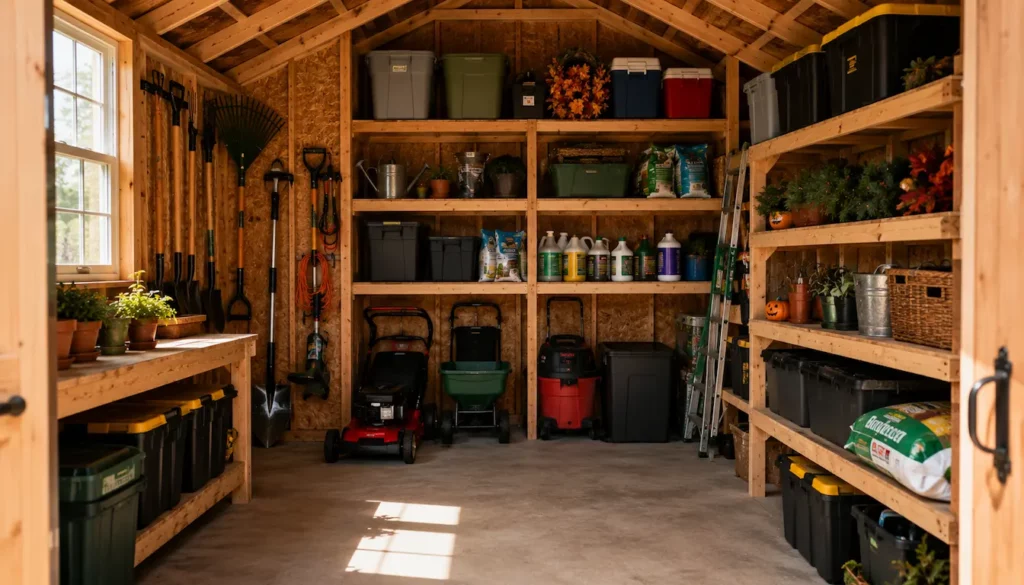
Utility sheds work best when storage areas are organized into dedicated zones.
Instead of treating the entire shed as one open space, dividing it into sections makes it easier to find what you need and keeps clutter from taking over.
🔹 Wall Zones
- Shelving for bins and frequently used supplies
- Hooks and pegboards for tools and accessories
- Makes use of valuable vertical storage space
🔹 Floor Zones
- Storage for equipment, rolling items, and larger containers
- Keeps heavier items easy to access
- Helps prevent overcrowding on shelves
🔹 Corner Zones
- Ideal for seasonal items and less frequently used equipment
- Makes use of otherwise wasted space
- Works well for tall tools and long-handled equipment
🔹 Door Clearance
- Keep entry areas free of permanent storage
- Makes loading and unloading easier
- Improves overall accessibility
A well-planned layout prevents the common “everything ends up in the middle” problem and makes the shed more useful year after year.
 Organize More With Storage Zones
🏠 Roof Styles That Support Utility Use
Roof design affects more than appearance.
The right roof style can improve storage capacity, ventilation, and day-to-day usability.
Popular utility shed roof options include:
- Gable roofs: Better headroom, improved airflow, and traditional appearance
- Saltbox roofs: Additional rear wall height for shelving and storage
- Single-slope roofs: Simple construction with an efficient, modern design
When storing a mix of tools, equipment, and seasonal supplies, ventilation becomes especially important.
Proper airflow helps reduce moisture buildup and protects stored items from long-term damage.
💡 Tip: If you plan to install shelving along the walls, pay attention to roof design.
Extra wall height often creates more usable storage space than a larger floor footprint.
🧱 Foundations That Handle Mixed Loads
Utility sheds often carry more weight than specialized storage sheds.
Lawn equipment, storage bins, seasonal decorations, tools, and household overflow can add up quickly, making a solid foundation especially important.
Popular foundation options include:
- Gravel base: Excellent drainage and reliable support
- Concrete pavers: Stable, level, and easy for DIY installation
- Pressure-treated skids: Portable and accepted in many locations
A strong foundation helps prevent settling, sticking doors, and alignment issues as the shed fills over time.
A Strong Foundation Matters

💡 Tip: It’s easier to build a slightly stronger foundation now than it is to correct a shifting shed later.
🪵 Materials That Hold Up Over Time
Because utility sheds store a wide variety of items, durability matters.
The right materials help protect everything inside while reducing long-term maintenance.
Recommended materials include:
- Pressure-treated lumber for base and ground-contact areas
- Exterior-rated wall and roof sheathing for weather resistance
- Durable siding with sealed edges to reduce moisture intrusion
- Roofing designed for your local climate and weather conditions
Focus on function before appearance.
Utility sheds are built to work hard, and choosing durable materials now can save time, repairs, and replacement costs later.
💡 Tip: Materials exposed to moisture, soil, or heavy use should always get the extra protection they need.
⚠️ Common Utility Shed Mistakes
Utility sheds are designed to solve storage problems, but a few common planning mistakes can limit their usefulness over time.
Watch out for:
- No plan for future storage needs: Utility sheds tend to fill up faster than expected
- Shelves not reinforced for weight: Storage bins and equipment can become surprisingly heavy
- Poor lighting inside: Makes it harder to find items and stay organized
- Doors too narrow for bulky equipment: Limits what can easily move in and out
- Overbuilding for rarely used items: Wastes both space and budget
The best utility sheds stay focused on practicality.
Plan for how you’ll actually use the space rather than trying to build for every possible scenario.
🏡 Is a Backyard Utility Shed Right for You?
A backyard utility shed is often the best choice when your storage needs don’t fit neatly into a single category.
Instead of creating separate storage solutions for different items, a utility shed brings everything together in one organized space.
A utility shed may be a good fit if you:
- Need flexible, all-purpose storage
- Want one shed instead of several smaller storage areas
- Store equipment, tools, and seasonal items year-round
- Have limited backyard space but changing storage needs
For many homeowners, a well-planned utility shed becomes one of the most useful structures on the property.
It adapts as needs change and helps keep both the yard and garage organized.
👉 If you’re comparing different shed styles and trying to decide what fits your space best,
our Simple Storage Shed Plans for Beginners guide covers sizes, layouts, materials, and beginner-friendly building strategies for small outdoor spaces.
👉 If your biggest challenge is limited space along fences or side yards,
our lean-to shed plans focus on space-saving builds designed to work against existing structures.
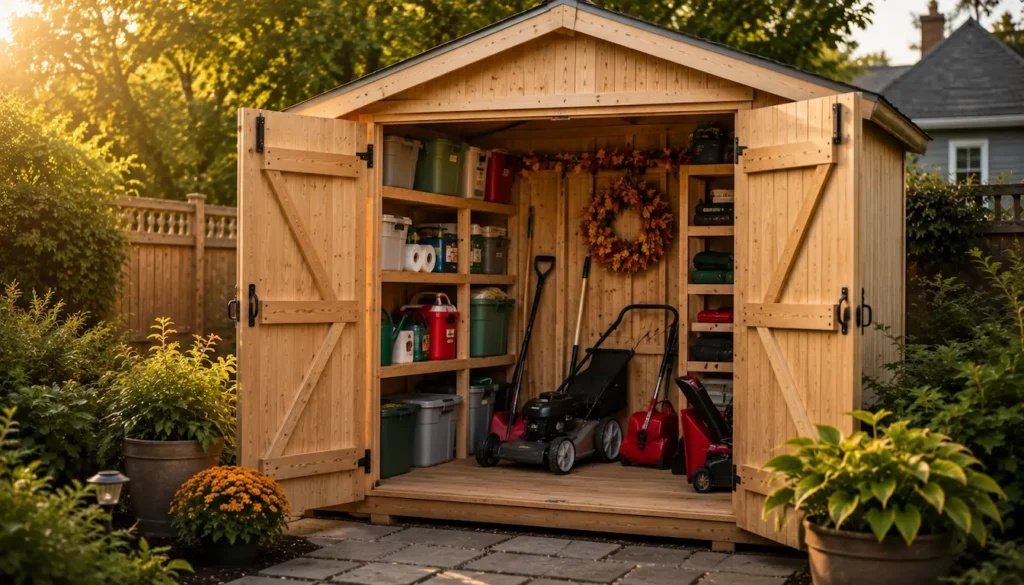
One Shed. Multiple Storage Solutions.
🏁 Final Thoughts…
A backyard utility shed is one of the most flexible storage solutions you can add to a small property.
Whether you’re storing lawn equipment, seasonal decorations, garden supplies, or household overflow, a well-planned utility shed helps keep everything organized and easy to access.
Focus on building for the way you actually live.
The best utility sheds aren’t necessarily the biggest — they’re the ones with smart layouts, durable materials, and enough flexibility to adapt as your storage needs change.
Start with a practical plan, prioritize organization over square footage, and build a shed that works for your space today while leaving room for tomorrow.
Helpful Guides for Small Spaces
If you’re ready to take the next step, these guides will help you avoid common mistakes, choose the right tools, and get more from your growing space.
-
Common Small Greenhouse Mistakes to Avoid
Learn which sizing, layout, and airflow mistakes cause the most frustration for new growers—and how to avoid them early. -
Essential Gardening Tools for Small Spaces
A practical breakdown of tools that make daily greenhouse tasks easier, cleaner, and more efficient in compact environments. -
Small Greenhouse Setup Guide
Step-by-step guidance on positioning, airflow planning, and layout decisions that set your greenhouse up for long-term success.
 Make the Most of Your Space
You don’t need a large backyard to enjoy gardening.
With the right setup, a little planning, and a willingness to learn, even the smallest balcony, patio, or corner can become a productive growing space.