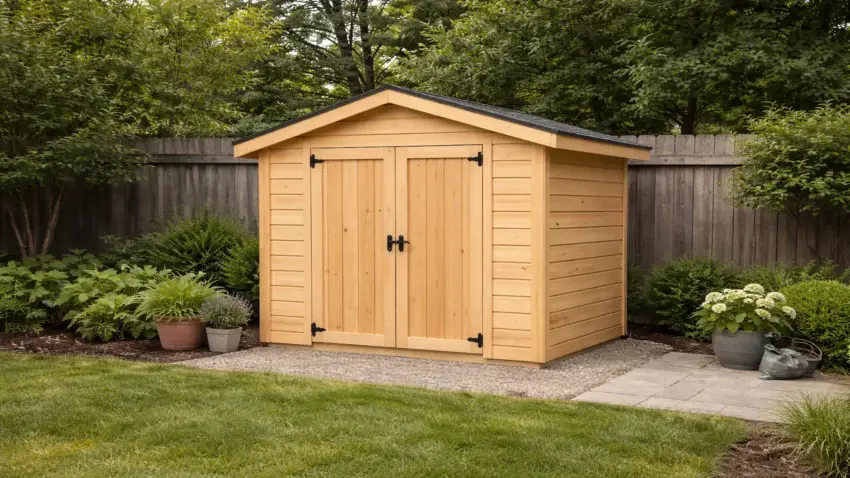
Simple Storage Shed Plans for Beginners are a great place to start if you want extra storage without taking on an overly complicated project.
A well-designed shed can help you organize tools, gardening supplies, seasonal decorations, and other items that seem to multiply around the house.
The good news is that your first shed doesn’t need to be large or expensive.
By choosing a beginner-friendly plan, you can focus on learning basic building skills while creating something practical you’ll use for years.
In this guide, you’ll learn what makes a shed plan beginner-friendly, common shed sizes that work well, basic materials you’ll need, and how to choose a design that matches your skill level and available space.
If you’re comparing layouts and sizes, explore my small storage shed plans
guide for easy DIY builds designed specifically for small gardens.
🔨 What Makes a Shed Plan “Beginner-Friendly”?
Not all shed plans are created with beginners in mind.
The best beginner-friendly plans focus on simple construction methods, common building materials, and straightforward instructions that help you build with confidence.
Look for shed plans that include:
- Straight wall framing with standard lumber sizes
- Minimal roof angles (gable or single-slope)
- Clear cut lists and step-by-step diagrams
- Simple door and trim details
If a plan requires specialty tools, custom joinery, or advanced measurements, it’s probably not the best choice for a first project.
Starting with a simple design allows you to learn the basics while building something practical and useful.
 Start With a Simple Shed Design
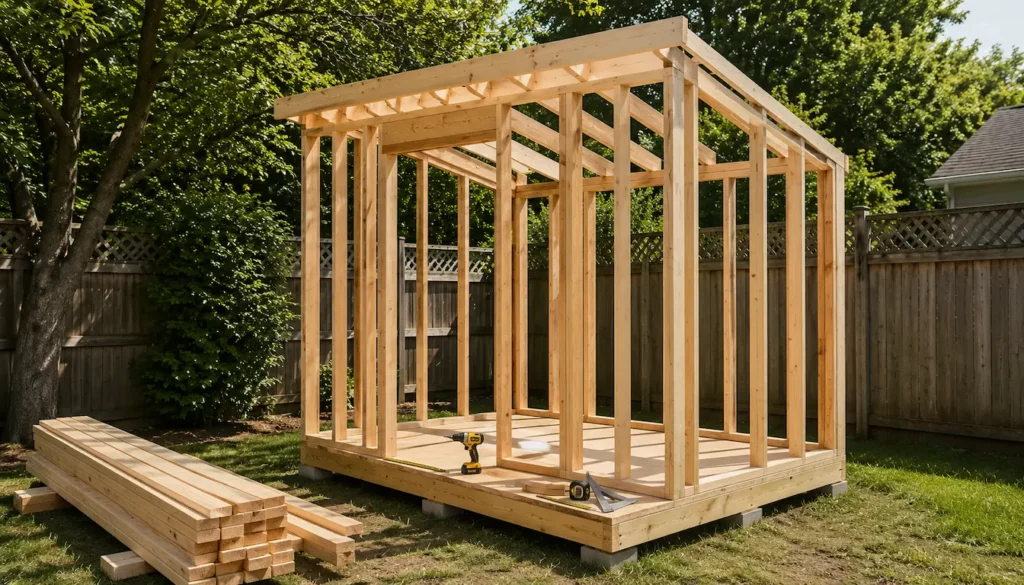
📏 Why Simple Shed Plans Are Easier to Get Right
When you’re building your first shed, simplicity is your friend.
The fewer complicated cuts, angles, and design features involved, the easier it is to stay on track and avoid costly mistakes.
Simple storage sheds:
- Go together faster
- Are easier to square and level
- Make material mistakes less costly
- Are easier to modify or repair later
For beginners, a clean rectangular structure is far more forgiving than decorative or complex builds.
Starting with a simple design helps you build confidence while developing skills that will carry over to larger woodworking and outdoor projects in the future.
🏡 Common Beginner Shed Sizes That Work Well
Most beginner shed plans stick to proven, manageable sizes that are easy to build and don’t require advanced framing skills.
These smaller footprints help keep material costs reasonable while still providing valuable storage space.
Popular beginner-friendly shed sizes include:
- 6×8 – Fast build with minimal materials
- 8×8 – Balanced size and usability
- 8×10 – Plenty of storage without feeling overwhelming
- 6×10 – Narrow footprint that works well in smaller yards
These sizes are ideal for learning basic framing, roofing, and layout techniques while still producing a shed that’s genuinely useful.
Once you’ve completed a simple shed project, you’ll have the confidence and experience needed to tackle larger outdoor builds.
🧰 Basic Materials Used in Beginner Shed Plans
One reason beginner shed plans are easier to build is that they rely on common materials available at nearly any home improvement store.
Using familiar materials helps keep costs predictable and makes it easier to follow the plans without unnecessary complications.
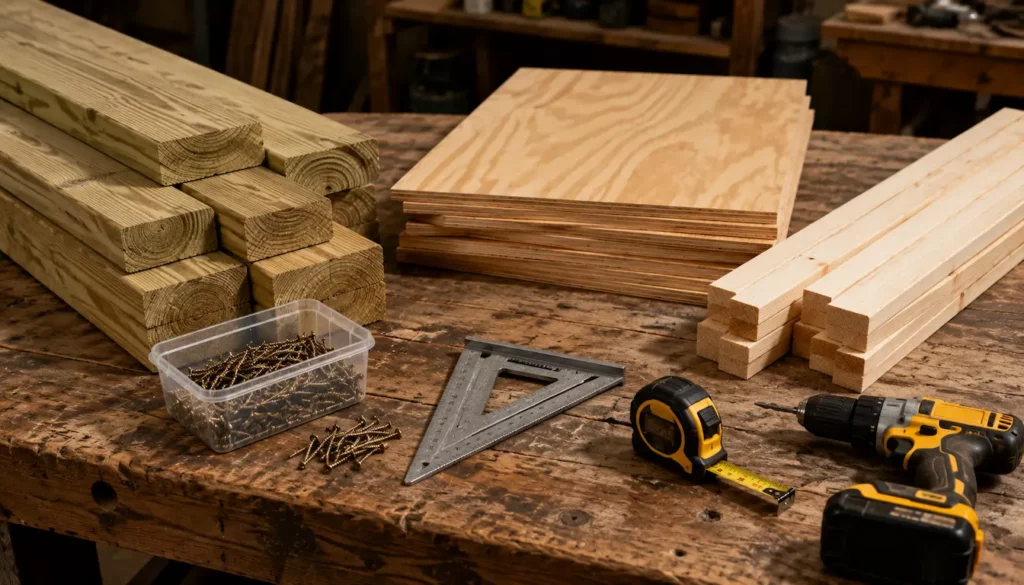
Most beginner shed designs rely on:
- Pressure-treated lumber for the base
- Standard dimensional framing lumber
- Plywood or OSB sheathing
- Basic siding panels or wood cladding
Using readily available materials reduces frustration during the build and makes replacement parts easier to find if repairs are needed later.
For first-time builders, simplicity and availability are often more important than using specialty materials or advanced construction techniques.
Common Materials Used in Shed Building
🏠 Roof Styles That Keep Things Simple
Roof design can make or break a beginner shed project.
Choosing a simple roof style reduces measuring errors, speeds up construction, and makes the entire build easier to manage.
The easiest options include:
- Basic gable roofs with equal slopes
- Single-slope (shed-style) roofs for compact builds
Both designs are beginner-friendly, use straightforward framing techniques, and work well for small storage sheds.
Avoid complex hips, dormers, or decorative roof features until you’ve completed at least one successful shed project and feel comfortable with the basics.
🎯 Learning Skills That Carry Into Bigger Builds
A simple shed project does more than provide extra storage space.
It also teaches valuable DIY and woodworking skills that can be used in future outdoor projects.
A beginner shed helps you practice:
- Measuring and cutting accurately
- Squaring walls and floors
- Installing siding and roofing
- Hanging doors and basic trim
These fundamentals apply to almost every future shed, workshop, garden structure, or outdoor woodworking project you build.
The confidence you gain from completing a simple shed often becomes the foundation for taking on larger and more ambitious projects later.
🚀 Where This Fits in Your Shed Planning Path
Simple storage shed plans for beginners are often the foundation of larger shed-building projects.
By starting with a straightforward design, you can learn the basic skills and construction techniques needed for more advanced builds later on.
Once you’re comfortable with these projects, you can move on to larger storage sheds, dedicated tool sheds, garden sheds, and multi-purpose utility buildings.
Each project builds on the skills you’ve already learned, making future builds easier and more enjoyable.
You can explore those next-step projects in the Small Storage Shed Plans section of this guide.
Every Builder Starts Somewhere
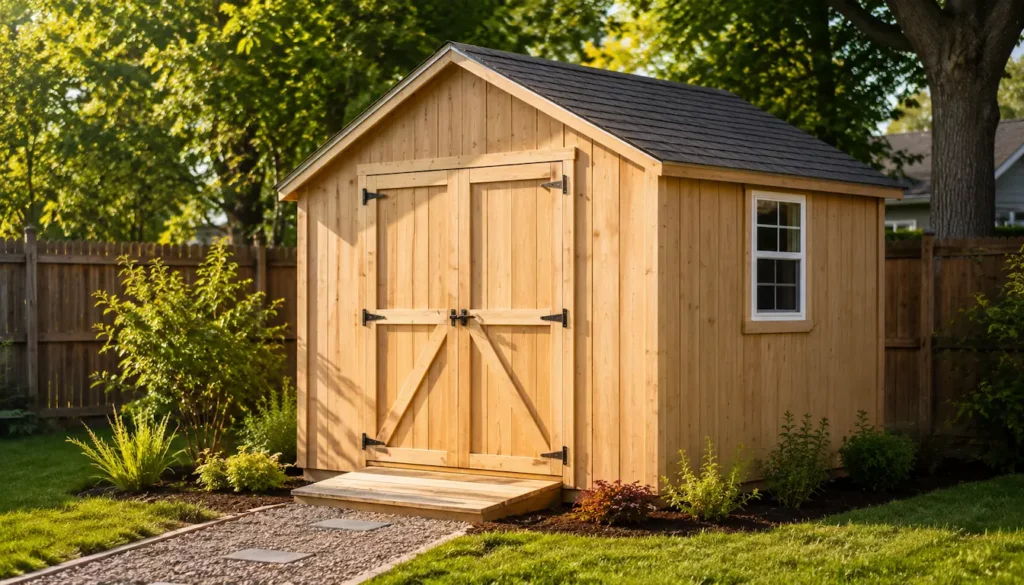
🏁 Final Thoughts…
Building your first storage shed doesn’t have to be complicated.
By choosing a beginner-friendly plan with simple framing, common materials, and a straightforward roof design, you can focus on learning valuable building skills while creating something practical for your property.
The best first shed is usually not the biggest or most elaborate one.
It’s the project that helps you build confidence, gain experience, and successfully complete a structure you’ll use for years to come.
Start simple, follow a proven plan, and enjoy the process.
Every experienced builder started with a first project, and a small storage shed is one of the best places to begin.
🌿 Helpful Guides for Small Spaces
If you’re ready to take the next step, these guides will help you avoid common mistakes, choose the right tools, and get more from your growing space.
-
Common Small Greenhouse Mistakes to Avoid
Learn which sizing, layout, and airflow mistakes cause the most frustration for new growers—and how to avoid them early. -
Essential Gardening Tools for Small Spaces
A practical breakdown of tools that make daily greenhouse tasks easier, cleaner, and more efficient in compact environments. -
Small Greenhouse Setup Guide
Step-by-step guidance on positioning, airflow planning, and layout decisions that set your greenhouse up for long-term success.
 Make the Most of Your Space
You don’t need a large backyard to enjoy gardening.
With the right setup, a little planning, and a willingness to learn, even the smallest balcony, patio, or corner can become a productive growing space.
SmallGardenBox is here to help you along the way.
Plan it. Grow it. Enjoy it!