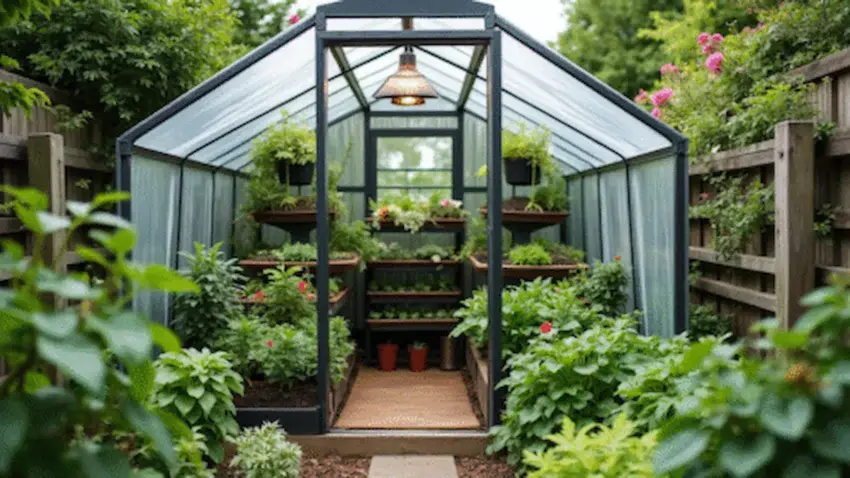
A small greenhouse can dramatically expand your growing season, but only if it’s the right size for your space and gardening goals.
Many gardeners either underestimate how much room they’ll need or buy the largest greenhouse they can fit into their yard without considering accessibility, airflow, and daily use.
The good news is that finding the right size isn’t complicated.
In this guide, you’ll learn how to evaluate your available space, plan for future growth, and choose a greenhouse size that makes gardening easier rather than more difficult.
🔧 Tools That Make Small-Space Greenhouse Gardening Easier
You don’t need a greenhouse full of gadgets to grow successfully in a small space.
However, a few carefully chosen tools can make greenhouse gardening easier, more productive, and less frustrating from the start.
The products below help with three key areas that have the biggest impact on success in compact greenhouses:
- Planning and measuring available space
- Monitoring temperature and humidity
- Improving airflow and ventilation
Choosing the right tools early can help create a healthier growing environment while making day-to-day greenhouse management much easier.
📏 Laser Distance Measure
A laser distance measure makes it easier to plan a small space greenhouse by giving you fast, accurate measurements without squeezing into tight corners.
It’s especially useful for patios, balconies, and indoor areas where every inch matters.
 Amazon Product Suggestion:
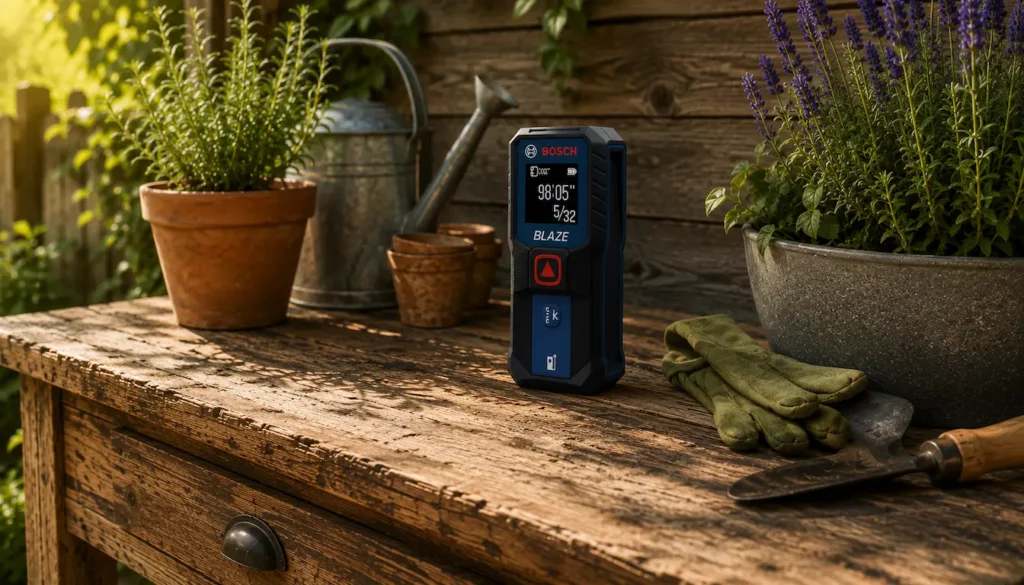
✔ BOSCH GLM100-23 100 Ft Blaze Laser
(Distance Measure)
A laser distance measure helps you quickly size up patios, balconies,
and indoor growing areas without wrestling with a tape measure.
It’s especially handy when working in tight spaces
where accuracy matters and access is limited.
Why It’s Great:
✔ Quickly measures tight or awkward spaces
✔ Helps prevent buying a greenhouse that won’t fit
✔ Makes planning shelf height and layout easier
✔ Faster and cleaner than traditional measuring tools
🌡️ Bluetooth Hygrometer & Thermometer
Small space greenhouses can heat up or hold moisture faster than expected, especially in enclosed or indoor locations.
Having a simple way to monitor conditions helps you make small adjustments before plants become stressed.
Amazon Product Suggestion:

✔ Govee Bluetooth Hygrometer Thermometer
A compact hygrometer and thermometer helps you keep tabs on
temperature and humidity inside a small space greenhouse without guessing.
It’s especially useful for enclosed setups where heat
and moisture can change quickly throughout the day.
Why It’s Great:
✔ Tracks temperature and humidity in real time
✔ Helps prevent overheating, mold, and excess moisture
✔ Useful for monitoring enclosed or indoor greenhouse setups
✔ Bluetooth tracking makes it easy to check conditions without opening the greenhouse
🌬️ Clip Fan for Greenhouse Ventilation
Poor airflow is one of the fastest ways to create heat stress, mold, and pest problems in a small space greenhouse.
A compact clip fan helps keep air moving without taking up valuable growing space.
Amazon Product Suggestion:
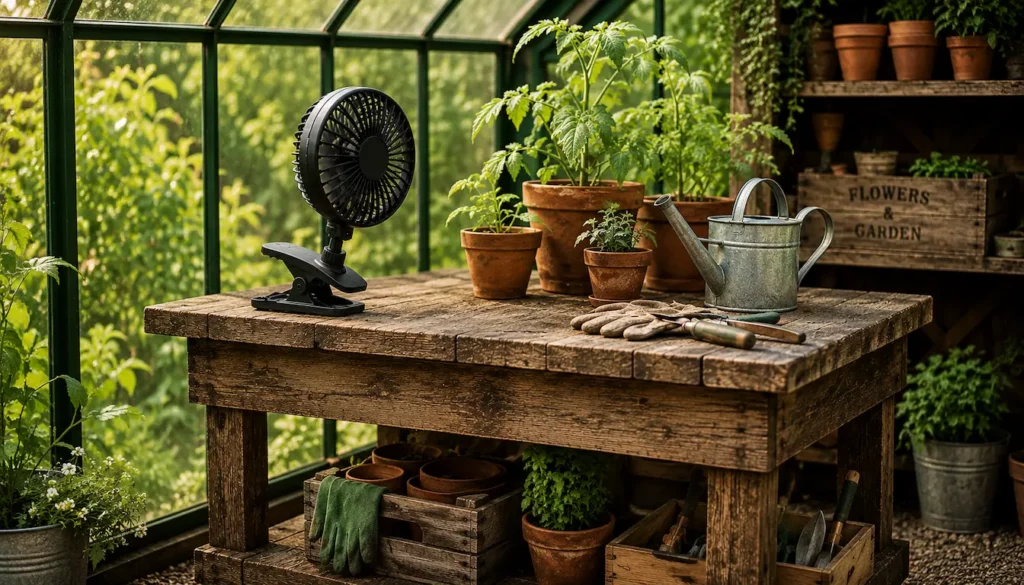
✔ VIVOSUN AeroWave E6 Gen2
(Grow Tent Clip Fan 6”)
A clip fan improves circulation inside compact greenhouses
by preventing hot spots and excess humidity from building up.
It’s especially useful for enclosed patios, pop-up greenhouses,
and indoor growing areas where natural airflow is limited.
Why It’s Great:
✔ Improves airflow in small or enclosed greenhouse spaces
✔ Helps regulate temperature and humidity levels
✔ Clips easily to frames, shelves, or poles
✔ Reduces mold, mildew, and pest issues
📏 Measure Before You Buy
Before you think about greenhouse models or layouts, you need an accurate picture of the space you’re working with.
Measure the usable footprint, not just the area where the greenhouse will sit.
Account for fences, walls, railings, and any nearby structures that could limit access or airflow.
Don’t forget vertical space.
Many small greenhouses rely on shelving and hanging plants,
so height matters just as much as width and depth.
If you’re placing a greenhouse on a patio or balcony,
also consider overhead obstructions like roof overhangs or pergolas.
🌱 Choose a Greenhouse That Fits Your Goals
The right greenhouse size depends heavily on what you plan to grow.
If your primary goal is starting seedlings in spring, a compact footprint with vertical shelving may be more than enough.
If you plan to grow vegetables year-round or overwinter plants, you’ll need more floor space and better airflow.
Think about:
-
Number of plants at maturity (not seedling size)
-
Pot sizes and spacing requirements
-
Whether you’ll grow upward (trellises, shelves) or outward
Under-sizing is one of the most common mistakes with small greenhouses, especially as confidence and plant collections grow.
🚪 Don’t Forget Daily Access
A greenhouse that’s technically “big enough” can still feel cramped if it’s hard to work in.
Make sure there’s enough space to comfortably move, water, prune, and harvest without constantly shifting plants around.
Pay attention to:
-
Walkway width
-
Door swing and entry clearance
-
Reach to back corners and upper shelves
If you can’t easily access every part of the greenhouse, maintenance becomes frustrating — and neglected plants follow quickly.
🌬️ Plan for Airflow and Temperature Control
Smaller greenhouses heat up fast.
While that’s great in early spring, it can become a problem during warmer months.
The size of your greenhouse directly affects how well you can manage airflow and temperature.
Larger footprints allow:
-
Better air circulation
-
More consistent temperatures
-
Space for vents, fans, or shade solutions
If you live in a hot or variable climate, slightly oversizing your greenhouse can make temperature control far easier over the long term.
📈 Leave Room for Future Growth
It’s tempting to choose the smallest greenhouse that fits your space, but most gardeners outgrow their first setup faster than expected.
New plants, new seasons, and new skills often demand more room.
When deciding on size, ask yourself:
-
Will I want to expand my growing season?
-
Will I add shelving, benches, or tools inside?
-
Will I regret not going one size up?
If your space allows it, choosing a slightly larger greenhouse now can save money, time, and frustration later.
📏 Quick Greenhouse Size Reference for Small Spaces
| Space Type | Recommended Greenhouse Size | Best Use Case |
|---|---|---|
| Balcony | 4′ × 4′ or smaller | Starting seedlings, herbs, compact potted plants |
| Patio | 4′ × 6′ to 6′ × 8′ | Seasonal vegetables, container gardening, mixed plants |
| Small Backyard | 6′ × 8′ to 8′ × 10′ | Extended growing seasons, larger vegetables, shelving setups |
| Urban Yard | 8′ × 10′ and up | Year-round growing, vertical systems, multiple plant types |
How to Use This Table
Use this chart as a starting point, not a rulebook.
Your ideal greenhouse size should always factor in:
-
Vertical growing potential
-
Local climate and temperature swings
-
How often you’ll be inside working with plants
If you’re between two sizes and your space allows it, going slightly larger usually provides better airflow, easier access, and more long-term flexibility.
🌱 Easy Access Makes Gardening Easier

🏁 Final Thoughts…
Choosing the right greenhouse size isn’t about squeezing the largest structure possible into a small space.
It’s about finding the balance between growing capacity, accessibility, airflow, and long-term usability.
For most gardeners, a greenhouse that fits comfortably within their available space will be easier to manage and more productive than one that’s overcrowded or difficult to access.
Take the time to measure carefully, think about your gardening goals, and plan for future growth before you buy.
A well-sized greenhouse can provide years of successful growing without overwhelming your patio, balcony, or backyard.
 Continue Your Greenhouse Journey
If you’re ready to take the next step, these guides will help you avoid common mistakes, choose the right tools, and get more from your growing space.
-
Common Small Greenhouse Mistakes to Avoid
Learn which sizing, layout, and airflow mistakes cause the most frustration for new growers—and how to avoid them early. -
Essential Gardening Tools for Small Spaces
A practical breakdown of tools that make daily greenhouse tasks easier, cleaner, and more efficient in compact environments. -
Small Greenhouse Setup Guide
Step-by-step guidance on positioning, airflow planning, and layout decisions that set your greenhouse up for long-term success.
 Turn Small Spaces Into Living Spaces
You don’t need a large backyard to enjoy gardening.
With the right setup, a little planning, and a willingness to learn, even the smallest balcony, patio, or corner can become a productive growing space.
 Plan it. Grow it. Enjoy it!
Finding the right size for a small-space greenhouse has always been a balancing act in my experience. In my previous garden, I started with a compact model that seemed perfect at first, but I quickly realized that once the tomatoes, peppers, and herbs grew in, it became overcrowded. Later, I upgraded to a slightly larger greenhouse, and it completely changed how I could rotate crops and manage airflow. I’ve learned that leaving extra room for vertical growth and future plant additions is crucial because plants always seem to take up more space than expected.