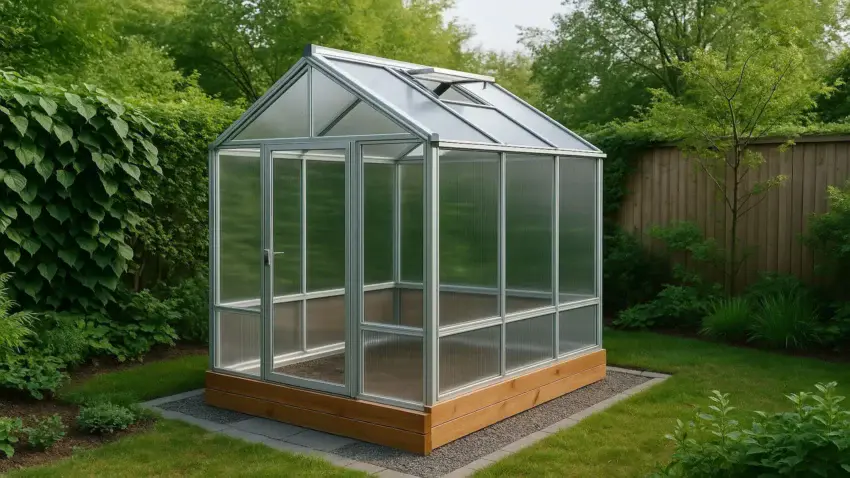
Choosing the right materials for a small greenhouse affects far more than appearance.
The frame, panels, and foundation all influence durability, insulation, maintenance requirements, and long-term growing success — especially when space is limited.
Whether you’re planning a greenhouse for a patio, balcony, or compact backyard, understanding the strengths and tradeoffs of different materials can help you make smarter decisions before you build or buy.
In this guide, you’ll learn which greenhouse materials work best for small spaces and how to choose options that fit your climate, budget, and gardening goals.
🌱 Greenhouse Covering Materials Worth Considering
The material covering your greenhouse has a major impact on light transmission, insulation, durability, and long-term maintenance.
While no single option is perfect for every greenhouse, understanding the strengths and tradeoffs of different materials can help you choose the best solution for your climate, budget, and gardening goals.
The products below represent some of the most popular greenhouse covering options used in small-space greenhouses today, ranging from lightweight plastic sheeting to durable polycarbonate panels and traditional glass.
Choosing the right material from the start can improve growing conditions, reduce maintenance, and help your greenhouse perform better throughout the year.
Polycarbonate Greenhouse Panels (Twin-Wall)
 Amazon Product Suggestion:

✔Polycarbonate Greenhouse Panels
(Twin-Wall)
Polycarbonate panels are one of the most popular materials for
small space greenhouses thanks to their strength, insulation, and long service life.
Twin-wall construction traps air between layers, helping maintain
stable temperatures while still allowing plenty of light to pass through.
Why it’s great:
✔ Excellent insulation for year-round growing
✔ Impact-resistant and far stronger than glass
✔ Lightweight and easy to cut for custom frames
✔ UV-protected to reduce yellowing over time
UV-Protected Plastic Greenhouse Sheeting
Plastic sheeting is a simple, budget-friendly option for covering small greenhouses, hoop houses, and temporary garden structures.
It’s lightweight, easy to install, and ideal for growers who want flexibility without a big investment.
Amazon Product Suggestion:
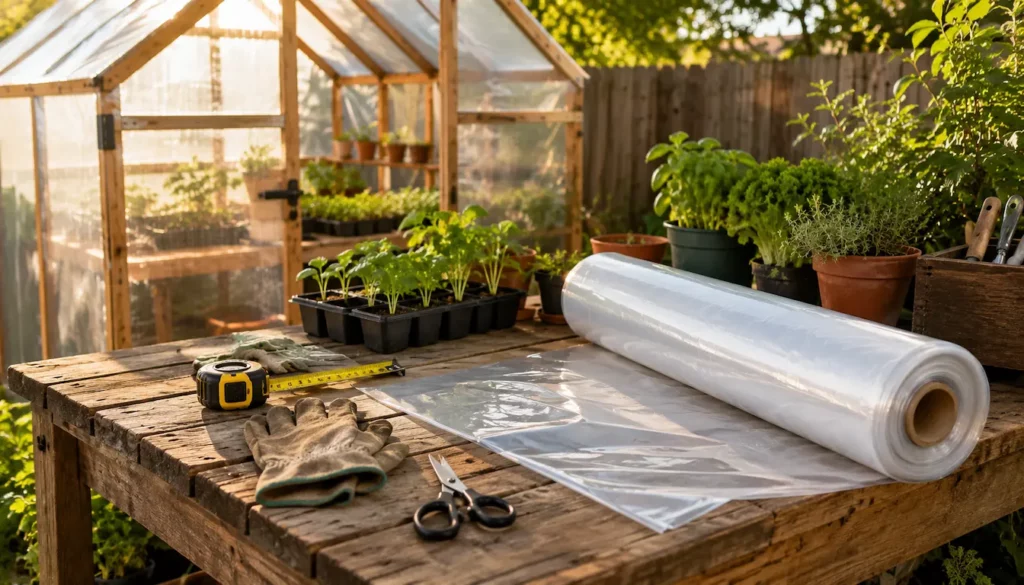
✔ Plastic Sheeting
(10′ x 25′) Long, 3 Mil (2 Pack)
Plastic sheeting is a budget-friendly option for temporary or
seasonal greenhouses, cold frames, and hoop houses.
It’s easy to install, flexible, and works well when weight
or cost is a concern in small backyard setups.
Why it’s great:
✔ Affordable solution for beginners or short-term use
✔ UV protection helps extend lifespan outdoors
✔ Lightweight and easy to replace
✔ Ideal for hoop houses and compact frames
Custom Cut Glass Panels
Amazon Product Suggestion:
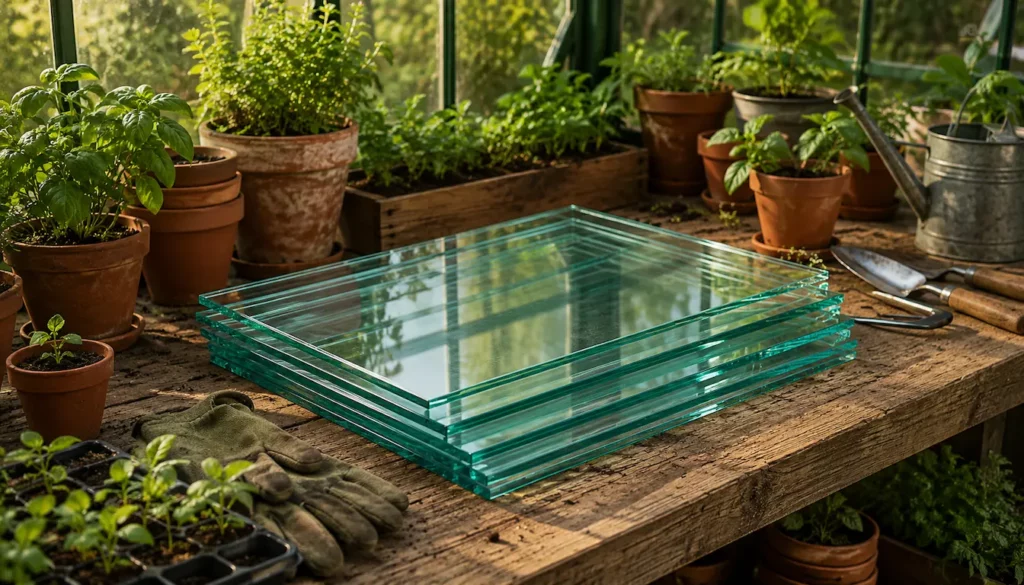
✔ Custom Cut to Size Glass
Glass offers unmatched clarity and a classic greenhouse look,
making it a favorite for permanent structures.
While heavier and more fragile than plastic options, properly installed glass
can last decades and provides excellent light transmission.
Why it’s great:
✔ Superior light transmission for plant growth
✔ Long-lasting and scratch-resistant
✔ Custom sizing for precise greenhouse builds
✔ Clean, traditional greenhouse appearance
Fiberglass Mat Panels
Fiberglass mat is a durable option for greenhouse repairs or reinforced panel builds where extra strength is needed.
It helps diffuse sunlight while adding structural support, making it useful for custom or hybrid greenhouse designs.
Amazon Product Suggestion:
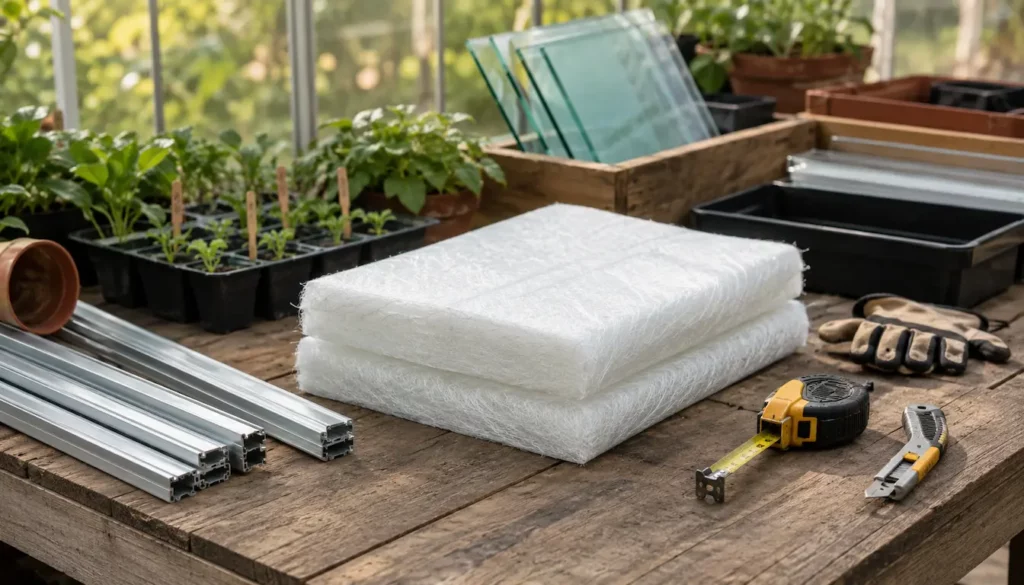
✔ Fiberglass Mat
(4.4 Yards X 41″)
Fiberglass panels provide a balance between durability and light diffusion,
making them useful for growers who want strong panels without harsh direct sunlight.
They’re commonly used in DIY greenhouse repairs or reinforced panel builds.
Why it’s great:
✔ Diffuses light to reduce plant stress
✔ Strong and weather-resistant material
✔ Good option for repairs or reinforced sections
✔ Handles temperature swings better than thin plastics
| Material | Insulation | Durability | Lifespan | Cost |
|---|---|---|---|---|
| Polycarbonate Panels (Twin-Wall) | Excellent | Very High | 10–15+ years | $$$ |
| Plastic Sheeting | Low | Low–Moderate | 1–3 years | $ |
| Custom Cut Glass | Moderate | Moderate | 20+ years | $$$$ |
| Fiberglass Mat Panels | Moderate | High | 10–20 years | $$ |
Quick takeaway:
Polycarbonate offers the best balance for most small space greenhouses,
while plastic sheeting works for temporary builds and glass suits permanent, classic structures.
🏡 Which Greenhouse Material Is Right for You?
Choosing the best greenhouse covering comes down to how you plan to use your space, how long you want the structure to last, and the climate you’re growing in.
Each material has strengths, but the right choice depends on your goals rather than a one-size-fits-all solution.
If you want year-round growing:
Polycarbonate panels are usually the best option for small space greenhouses.
Their insulating properties help maintain stable temperatures while standing up well to wind, hail, and seasonal weather changes.
If you’re building on a budget or need a temporary setup:
Plastic sheeting works well for seasonal growing, hoop houses, or starter greenhouses.
It’s inexpensive and easy to replace, making it ideal if flexibility matters more than longevity.
If you want a permanent, traditional greenhouse:
Glass offers excellent light transmission and a classic appearance.
It’s best suited for sturdy frames and long-term builds where weight and installation are carefully planned.
If you’re reinforcing or repairing panels:
Fiberglass mat is a practical choice for strengthening existing structures or diffusing light in problem areas.
It’s often used alongside other materials rather than as a primary covering.
👉 Common Mistakes to Avoid When Choosing Greenhouse Materials
Choosing greenhouse materials involves more than comparing prices.
These common mistakes can reduce durability, increase maintenance, and affect growing conditions over time.
-
Choosing glass without planning for weight and framing
Glass requires a strong, well-built frame and proper installation to avoid breakage and safety issues. -
Expecting thin plastic sheeting to last for years
Plastic works well for temporary or seasonal setups, but it isn’t designed for long-term exposure without replacement. -
Ignoring insulation needs in cooler climates
Materials with poor insulation can lead to temperature swings that stress plants and limit growing seasons. -
Overbuilding for a small space
Heavier or more complex materials aren’t always better and can overwhelm patios, balconies, or tight backyard areas.
🌿 Choosing the Right Materials Pays Off
🏁 Final Thoughts…
The best greenhouse material isn’t always the most expensive option — it’s the one that best fits your climate, gardening goals, and maintenance preferences.
Whether you choose durable polycarbonate panels, budget-friendly plastic sheeting, traditional glass, or versatile fiberglass panels, understanding the strengths and tradeoffs of each option helps you make a more confident decision.
By matching the right material to your growing space, you can create a greenhouse that performs better, lasts longer, and requires less maintenance over time.
 Continue Your Greenhouse Journey
If you’re ready to take the next step, these guides will help you avoid common mistakes, choose the right tools, and get more from your growing space.
-
Common Small Greenhouse Mistakes to Avoid
Learn which sizing, layout, and airflow mistakes cause the most frustration for new growers—and how to avoid them early. -
Essential Gardening Tools for Small Spaces
A practical breakdown of tools that make daily greenhouse tasks easier, cleaner, and more efficient in compact environments. -
Small Greenhouse Setup Guide
Step-by-step guidance on positioning, airflow planning, and layout decisions that set your greenhouse up for long-term success.
 Turn Small Spaces Into Living Spaces
You don’t need a large backyard to enjoy gardening.
With the right setup, a little planning, and a willingness to learn, even the smallest balcony, patio, or corner can become a productive growing space.
 Plan it. Grow it. Enjoy it!