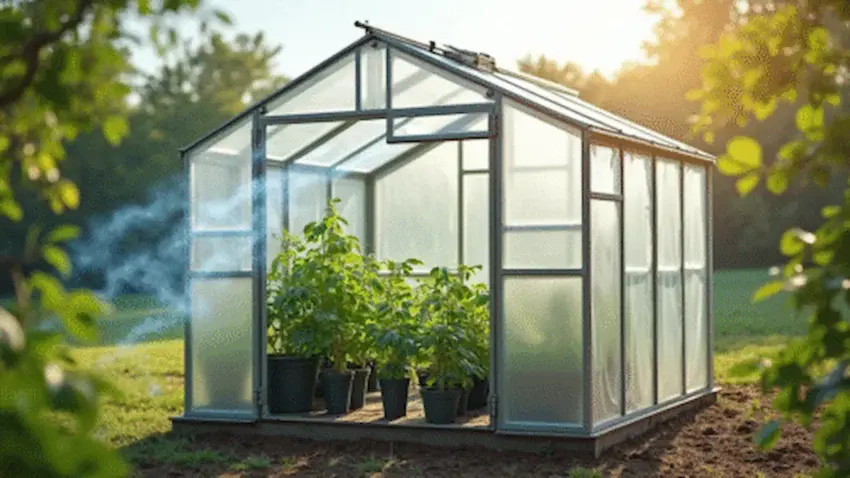
Understanding ventilation in compact greenhouses is essential for keeping plants healthy and productive year-round.
Proper airflow does more than cool things down —
it regulates humidity, discourages mold, and helps prevent diseases that thrive in warm, stagnant air.
Whether you’re growing herbs on a sunny patio or starting seedlings in a backyard greenhouse, learning how ventilation works can mean the difference between strong, thriving plants and constant frustration.
Most greenhouse problems start with poor airflow — the good news is that improving it is easier than many beginners realize.
If you’re setting up your first compact greenhouse, airflow can feel confusing at first.
The air inside can heat up fast, humidity builds, and your seedlings can struggle if things aren’t balanced.
I learned early on that greenhouse ventilation isn’t just about cracking a window — it’s about creating a living system where air moves naturally and consistently.
In this guide, we’ll break down how ventilation works in compact greenhouses, the different ways air can move through small spaces, and how to choose the right setup based on your climate and greenhouse size.

🌬️ Optimizing Airflow in Compact Greenhouses
Proper airflow is one of the biggest challenges in compact greenhouses.
Because small structures heat up quickly, relying on manual venting alone can lead to temperature swings and humidity buildup if you’re not around to adjust vents throughout the day.
Good ventilation isn’t just about keeping temperatures down.
Consistent airflow also helps reduce excess moisture, discourages mold growth, and creates a healthier environment for plants.
That’s where automated airflow solutions can help.
By opening vents automatically as temperatures rise, these systems help maintain more stable growing conditions with less day-to-day effort from the gardener.
BIBISTORE Solar Automatic Greenhouse Vent Opener
If you’re not always available to open and close greenhouse vents throughout the day, an automatic vent opener can make airflow management much easier.
These devices help protect plants from overheating while keeping ventilation more consistent.
🌟 Amazon Product Suggestion:
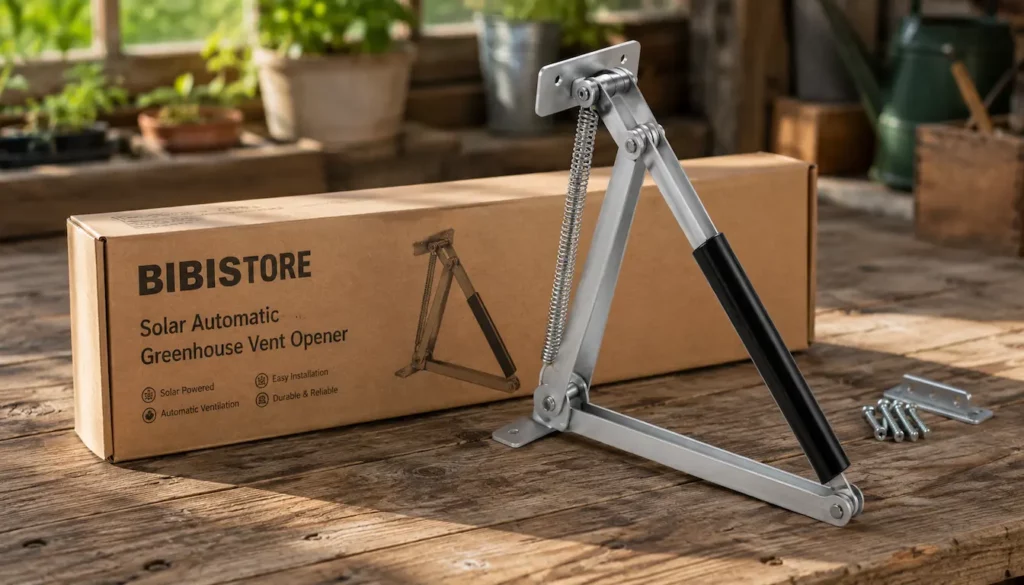
✔ BIBISTORE Solar Automatic Greenhouse Vent Opener
This heat-activated vent opener automatically lifts your greenhouse window
as temperatures rise and closes it again as things cool down —
no electricity, batteries, or switches needed.
It keeps compact greenhouses from overheating,
even on days when you’re not home.
Built from durable aluminum with a smooth, reliable opening action.
Why It’s Great:
✔ Opens and closes automatically based on temperature
✔ Prevents overheating in compact or backyard greenhouses
✔ 100% solar/thermal powered — no wiring or batteries
✔ Easy DIY installation and consistent airflow for healthier plants
🌬️ Why Compact Greenhouses Need Good Airflow
Many new greenhouse owners underestimate how important ventilation really is.
I used to think my small greenhouse would be easier to manage simply because of its size, but compact structures can actually heat up much faster than larger ones.
Within minutes of sunrise, temperatures can begin to climb.
Add watering, warm weather, and limited airflow, and humidity levels can rise quickly as well.
Good ventilation helps regulate temperature, reduce excess moisture, and create a healthier growing environment for your plants.
Without consistent airflow, even a small greenhouse can become stressful for both gardeners and the plants they’re trying to grow.
🌿 Why Ventilation Matters
- Stale, damp air encourages mold and fungal growth like powdery mildew and botrytis.
- Poor air movement can lead to weak, leggy stems and poor pollination.
- Pests like aphids and whiteflies often thrive in stuffy greenhouse conditions.
- Stressed plants are more likely to drop leaves, flowers, or developing fruit.
Even passive airflow or gentle fan circulation can make a noticeable difference.
Consistent air movement helps regulate temperature and humidity while creating a healthier environment for plants throughout the growing season.
💧Pro Tip: A small oscillating fan can make a huge difference in keeping greenhouse air fresh and moving.
VIVOSUN AeroWave E6 6-inch Clip-On Oscillating Fan
Good airflow is one of the most important parts of maintaining a healthy greenhouse environment.
The VIVOSUN AeroWave E6 helps circulate air evenly, reducing hot spots, excess humidity, and stagnant conditions that can stress your plants.
🌟 Amazon Product Suggestion:
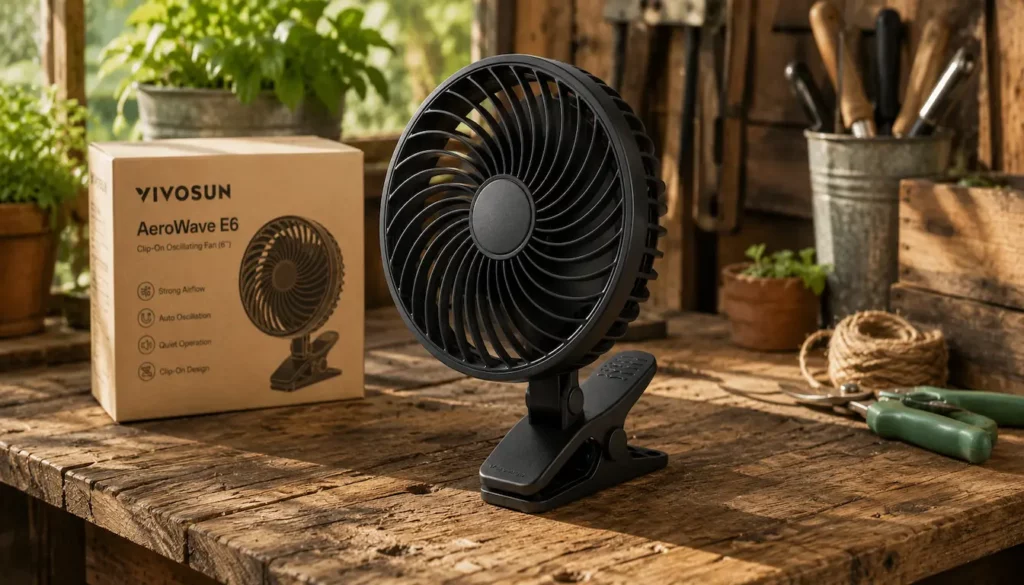
✔ VIVOSUN AeroWave E6 Clip-On Oscillating Fan (6″)
This powerful 6-inch oscillating clip fan keeps fresh air moving inside
compact greenhouses, preventing hot spots and stagnant humidity.
It uses a quiet EC motor, offers adjustable angles, and clips securely to shelving or framing.
Perfect for seedlings, herbs, and small greenhouse setups where ventilation needs a boost.
Why It’s Great:
✔ Quiet, efficient EC motor keeps air moving consistently
✔ Oscillates to reduce hot spots and stagnant humidity
✔ Clips securely to shelves, poles, or greenhouse framing
✔ Gentle airflow helps prevent mold and strengthen seedlings
🌬️ How Much Airflow Does a Small Greenhouse Really Need?
When I first started researching greenhouse setups, I wanted hard numbers.
How much airflow is actually enough?
A common rule of thumb is to aim for vent openings that equal roughly 20% of your greenhouse’s floor area.
For example, a 6×8-foot greenhouse (48 sq. ft.) should have about 9–10 sq. ft. of vent space.
Even if you can’t hit that number exactly, opening vents during sunny hours can still make a noticeable difference.
In small or shelf-style greenhouses, use whatever ventilation options are available — roof panels, adjustable vents, or even a cracked door.
The goal is to let cooler air enter low while warm air escapes higher up, creating steady natural airflow.
In my own mini greenhouse, I keep two roof panels slightly open for most of the day and crack the door when needed.
That simple habit pays off with sturdier stems, greener leaves, and healthier plant growth.
💧 Pro Tip: If your greenhouse doesn’t have built-in roof vents —
or you’re tired of adjusting them by hand — automatic vent openers are an easy upgrade.
They respond to temperature changes and help maintain consistent airflow with little day-to-day effort.
🌡️ Should Vents Be Open or Closed on a Mini Greenhouse?
This is one of the most common greenhouse questions I hear.
The answer depends on the weather, the season, and what you’re growing, but as a general rule, keep vents partially open whenever the sun is shining.
Even during spring, greenhouse temperatures can rise surprisingly fast once sunlight hits the panels.
I usually open both roof and side vents by late morning, then close them again toward evening to help retain warmth overnight.
If you’re starting seeds or growing tender plants, a simple thermometer can be one of the most useful tools you own.
It helps you learn how quickly temperatures change inside your greenhouse and when adjustments are needed.
💧 Pro Tip: If your greenhouse still overheats with vents open, prop the door open a few inches or add a small clip-on fan.
Gentle air movement mimics natural outdoor conditions and helps plants develop stronger stems.
ThermoPro TP350 Bluetooth Greenhouse Hygrometer
Keeping temperature and humidity in the right range is one of the easiest ways to improve greenhouse success.
The ThermoPro TP350 Bluetooth Greenhouse Hygrometer helps you monitor conditions at a glance and track changes before they become problems.
🌟 Amazon Product Suggestion:
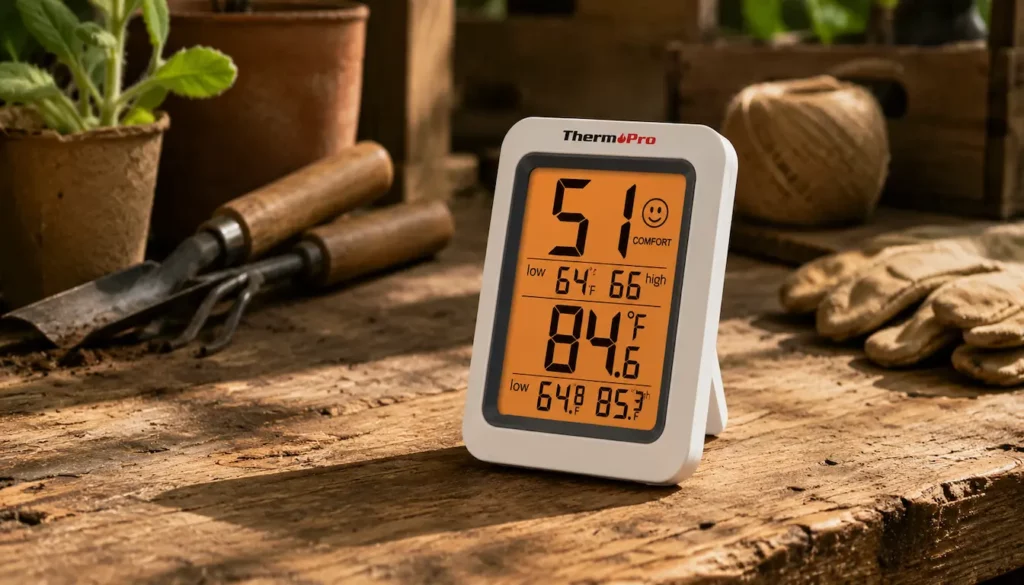
✔ ThermoPro TP350 Bluetooth Greenhouse Hygrometer
This smart hygrometer tracks temperature and humidity in real time,
helping you catch heat spikes and humidity swings before they become a problem.
With Bluetooth monitoring up to 260 ft and a large backlit display,
it’s easy to check conditions at a glance or from your phone.
Why It’s Great:
✔ Tracks real-time temperature and humidity
✔ Bluetooth monitoring with app alerts for quick checks
✔ Backlit display and recorded highs/lows for easy tuning
✔ Helps prevent mold, heat stress, and poor ventilation
🌬️ How Airflow Works Inside a Greenhouse
Think of your greenhouse as a tiny weather system.
Warm air naturally rises and escapes through roof vents, while cooler air enters through lower openings.
This creates a balanced circulation pattern known as passive airflow.
In smaller greenhouses, even minor vent adjustments can make a noticeable difference.
Vent placement matters too.
If all of your openings are on one side, pockets of stagnant air can develop.
Positioning vents or windows at different heights and opposite ends of the structure helps keep air moving more evenly.
One simple test I use on warm days is to step inside and pay attention to how the air feels.
If the greenhouse feels heavy, humid, or completely still, it’s usually a sign that more ventilation is needed.
💧 Pro Tip: If your greenhouse tends to trap heat or doesn’t have enough built-in venting, consider adding a small solar-powered fan.
It’s an easy way to improve air circulation without running electrical cords.
🌱 Tips to Get Air Moving in a Small Greenhouse
Sometimes passive ventilation isn’t enough — especially when a greenhouse is packed with seed trays, shelves, or mature plants.
If temperatures rise or humidity starts to build, these simple adjustments can improve airflow quickly.
- Open both top and bottom vents to create a natural “chimney effect” that pulls in cooler air and releases warm air.
- Use a small oscillating fan to keep air circulating in corners and reduce moisture buildup.
- Leave space between plants so air can move freely around leaves, stems, and trays.
- Crack the door during warm afternoons to provide an extra source of fresh air.
- Install automatic vent openers to maintain more consistent temperatures and reduce daily maintenance.
Even a few small airflow improvements can make a noticeable difference in plant health, temperature control, and humidity management throughout the growing season.
💧 Extra Tips for Common Airflow Problems
Dealing with Humidity Swings
After watering, humidity levels can rise quickly — especially in compact greenhouses.
That extra moisture often condenses on panels and creates ideal conditions for mold, mildew, and other moisture-related plant problems.
One simple solution is to run a small oscillating fan for 20–30 minutes after watering.
Keeping air moving helps moisture evaporate more evenly and reduces the chance of condensation building up on greenhouse surfaces.
💧 Pro Tip: If your greenhouse tends to trap moisture on rainy days or in tightly packed growing setups, use a thermometer/hygrometer to monitor humidity levels.
When readings climb above 70%, increase airflow with a fan or additional venting until conditions return to a healthier range.
🌱 New to Greenhouse Gardening?
If you’re building a healthier growing environment, ventilation is only one piece of the puzzle.
Understanding greenhouse size, setup, airflow, and daily maintenance can help you avoid common mistakes and get better results from your growing space.
👉 Getting Started with Small Greenhouses is a great place to learn the fundamentals and explore the next steps in creating a productive greenhouse setup.
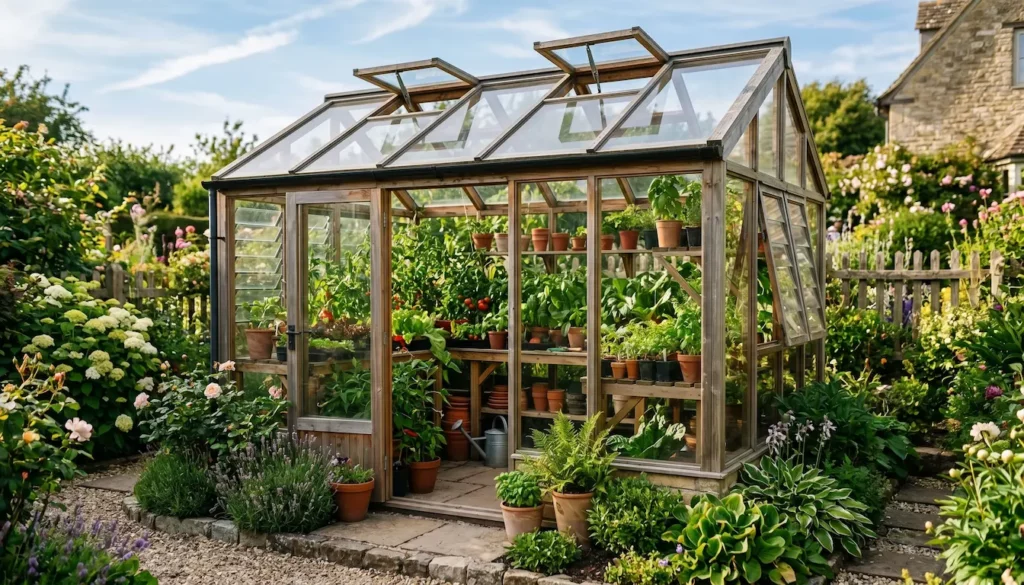
🌬️ Good Airflow Creates Healthier Plants
🏁 Final Thoughts…
Good ventilation is one of the most overlooked — and most important — parts of a successful compact greenhouse.
You don’t need complicated systems or constant adjustments, but you do need consistent airflow to help manage heat, humidity, and plant stress.
By combining smart vent placement, gentle air circulation, and simple monitoring, even a small greenhouse can maintain healthy growing conditions throughout the season.
Start with passive airflow, add a fan or automatic vent opener if needed, and pay attention to how your greenhouse responds during different weather conditions.
When airflow is dialed in, plants grow stronger, humidity becomes easier to manage, and common greenhouse problems become far less frustrating.
A little attention to ventilation today can lead to healthier plants and better harvests all season long.
 Continue Your Greenhouse Journey
If you’re ready to take the next step, these guides will help you avoid common mistakes, choose the right tools, and get more from your growing space.
-
Common Small Greenhouse Mistakes to Avoid
Learn which sizing, layout, and airflow mistakes cause the most frustration for new growers—and how to avoid them early. -
Essential Gardening Tools for Small Spaces
A practical breakdown of tools that make daily greenhouse tasks easier, cleaner, and more efficient in compact environments. -
Small Greenhouse Setup Guide
Step-by-step guidance on positioning, airflow planning, and layout decisions that set your greenhouse up for long-term success.
 Turn Small Spaces Into Living Spaces
You don’t need a large backyard to enjoy gardening.
With the right setup, a little planning, and a willingness to learn, even the smallest balcony, patio, or corner can become a productive growing space.
SmallGardenBox is here to help you along the way.
 Plan it. Grow it. Enjoy it!