

When outdoor space is tight, placement matters just as much as size.
Lean-to shed plans are designed to tuck storage against fences, walls, or property lines —
making them ideal for narrow side yards, patios, and compact backyards.
This guide is for Small Garden Box readers who need practical storage
without giving up valuable garden space.
You’ll learn when a lean-to shed makes sense, how to size it correctly,
and what design choices help it blend naturally into small outdoor areas.
👉 This guide is part of our complete collection of free shed plans for small gardens,
focused on space-saving storage builds that work along fences and existing structures.
🏠 What Is a Lean-To Shed?
A lean-to shed uses a single-slope roof that angles away from an existing structure or fence line.
Unlike freestanding sheds, lean-to designs are built to fit alongside garages, workshops, homes, fences, or other outdoor structures.
Their compact footprint makes them especially useful when outdoor space is limited.
By utilizing areas that might otherwise go unused, lean-to sheds provide practical storage without taking over the yard.
Key Advantages
- 📏 Minimal footprint
- 🪚 Efficient roof framing
- 🌧️ Easy water runoff control
- 🏡 Excellent for narrow or awkward spaces
Lean-to sheds solve storage problems that traditional freestanding sheds often can’t.
For homeowners with limited backyard space, they can be one of the smartest and most practical storage solutions available.
👉 Perfect Storage for Narrow Side Yards
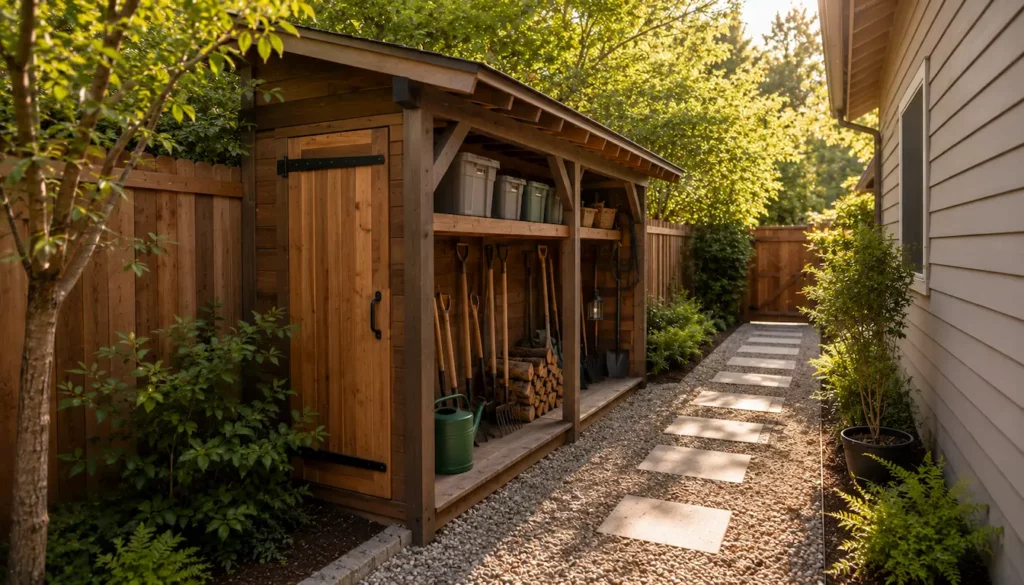
📍 Best Places to Build a Lean-To Shed
Lean-to sheds work best where traditional sheds won’t fit.
- Along fence lines
- Against garage or house walls (where permitted)
- In narrow side yards
- Behind patios or garden beds
💡 Tip: Always check local setback and building requirements before construction.
📏 Popular Lean-To Shed Sizes
The right size depends on what you need to store and how much space you have available.
- 3×6 – Hand tools, hoses, and small equipment
- 4×8 – Shelving, long-handled tools, and garden supplies
- 5×10 – Larger storage needs without blocking walkways
💡 Tip: Depth is often more important than width when planning a lean-to shed.
🌧️ Roof Slope & Drainage Considerations
A properly designed roof helps protect both the shed and nearby structures.
- Slope the roof away from buildings
- Install flashing when attaching near structures
- Direct runoff away from foundations
- Match roof pitch to local weather conditions
💡 Tip: Good drainage is one of the easiest ways to prevent rot, mold, and water damage.
👉 Proper Drainage Protects Your Shed
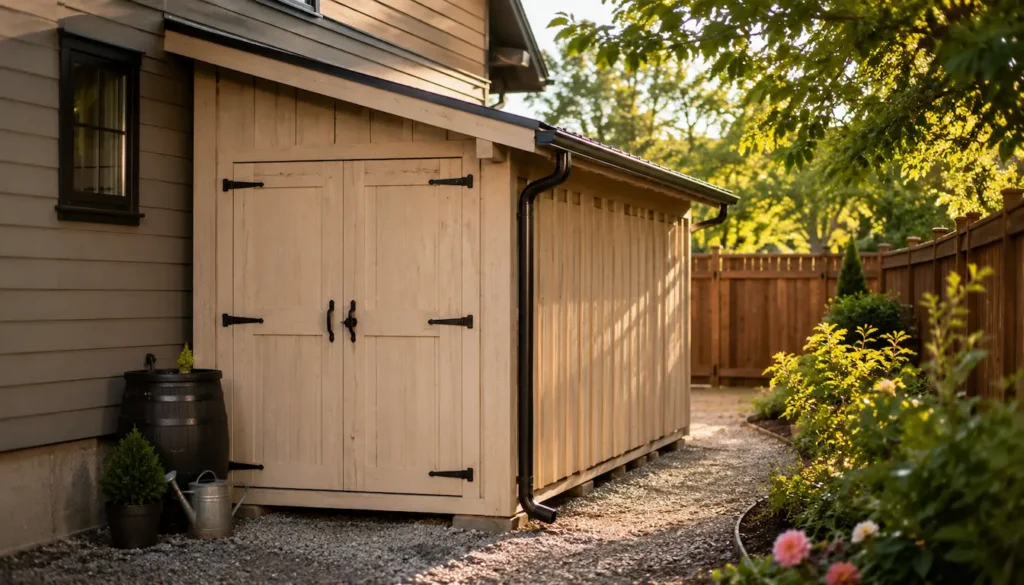
🏗️ Foundations That Work for Lean-To Sheds
A solid foundation helps prevent settling, moisture problems, and door alignment issues.
- Concrete pavers for level support
- Gravel bases for excellent drainage
- Pressure-treated skids for portability
💡 Tip: Even small lean-to sheds need a stable foundation to stay square and functional.
🪵 Materials for Long-Term Durability
Choosing weather-resistant materials helps your shed last for years with less maintenance.
- Pressure-treated base lumber
- Exterior-rated sheathing
- Durable siding materials
- Metal or asphalt roofing
💡 Tip: Seal exposed edges and joints since lean-to sheds often experience increased runoff exposure.
⚠️ Common Lean-To Shed Mistakes
A few planning mistakes can reduce storage space and create maintenance headaches later.
- Blocking walkways
- Poor drainage planning
- Roof slopes that are too shallow
- Poor door placement
- Ignoring ventilation and airflow
💡 Tip: Smart placement and proper drainage are often the difference between a shed that works and one that becomes a problem.
👉 Built Right From the Ground Up
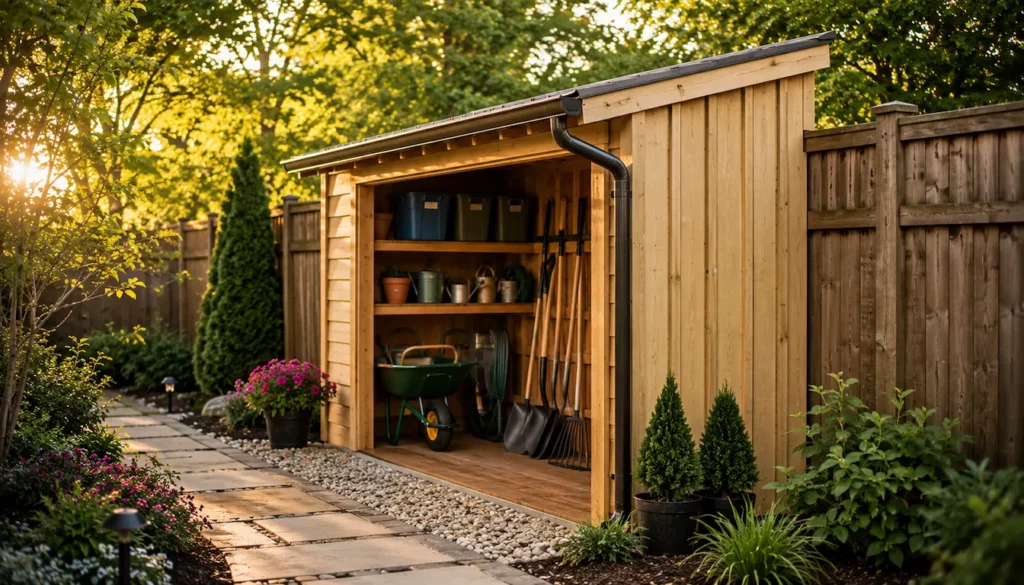
🤔 Is a Lean-To Shed Right for You?
A lean-to shed can be one of the smartest storage solutions for homeowners working with limited space.
A lean-to shed may be a great fit if you:
- Have a narrow side yard or unused space along a fence
- Want convenient storage close to your home
- Need easy access to frequently used tools and equipment
- Prefer a simpler, faster shed project
💡 Bottom Line: If space is limited but storage needs are growing, a lean-to shed offers an efficient way to stay organized without overwhelming your backyard.
If you’re still comparing overall shed sizes and styles before choosing a specific build,
our small storage shed plans provide a broad starting point for compact garden storage.
🏁 Final Thoughts…
Lean-to sheds are one of the most practical storage solutions for homeowners with limited outdoor space.
Whether you’re working with a narrow side yard, a fence line, or an unused corner of the backyard, a well-designed lean-to shed can provide valuable storage without taking over your landscape.
By choosing the right location, foundation, materials, and roof design, you can build a shed that stays functional, durable, and easy to access for years to come.
The best lean-to shed isn’t necessarily the biggest one — it’s the one that makes the most of the space you already have.
 Helpful Guides for Small Spaces
If you’re ready to take the next step, these guides will help you avoid common mistakes, choose the right tools, and get more from your growing space.
-
Common Small Greenhouse Mistakes to Avoid
Learn which sizing, layout, and airflow mistakes cause the most frustration for new growers—and how to avoid them early. -
Essential Gardening Tools for Small Spaces
A practical breakdown of tools that make daily greenhouse tasks easier, cleaner, and more efficient in compact environments. -
Small Greenhouse Setup Guide
Step-by-step guidance on positioning, airflow planning, and layout decisions that set your greenhouse up for long-term success.
 Make the Most of Your Space
You don’t need a large backyard to enjoy gardening.
With the right setup, a little planning, and a willingness to learn, even the smallest balcony, patio, or corner can become a productive growing space.