
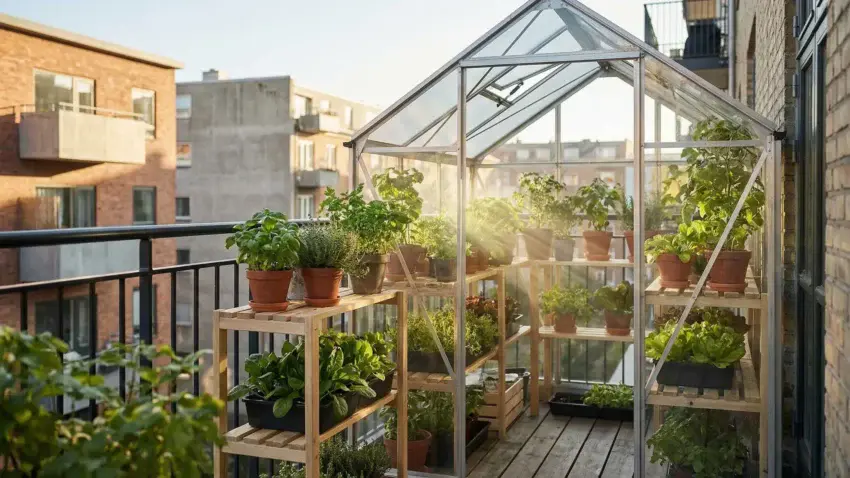
Sunlight is one of the most important factors for
growing healthy plants in a balcony greenhouse.
The amount of light your balcony receives can affect plant growth,
temperature inside the greenhouse, and the types of plants that thrive.
Understanding how much sunlight your greenhouse needs helps you position it correctly
and create the best growing environment for herbs, vegetables, and seedlings.
👉 Before setting up your greenhouse location,
it helps to understand what features actually matter in a balcony greenhouse.
Why Sunlight Matters In A Balcony Greenhouse
Plants rely on sunlight for photosynthesis,
which fuels healthy growth and strong root development.
In a small balcony greenhouse, sunlight also affects the internal temperature of the structure.
Too little light can slow plant growth,
while too much direct sunlight can cause overheating.
Finding the right balance helps create a stable environment
for your plants throughout the growing season.
Balcony orientation and surrounding buildings also play a major role in
how much sunlight your greenhouse receives each day.
How Much Sunlight Different Plants Need
Different plants require different levels of sunlight to grow properly.
Understanding these needs helps you choose plants that match the conditions on your balcony.
Sunlight Requirements For Common Greenhouse Plants
| Sunlight Level | Hours Per Day | Plants That Thrive |
|---|---|---|
| Full Sun | 6–8 hours | Tomatoes, peppers, cucumbers |
| Partial Sun | 4–6 hours | Lettuce, spinach, herbs |
| Low Sun | 2–4 hours | Microgreens, leafy greens |
Matching your plant selection to your balcony’s sunlight conditions
makes greenhouse gardening much easier and more productive.
Best Balcony Locations For Sunlight
The direction your balcony faces greatly affects how much sunlight your greenhouse receives.
- South-facing balconies usually receive the most sunlight
and are ideal for growing vegetables and fruiting plants. - East-facing balconies get strong morning sunlight
and are great for herbs and leafy greens. - West-facing balconies receive intense afternoon sun,
which can sometimes cause greenhouse temperatures to rise quickly. - North-facing balconies tend to receive the least sunlight
and may benefit from reflective surfaces or grow lights.
Understanding your balcony’s orientation helps you position your greenhouse
for maximum light exposure.
Managing Too Much Sunlight
While sunlight is essential for plant growth,
too much direct sun can cause a greenhouse to overheat.
This is especially common on small balconies where airflow may be limited.
Ventilation, shade cloth, and careful plant placement can help control temperatures
inside the greenhouse during hot weather.
Keeping an eye on internal temperature ensures your plants stay healthy
even on bright summer days.
Final Thoughts…
Sunlight plays a critical role in the success of any balcony greenhouse.
By understanding how much light your balcony receives
and selecting plants that match those conditions,
you can create a productive growing space even in small urban environments.
 Plan it. Grow it. Enjoy it!
 Helpful Resources for Small Greenhouse Success
Growing successfully in a small greenhouse isn’t just about choosing the right size.
Setup, airflow, and smart maintenance decisions all play a role in long-term results.
If you’re continuing your greenhouse journey, these guides will help:
-
Common Small Greenhouse Mistakes to Avoid
Learn which sizing, layout, and ventilation errors cause the most frustration —
and how to prevent them early. -
Essential Gardening Tools for Small Spaces
A practical breakdown of tools that make daily greenhouse tasks easier
and more efficient. -
Small Greenhouse Setup Guide
Step-by-step positioning, airflow planning,
and layout strategies for long-term success.
 Turn Your Gardening Knowledge Into a Simple Online Income
Curious how this site was built?
 Click here to learn more about Wealthy Affiliate.
SmallGardenBox.com started as a simple small-space gardening project.
It grew once I learned how to structure content properly and build a real website around it.
If you’ve ever considered sharing your gardening knowledge, greenhouse experience,
or small-space growing tips online, Wealthy Affiliate is the training platform I personally used
and still recommend.
It walks you through building a website, creating helpful content,
and turning your knowledge into a long-term online asset.
