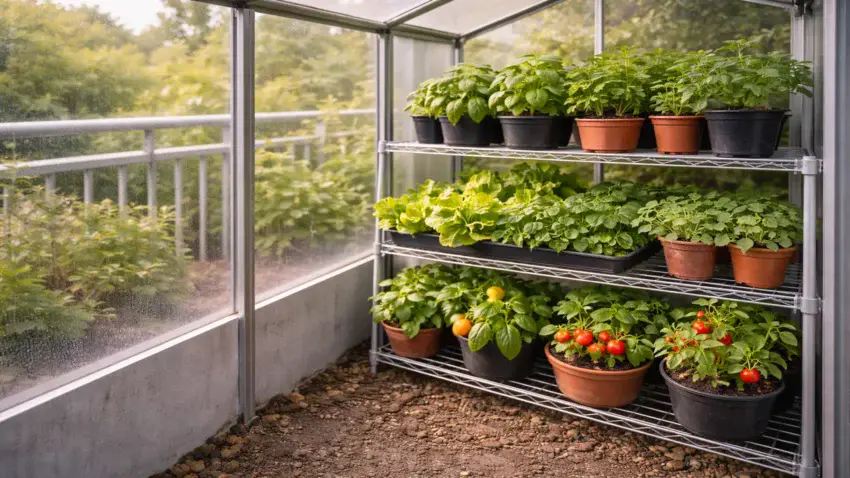
One of the biggest misconceptions about small and balcony greenhouses is that they work like miniature backyard greenhouses.
They don’t.
Success in compact spaces isn’t about trying to grow everything — it’s about growing the right plants, in the right quantities, under realistic conditions.
When expectations match the space, small greenhouses become productive, efficient, and surprisingly rewarding.
Some plants thrive in containers and protected environments, while others struggle without more room, deeper soil, or stronger sunlight.
Understanding those differences is the key to getting better results and avoiding frustration.
In this guide, we’ll look at what actually grows well in small and balcony greenhouses, which plants need more space, and how to choose crops that fit your growing conditions and the changing seasons.
🌡️ Why Small Greenhouses Behave Differently
Small greenhouses respond much faster to environmental changes than larger structures.
Temperature, humidity, and airflow can shift quickly — sometimes within minutes.
This creates two important realities:
- 🌡️ Plants experience bigger temperature swings
- 💨 Limited space affects light and airflow more than soil quality
Plants that tolerate fluctuations, stay compact, or mature quickly tend to thrive in these environments.
On the other hand, crops that need stable temperatures, deep root zones, or heavy airflow often struggle in confined spaces.
That’s why choosing the right plants matters more in a small greenhouse than in a traditional backyard garden.
Understanding how compact greenhouses behave makes it much easier to select crops, avoid common problems, and enjoy more consistent results throughout the year.
🌿 Understanding Compact Greenhouse Growing
🥬 Plants That Thrive in Small & Balcony Greenhouses
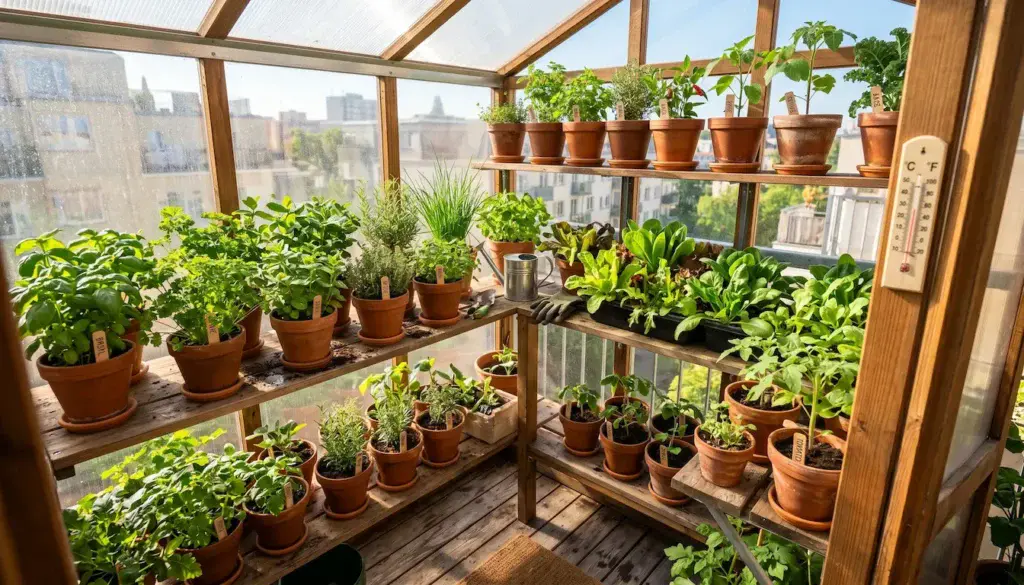
Some crops naturally perform better in compact greenhouses than others.
Plants that mature quickly, tolerate moderate humidity, and don’t require deep root systems are usually the most rewarding.
🥬 Leafy Greens (Top Performers)
Leafy greens are among the most reliable crops for small spaces.
Great choices:
- Lettuce (leaf, butterhead, romaine)
- Spinach
- Arugula
- Asian greens (bok choy, mizuna, tatsoi)
- Dwarf kale varieties
Why they work well:
- 🌱 Shallow roots
- ⚡ Fast growth cycles
- ❄️ Tolerate cooler temperatures
- ✂️ Harvestable in stages
These crops handle limited space and moderate humidity exceptionally well.
🌿 Herbs (Reliable and Compact)
Most culinary herbs adapt beautifully to small greenhouse environments.
Great choices:
- Basil
- Parsley
- Cilantro
- Chives
- Thyme
- Oregano
- Mint (best kept in containers)
Why they work well:
- 🌿 Compact growth habits
- ✂️ Frequent harvesting encourages new growth
- ☀️ Adapt to containers
- 🌡️ Tolerate changing conditions
Herbs provide fresh flavor while taking up very little room.
🍅 Compact Fruiting Plants
Not all fruiting plants need a large greenhouse.
Good options:
- Cherry tomatoes
- Mini peppers
- Strawberries
- Patio cucumbers
- Dwarf beans
Things to watch:
- ☀️ Need plenty of sunlight
- 💧 Require consistent watering
- 🌬️ Benefit from good airflow
- 🪴 Need support or cages
Choosing smaller varieties helps prevent overcrowding and makes maintenance easier.
🌿 Best Crops for Small Greenhouses
🌿 Herbs (Reliable and Compact)
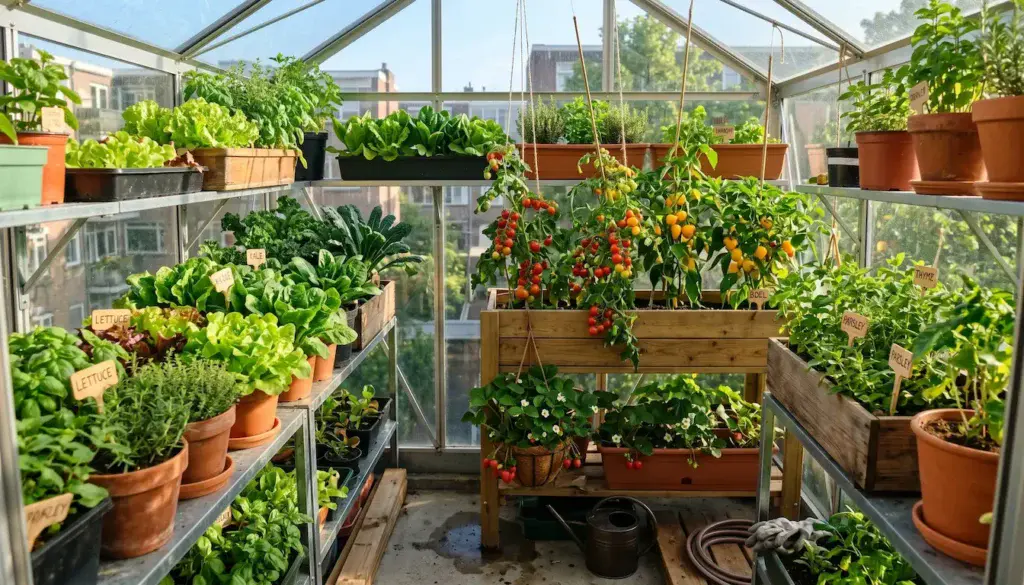
Most culinary herbs adapt exceptionally well to small greenhouse environments and thrive in containers.
Great choices:
- Basil
- Parsley
- Cilantro
- Chives
- Thyme
- Oregano
Things to watch:
- 🌡️ Basil prefers warmth and good airflow
- 💧 Woody herbs need excellent drainage
- ✂️ Overcrowding reduces flavor and growth
Herbs are often most productive when rotated seasonally or grown in small batches rather than left in permanent containers.
🍅 Compact Fruiting Plants (With Limits)
Fruiting plants can grow successfully in small greenhouses — but scale matters.
Good options:
- Cherry tomatoes (patio or dwarf varieties)
- Compact peppers
- Strawberries
- Mini cucumbers trained vertically
What to expect:
- 🍅 Smaller harvests than outdoor gardens
- ⏳ Shorter production windows
- 🌡️ Greater sensitivity to heat buildup
One or two healthy, well-managed plants will usually outperform a crowded greenhouse full of stressed plants.
🌱 Seedlings & Transplants (Best Use of Space)
Small greenhouses excel at starting plants — even if those plants eventually move outdoors.
Ideal seedlings include:
- Tomatoes
- Peppers
- Broccoli and other brassicas
- Herbs
- Flowers
Why this works:
- 🌱 Makes efficient use of limited space
- ☀️ Gives plants a strong start
- 📅 Extends the growing season
- 🪴 Frees up room later in the year
Many gardeners get more value from using a small greenhouse as a seed-starting station than as a permanent home for mature plants.
🚫 Plants That Need More Space
Not every crop is a good fit for compact greenhouses. Some plants quickly outgrow their surroundings or require conditions that are difficult to maintain in small spaces.
Plants that often struggle:
- Large indeterminate tomatoes
- Pumpkins
- Watermelons
- Corn
- Squash vines
- Full-size cucumbers
Common problems:
- 🌿 Excessive crowding
- 💨 Poor airflow
- ☀️ Uneven light exposure
- 🌡️ Heat buildup
- 🍄 Increased disease pressure
Choosing crops that match your available space usually leads to healthier plants, fewer problems, and much better harvests.
👉 Need help fitting herbs, vegetables, and seedlings into a compact growing area?
Our guide to Small Balcony Greenhouse Layout Ideas shows how to maximize sunlight, improve airflow, and make the most of every square foot.
🌿 Making the Most of Limited Space
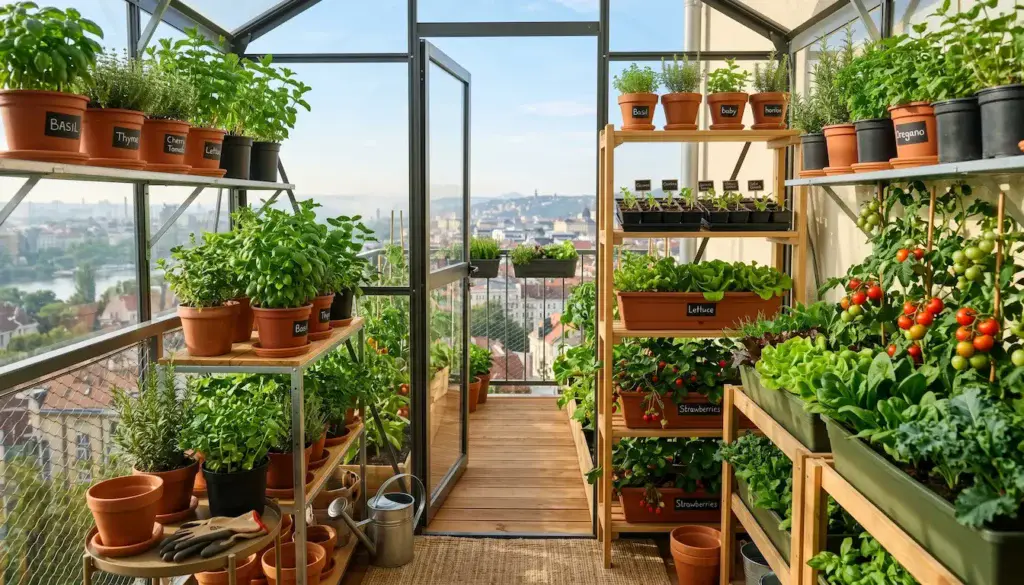
🌸 Flowers That Grow Well Under Cover
Flowers aren’t just decorative — they can attract pollinators, discourage pests, and add color to small greenhouse spaces.
Many compact varieties thrive in containers and adapt well to the stable conditions inside mini greenhouses.
Great choices:
- 🌼 Marigolds
- 🌸 Petunias
- 🌺 Nasturtiums
- 🌷 Pansies
- 🌹 Snapdragons
Why they work well:
- Add color throughout the season
- Attract beneficial insects
- Support companion planting
- Adapt well to containers
A few flowering plants can make a small greenhouse more productive and much more enjoyable to spend time in.
📅 Seasonal Growing Ideas
One of the biggest advantages of small greenhouses is flexibility.
Because crops mature quickly and space is limited, it’s easy to rotate plants throughout the year and keep something productive growing in every season.
🌷 Spring Favorites
Spring is perfect for cool-season crops and getting a head start on summer.
Good choices:
- Lettuce
- Spinach
- Radishes
- Herbs
- Pansies
☀️ Summer Choices
Warm weather opens the door for heat-loving plants.
Popular options:
- Basil
- Peppers
- Cherry tomatoes
- Cucumbers
- Marigolds
🍂 Fall Crops
As temperatures begin to cool, many leafy greens bounce back and perform beautifully.
Great fall selections:
- Kale
- Arugula
- Asian greens
- Parsley
- Snapdragons
❄️ Winter Possibilities
Even during colder months, small greenhouses can remain productive with the right crops and protection.
Cold-tolerant favorites:
- Garlic
- Chives
- Spinach
- Winter lettuce
- Pansies (with protection)
👉 By changing crops with the seasons, small greenhouses can remain productive year-round without becoming overcrowded.
🌿 Growing Through the Seasons
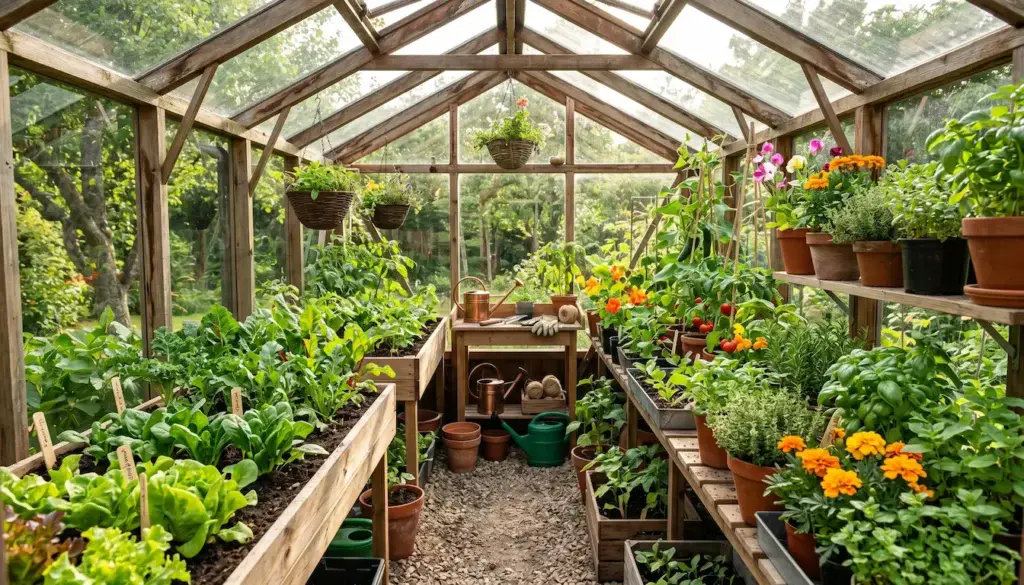
⚠️ Common Mistakes When Choosing Plants
Growing in a small greenhouse isn’t just about what you plant — it’s also about avoiding the common mistakes that lead to overcrowding, disease, and disappointment.
🚫 Growing Oversized Crops
Large indeterminate tomatoes, pumpkins, and sprawling squash vines can quickly outgrow compact spaces and overwhelm smaller plants.
🚫 Overcrowding Containers
Packing too many plants together reduces airflow, increases humidity, and creates ideal conditions for pests and disease.
🚫 Ignoring Light Requirements
Sun-loving vegetables struggle in shady locations, while cool-season crops often suffer in excessive summer heat.
🚫 Forgetting Crop Rotation
Growing the same crops continuously in the same containers can lead to nutrient depletion and increased pest pressure.
🚫 Expecting Everything to Produce Year-Round
Small greenhouses extend the season, but they don’t eliminate it. Different crops perform best at different times of the year.
🚫 Neglecting Airflow
Stagnant air encourages mildew, mold, and pest problems. Proper spacing and ventilation are just as important as watering.
👉 A few simple adjustments can prevent most growing problems before they start.
🌿 Keeping Plants Healthy in Small Spaces
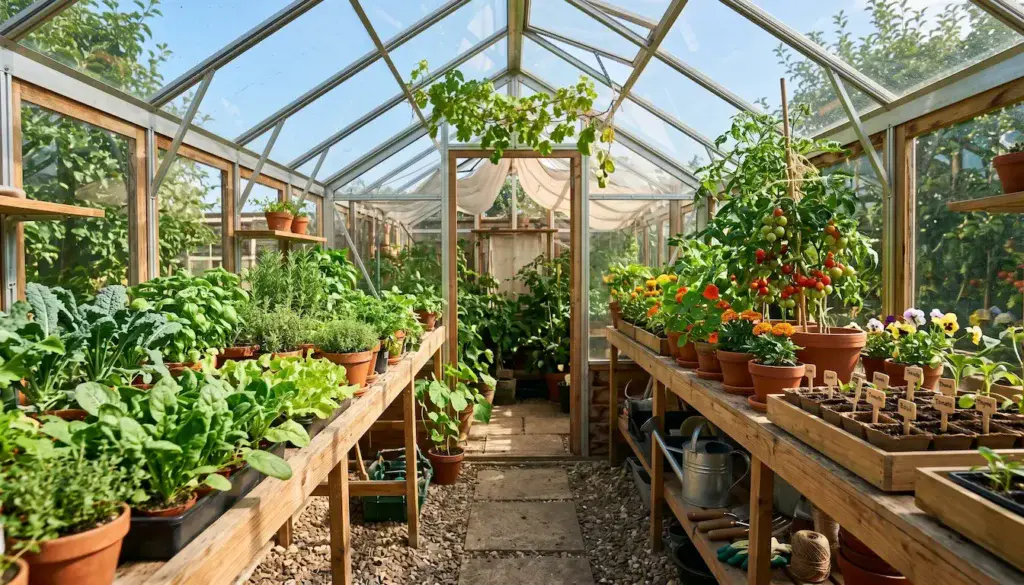
👉 To see which plants actually thrive in a balcony greenhouse —
and how growing options change with space and season —
this guide to what you can grow in a balcony greenhouse breaks it all down.
🏁 Final Thoughts…
Small and balcony greenhouses may be compact, but they’re capable of producing far more than most gardeners expect.
By choosing plants that fit your space and rotating crops with the seasons, you can enjoy fresh harvests and colorful blooms throughout the year.
You don’t need a huge greenhouse to be successful. Start with a few reliable crops, learn what works best in your environment, and let your greenhouse evolve with the seasons.
 Continue Your Greenhouse Journey
If you’re ready to take the next step, these guides will help you avoid common mistakes, choose the right tools, and get more from your growing space.
-
Common Small Greenhouse Mistakes to Avoid
Learn which sizing, layout, and airflow mistakes cause the most frustration for new growers—and how to avoid them early. -
Essential Gardening Tools for Small Spaces
A practical breakdown of tools that make daily greenhouse tasks easier, cleaner, and more efficient in compact environments. -
Small Greenhouse Setup Guide
Step-by-step guidance on positioning, airflow planning, and layout decisions that set your greenhouse up for long-term success.
 Turn Small Spaces Into Living Spaces
You don’t need a large backyard to enjoy gardening.
With the right setup, a little planning, and a willingness to learn, even the smallest balcony, patio, or corner can become a productive growing space.
 Plan it. Grow it. Enjoy it!