One of the biggest misconceptions about small and balcony greenhouses is that they work
like scaled-down backyard greenhouses.
They don’t.
In compact spaces, success isn’t about growing everything —
it’s about growing the right plants, in the right quantities, under realistic conditions.
When expectations match the space, small greenhouses become productive,
flexible growing environments instead of overcrowded experiments.
This guide breaks down what actually grows well in small and balcony greenhouses,
why some plants struggle, and how to choose crops that fit your space and season.
Why Small Greenhouses Behave Differently
Small greenhouses respond faster to environmental changes than large structures.
Temperature, humidity, and airflow shift quickly — sometimes within minutes.
This creates two important realities:
-
Plants experience more extreme swings
-
Space limitations affect light and airflow more than soil quality
Plants that tolerate fluctuation, grow compactly, or mature quickly tend to thrive.
Plants that need stable temperatures, deep root zones, or heavy airflow often struggle.
Understanding this difference makes plant selection much easier.
Plants That Thrive in Small & Balcony Greenhouses
Leafy Greens (Top Performers)
Leafy greens are some of the most reliable greenhouse crops for tight spaces.
Best options include:
-
Lettuce (leaf, butterhead, romaine)
-
Spinach
-
Arugula
-
Asian greens (bok choy, mizuna, tatsoi)
-
Kale (dwarf varieties)
Why they work well:
-
Shallow roots
-
Fast growth cycles
-
Tolerant of cooler temperatures
-
Harvestable in stages
These crops handle limited space and moderate humidity exceptionally well.
Herbs (Reliable and Compact)
Most culinary herbs adapt well to small greenhouse environments.
Best choices:
-
Basil
-
Parsley
-
Cilantro
-
Chives
-
Thyme
-
Oregano
Things to watch:
-
Basil prefers warmth and airflow
-
Woody herbs need good drainage
-
Overcrowding reduces flavor and growth
Herbs work especially well when rotated seasonally or
grown in small batches rather than permanent plantings.
Compact Fruiting Plants (With Limits)
Fruiting plants can grow in small greenhouses — but scale matters.
Good options:
-
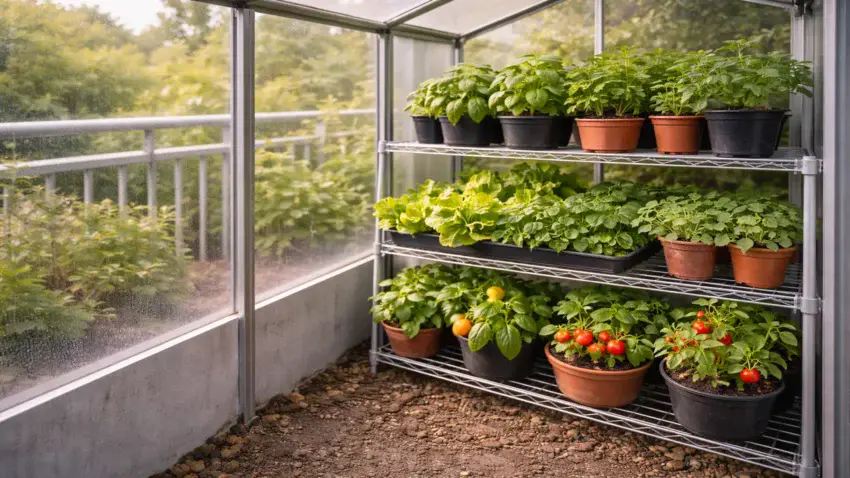
Cherry tomatoes (dwarf or patio varieties)
-
Peppers (compact types)
-
Strawberries
-
Mini cucumbers (trained vertically)
What to expect:
-
Fewer fruits than outdoor gardens
-
Shorter harvest windows
-
Higher sensitivity to heat buildup
One or two well-managed plants outperform many stressed ones.
Seedlings & Transplants (Best Use of Space)
Small greenhouses excel at starting plants, even if they’re later moved outside.
Ideal seedlings include:
-
Tomatoes
-
Peppers
-
Brassicas
-
Herbs
-
Flowers
This approach maximizes value without committing long-term space to large plants.
Plants That Often Struggle
Some plants sound appealing but create frustration in tight greenhouse setups.
Large or Sprawling Crops
-
Full-size tomatoes
-
Squash
-
Pumpkins
-
Indeterminate vines
These quickly overwhelm airflow and light access.
Long-Season Crops
-
Corn
-
Large melons
-
Eggplant (non-compact varieties)
They require consistent conditions that are difficult to maintain in small structures.
High-Humidity Sensitive Plants
-
Some flowering plants
-
Plants prone to fungal disease
Without excellent airflow, these crops can fail even when temperatures are right.
Matching Plants to the Season
Small greenhouses shine when used seasonally, not year-round with the same crops.
Cool Seasons (Early Spring / Fall)
-
Leafy greens
-
Herbs
-
Brassica seedlings
Warm Seasons (Late Spring / Summer)
-
Compact tomatoes
-
Peppers
-
Basil
-
Strawberries
Rotating crops with the season keeps conditions manageable and plants healthier.
How Many Plants Is Too Many?
Overcrowding is the fastest way to kill productivity.
A good rule of thumb:
-
Prioritize airflow over volume
-
Leave visible space between plants
-
Avoid stacking mature plants vertically
If leaves touch constantly, airflow is already compromised.
Choosing Plants Based on Your Greenhouse Type
Not all small greenhouses behave the same.
-
Shelf greenhouses: Best for greens, herbs, seedlings
-
Walk-in mini greenhouses: Allow limited fruiting plants
-
Lean-to or wall-mounted: Benefit from shared warmth but need airflow planning
-
Portable pop-up styles: Best for short-term use and early season growing
Matching plants to structure matters just as much as plant type.
To see which plants actually thrive in a balcony greenhouse —
and how growing options change with space and season —
this guide to what you can grow in a balcony greenhouse breaks it all down.
Final Thoughts…
Small and balcony greenhouses aren’t about growing everything —
they’re about growing what makes sense.
When plant choices align with space, airflow, and season, even the smallest greenhouse becomes productive and enjoyable. Focus on compact crops, rotate with the seasons, and resist overcrowding,
and your greenhouse will consistently outperform expectations.
 Plan it. Grow it. Enjoy it!
 Helpful Resources for Small Greenhouse Success
Planning and maintaining a small greenhouse goes far beyond choosing the right size or layout. Understanding common pitfalls, having the right tools on hand, and setting things up correctly from the start can make a noticeable difference in both plant health and long-term enjoyment.
If you’re continuing your small greenhouse journey,
these guides will help you move forward with confidence:
-
Common Small Greenhouse Mistakes to Avoid
Learn which sizing, layout, and airflow mistakes cause the most frustration for new growers —
and how to avoid them early. -
Essential Gardening Tools for Small Spaces
A practical breakdown of tools that make daily greenhouse tasks easier, cleaner,
and more efficient in compact environments. -
Small Greenhouse Setup Guide
Step-by-step guidance on positioning, airflow planning, and layout decisions that set your greenhouse up for long-term success.
 Turn Your Gardening Knowledge Into a Simple Online Income
Curious how this site was built?
 Click here to learn more about Wealthy Affiliate.
SmallGardenBox.com started as a simple project built around small-space gardening ideas and greenhouse setups — and it only grew once I learned how to properly build and structure a real website.
If you’ve ever thought about sharing your gardening knowledge, greenhouse experience, or small-space growing tips online, the training at Wealthy Affiliate is what I personally used and recommend.
It walks you through building a website, creating helpful content,
and turning that knowledge into a long-term online asset.
