
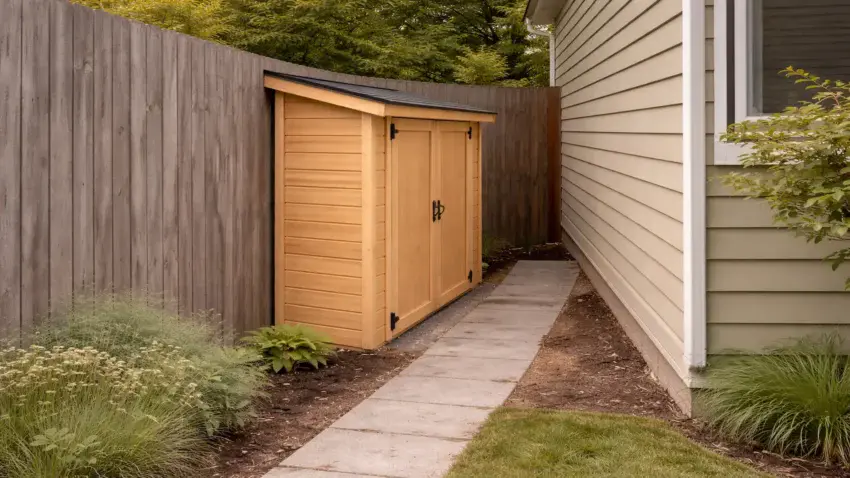
When you’ve got usable length but almost no width,
narrow lean-to shed plans for side yards are often the only practical solution.
These sheds are designed to tuck into slim gaps between homes, fences,
and property lines without blocking access or overwhelming the space.
Instead of fighting the limitations of a side yard, these plans work with them —
prioritizing shallow depth, clean roof slopes, and efficient storage layouts.
This guide is part of my lean-to shed plans collection,
where I focus on space-saving builds designed specifically for side yards and fence lines.
Why Side Yards Need Narrow Shed Designs
Side yards come with hard limits.
Common constraints include:
-
Limited depth between structures
-
Walkway clearance requirements
-
Fence or wall boundaries
-
Drainage and runoff considerations
Narrow lean-to sheds are built to respect these limits while still providing useful storage.
Typical Depths for Narrow Lean-To Sheds
Depth is the defining dimension for side-yard sheds.
Most narrow lean-to plans fall into these ranges:
-
3–4 feet deep – Ultra-tight side yards
-
4–5 feet deep – Most common narrow build
-
5–6 feet deep – Usable storage without crowding
Shallower sheds reduce roof pitch issues and make attachment simpler.
What These Narrow Sheds Are Best Used For
Because of their depth, narrow lean-to sheds work best for:
-
Long-handled tools
-
Folding ladders
-
Garden supplies and bins
-
Hose storage and accessories
-
Seasonal outdoor items
They’re not designed for large equipment—but they excel at vertical storage.
Roof Design Matters More in Narrow Builds
Roof slope is critical when depth is limited.
Good narrow lean-to plans include:
-
Steeper single-slope roofs
-
Clear water runoff paths
-
Proper flashing at attachment points
-
Adequate clearance at the low edge
Poor roof design is the #1 failure point in narrow sheds.
Door Placement in Side-Yard Lean-To Sheds
Access needs careful planning.
Effective designs use:
-
Doors placed along the long side
-
Sliding or narrow swing doors
-
Door positions that don’t block walkways
Door placement often matters more than shed length.
Foundations That Work in Tight Spaces
Narrow lean-to sheds usually rely on:
-
Skids aligned with the structure
-
Concrete blocks placed close to fences
-
Gravel bases with minimal excavation
Simple foundations reduce disruption in tight areas.
Who These Shed Plans Are Best For
Narrow lean-to shed plans for side yards are ideal if you:
-
Have limited width but usable length
-
Need storage without blocking access
-
Want a shed that visually disappears
-
Prefer practical over decorative builds
They’re some of the most efficient sheds you can build.
Where This Fits in the Lean-To Shed Lineup
This is the footprint-focused branch of lean-to sheds.
It builds on attached designs and sets the stage for:
-
Beginner-friendly lean-to builds
-
Budget-conscious lean-to sheds
—all covered in the remaining lean-to section.
What’s Next
If you’re new to lean-to construction and want a design that’s forgiving and easy to build,
the next step is focusing on beginner-friendly lean-to shed plans.
Continue to my lean-to shed plans guide to explore space-saving builds designed
for side yards and fence lines.
 Plan it. Grow it. Enjoy it!
 Helpful Resources for Small Greenhouse Success
Planning and maintaining a small greenhouse goes far beyond choosing the right size or layout.
Understanding common pitfalls, having the right tools on hand,
and setting things up correctly from the start can make a
noticeable difference in both plant health and long-term enjoyment.
If you’re continuing your small greenhouse journey,
these guides will help you move forward with confidence:
-
Common Small Greenhouse Mistakes to Avoid
Learn which sizing, layout, and airflow mistakes cause the most frustration for new growers — and how to avoid them early. -
Essential Gardening Tools for Small Spaces
A practical breakdown of tools that make daily greenhouse tasks easier, cleaner, and more efficient in compact environments. -
Small Greenhouse Setup Guide
Step-by-step guidance on positioning, airflow planning, and layout decisions that set your greenhouse up for long-term success.
 Turn Your Gardening Knowledge Into a Simple Online Income
Curious how this site was built?
 Click here to learn more about Wealthy Affiliate.
SmallGardenBox.com started as a simple project built around small-space gardening ideas and greenhouse setups —
and it only grew once I learned how to properly build and structure a real website.
If you’ve ever thought about sharing your gardening knowledge, greenhouse experience, or small-space growing tips online,
the training at Wealthy Affiliate is what I personally used and recommend.
It walks you through building a website, creating helpful content,
and turning that knowledge into a long-term online asset.
