
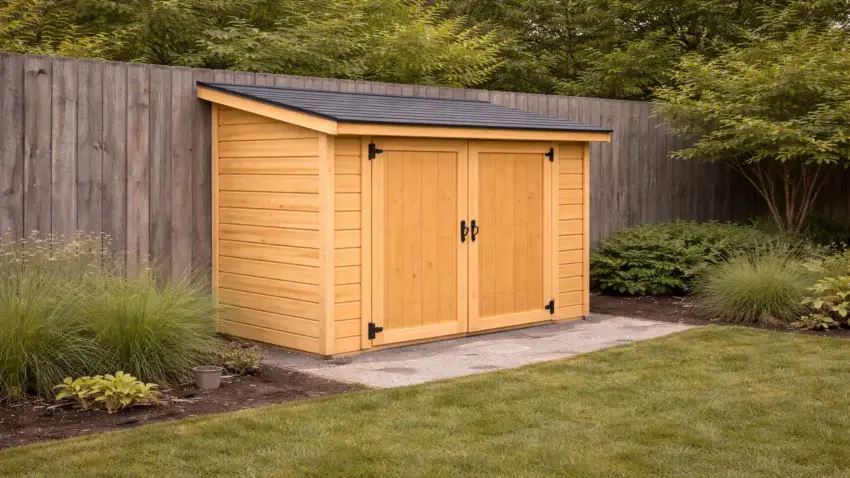
Not all sheds are meant to stand alone.
Lean-to shed plans attached to a fence or wall are designed to share support
with an existing structure, making them one of the most space-efficient shed options available.
These plans are ideal for side yards, narrow gaps,
and fence lines where a freestanding shed simply won’t fit.
By tying into an existing wall or fence, lean-to sheds reduce material needs
while maximizing usable storage space.
This guide is part of my lean-to shed plans collection,
where I focus on space-saving builds designed specifically for side yards and fence lines.
What Makes a Shed a “True” Lean-To?
A true lean-to shed is physically supported by another structure.
Key characteristics include:
-
One wall shared with a fence, house, or existing structure
-
A single-slope roof that slopes away from the attachment point
-
Ledger boards or framing connected to the supporting surface
-
A narrower footprint than freestanding sheds
If a shed is fully freestanding, it’s not a lean-to—no matter how narrow it looks.
Why Attach to a Fence or Wall?
Attachment changes how the shed functions.
Lean-to sheds:
-
Use less lumber than freestanding builds
-
Fit into spaces that would otherwise go unused
-
Create clean, intentional storage zones
-
Keep the yard more open and usable
For tight outdoor layouts, attachment is often the only practical solution.
Common Locations for Attached Lean-To Sheds
These sheds work best in:
-
Side yards between homes and fences
-
Along solid privacy fences
-
Against garage or house exterior walls
-
Boundary edges of small yards
Plans designed for attachment account for clearance, slope, and water runoff from the start.
Structural Considerations You Can’t Ignore
Because lean-to sheds rely on another structure, proper framing matters.
Good plans include:
-
Secure ledger attachment methods
-
Clear roof slope calculations
-
Proper flashing or water diversion
-
Adequate spacing for airflow
Skipping these details leads to moisture issues later.
Size and Depth That Work Best for Lean-To Sheds
Lean-to sheds favor depth over width control.
Common dimensions include:
-
4–5 ft deep for narrow side yards
-
6–8 ft deep for more usable storage
-
Length adjusted to fence or wall span
Keeping depth manageable prevents roof pitch issues.
Materials That Suit Attached Builds
Lean-to shed plans typically use:
-
Pressure-treated lumber at contact points
-
Standard framing lumber
-
Exterior-grade sheathing and siding
-
Simple roofing materials matched to slope
The focus is durability without overbuilding.
Who These Shed Plans Are Best For
Lean-to shed plans attached to a fence or wall are ideal if you:
-
Have limited yard width
-
Want storage without crowding the space
-
Prefer efficient, intentional designs
-
Need a shed that blends into existing structures
They’re one of the smartest options for small or awkward outdoor spaces.
Where This Fits in the Lean-To Shed Lineup
This is the foundation concept for lean-to sheds.
Once attachment is understood, you can explore:
-
Narrow lean-to builds
-
Beginner-friendly lean-to designs
-
Budget-focused lean-to sheds
—all covered within the broader lean-to shed section.
What’s Next
If you’re working with an especially narrow side yard, the next step is focusing
on lean-to shed designs built specifically for tight footprints.
Continue to my lean-to shed plans guide to explore space-saving builds
designed for side yards and fence lines.
 Plan it. Grow it. Enjoy it!
 Helpful Resources for Small Greenhouse Success
Planning and maintaining a small greenhouse goes far beyond choosing the right size or layout.
Understanding common pitfalls, having the right tools on hand,
and setting things up correctly from the start can make a
noticeable difference in both plant health and long-term enjoyment.
If you’re continuing your small greenhouse journey,
these guides will help you move forward with confidence:
-
Common Small Greenhouse Mistakes to Avoid
Learn which sizing, layout, and airflow mistakes cause the most frustration for new growers — and how to avoid them early. -
Essential Gardening Tools for Small Spaces
A practical breakdown of tools that make daily greenhouse tasks easier, cleaner, and more efficient in compact environments. -
Small Greenhouse Setup Guide
Step-by-step guidance on positioning, airflow planning, and layout decisions that set your greenhouse up for long-term success.
 Turn Your Gardening Knowledge Into a Simple Online Income
Curious how this site was built?
 Click here to learn more about Wealthy Affiliate.
SmallGardenBox.com started as a simple project built around small-space gardening ideas and greenhouse setups —
and it only grew once I learned how to properly build and structure a real website.
If you’ve ever thought about sharing your gardening knowledge, greenhouse experience, or small-space growing tips online,
the training at Wealthy Affiliate is what I personally used and recommend.
It walks you through building a website, creating helpful content,
and turning that knowledge into a long-term online asset.
