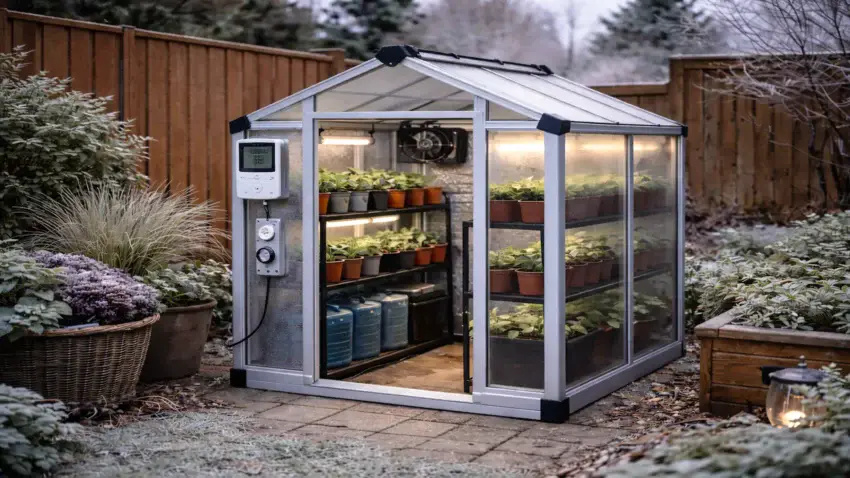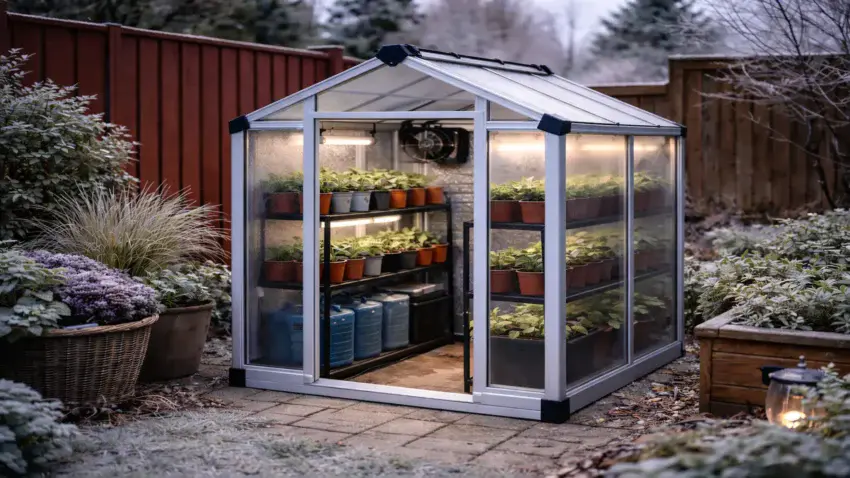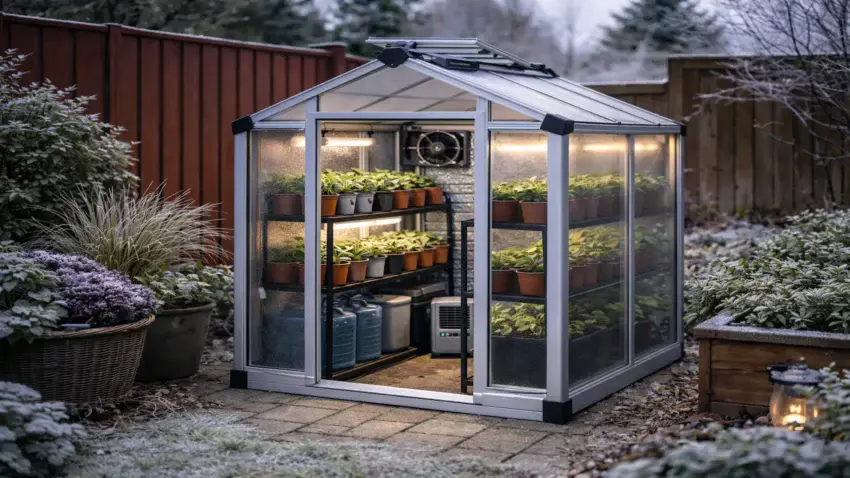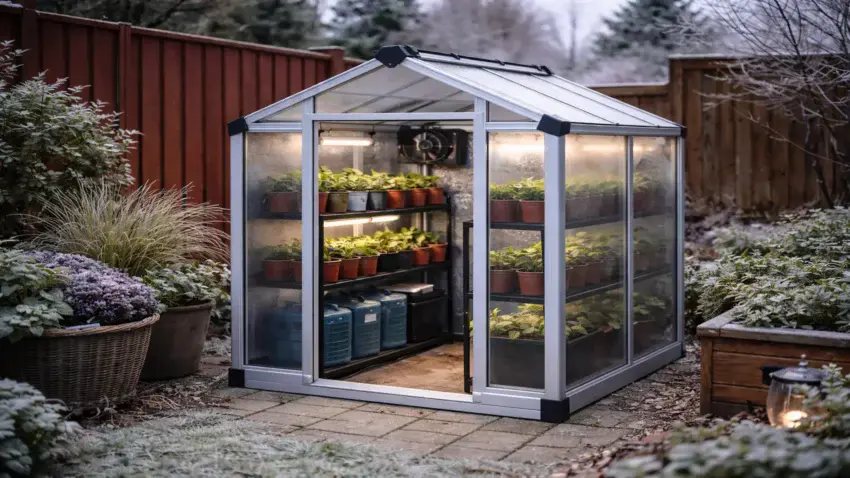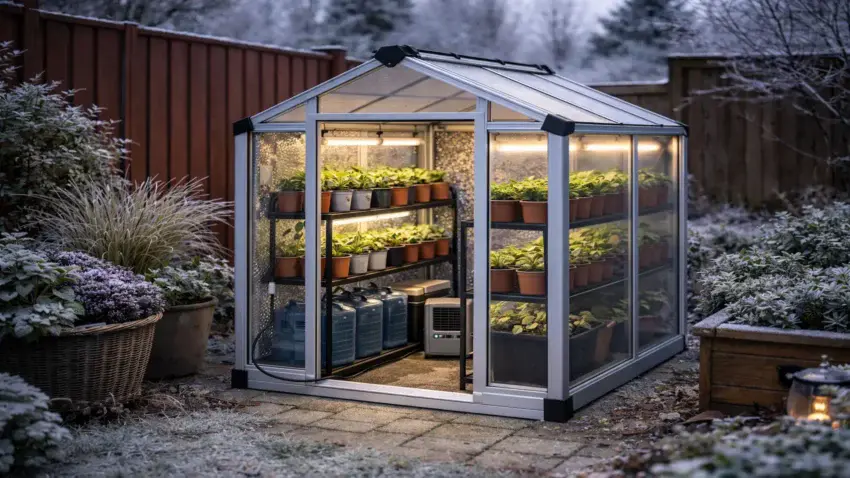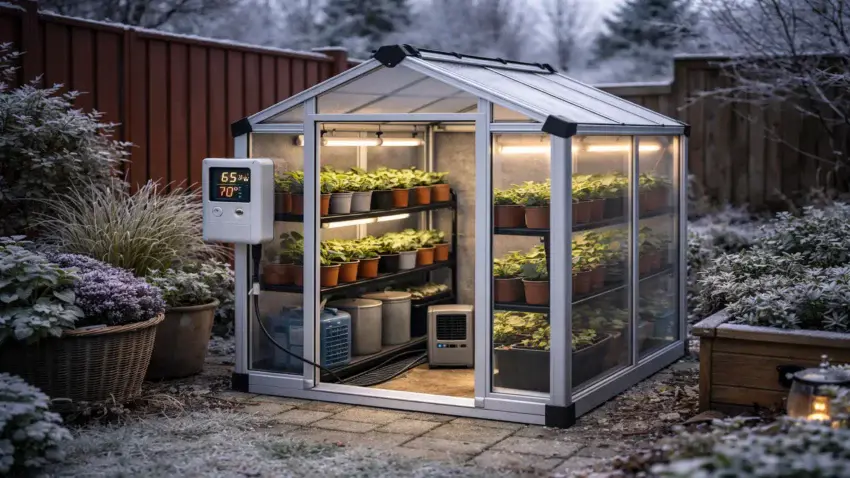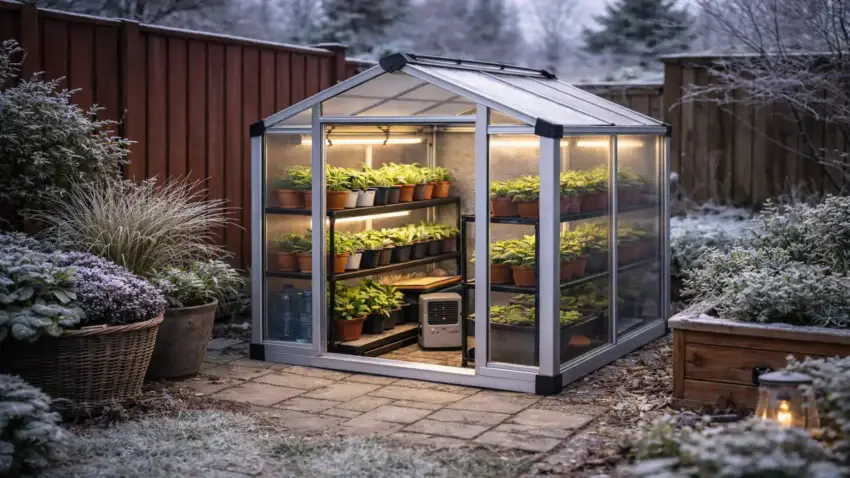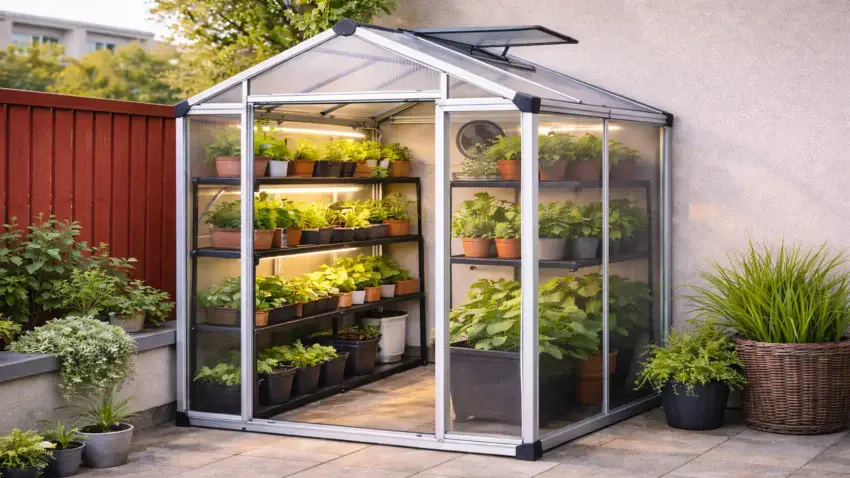
Lighting in a small greenhouse isn’t just about brightness — it’s about distribution, consistency, and duration. In compact spaces, light behaves differently than it does in large backyard or commercial greenhouses, and those differences directly affect plant growth. Limited footprint, nearby obstructions, and seasonal sun angles all have a much bigger impact when space is…
Author: Wayne
Ventilation Timing and Automation for Small Greenhouses
In small greenhouses, when air moves matters just as much as how it moves. Because temperature and humidity change quickly in compact spaces, poorly timed ventilation can undo otherwise good airflow design. Short bursts at the wrong time can dump heat. Long runs at the wrong moment can dry plants or stall growth. Timing is…
Airflow Direction and Fan Placement in Small Greenhouses
In small greenhouses, ventilation success isn’t just about having vents or fans — it’s about where air moves once it’s inside. Poor airflow direction creates dead zones, humidity pockets, and uneven temperatures even when ventilation equipment is present. This page supports our main guide, Greenhouse Ventilation & Airflow for Small Spaces, which explains how to…
Passive vs Active Ventilation in Small Greenhouses
Ventilation in small greenhouses usually falls into two categories: passive airflow and active airflow. Both can work — but they behave very differently in compact spaces, and choosing the wrong approach often creates more problems than it solves. This page supports our main guide, Greenhouse Ventilation & Airflow for Small Spaces, which explains how to…
Why Ventilation Works Differently in Small Greenhouses
Ventilation in a small greenhouse isn’t simply about opening a vent or adding a fan. In compact structures, air behaves differently, moisture builds faster, and small mistakes compound quickly. Because space is limited, airflow decisions in small greenhouses have a much bigger impact on plant health, temperature stability, and humidity control than they do in…
Insulation and Heat Retention for Small Greenhouses
Adding heat to a small greenhouse is only half the equation. In compact spaces, how well heat is retained often matters more than how much heat is produced. Poor insulation forces heaters to cycle constantly, while even modest insulation upgrades can dramatically stabilize temperatures. This page supports our main guide, Greenhouse Heating for Small Spaces,…
Thermostats and Temperature Control for Small Greenhouses
In a compact greenhouse, temperature doesn’t drift slowly — it moves fast. That’s why thermostats and control methods matter just as much as the heater itself. Without proper control, even the right heating method can create stress cycles that harm plants. This page supports our main guide, Greenhouse Heating for Small Spaces, which explains how…
Heating Methods for Small Greenhouses (What Actually Works)
Choosing a heater for a compact greenhouse isn’t about finding the strongest option — it’s about selecting heating methods that match small-space behavior. Before diving into specific approaches, it helps to understand why small structures heat differently, which we cover in our main guide on Greenhouse Heating for Small Spaces. This page focuses on heating…
Why Greenhouse Heating Works Differently in Small Spaces
Heating a small greenhouse isn’t just a scaled-down version of heating a large one. In compact structures — balcony greenhouses, mini backyard builds, patio setups, and side-yard enclosures — temperature changes happen faster, hit harder, and swing wider. That difference is the root cause of most heating mistakes. This page breaks down why small greenhouses…
Shelving, Layout & Space Optimization for Small Greenhouses
In a small greenhouse, layout is climate control. When space is limited, how you arrange shelves, plants, and walkways directly affects airflow, light distribution, temperature stability, and daily usability. Poor layout can undo good heating, ventilation, and lighting — while a thoughtful layout can make a small greenhouse feel larger, calmer, and easier to manage….