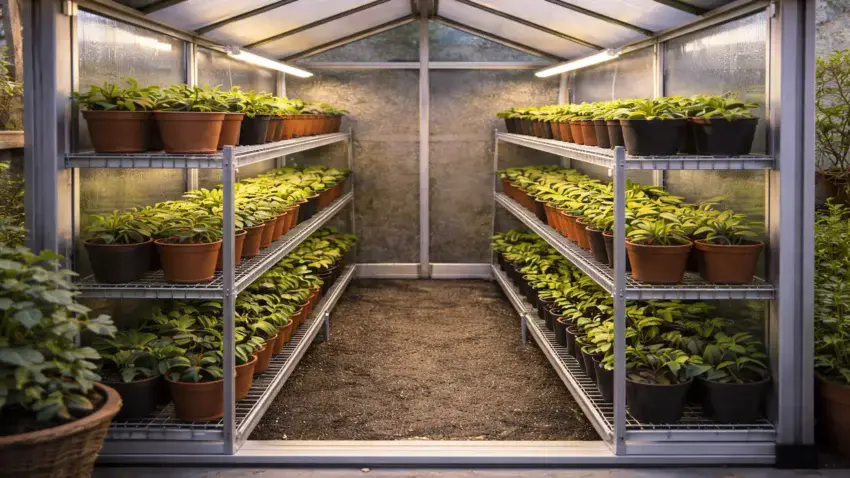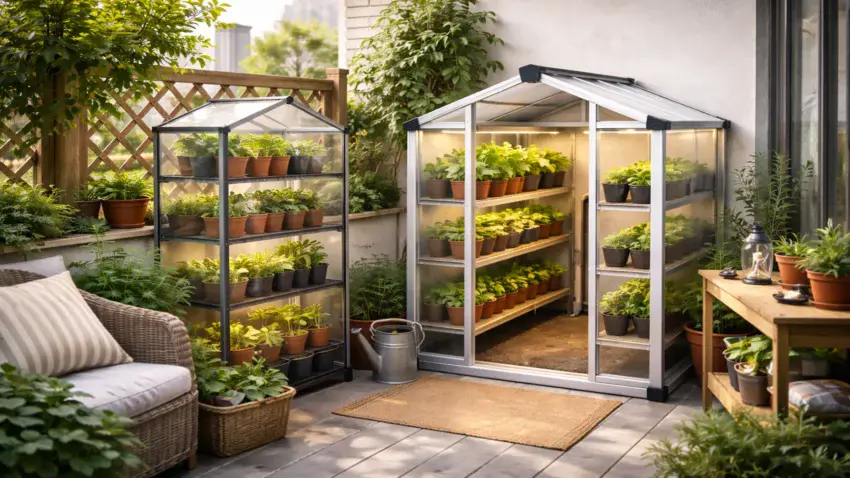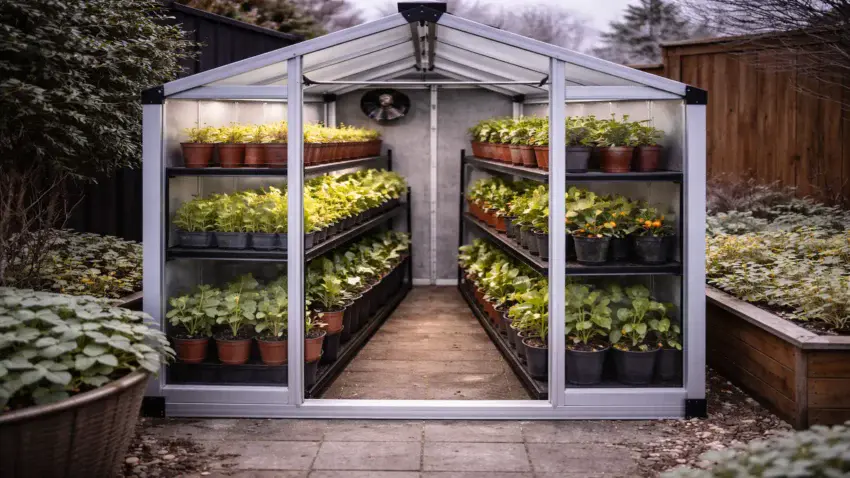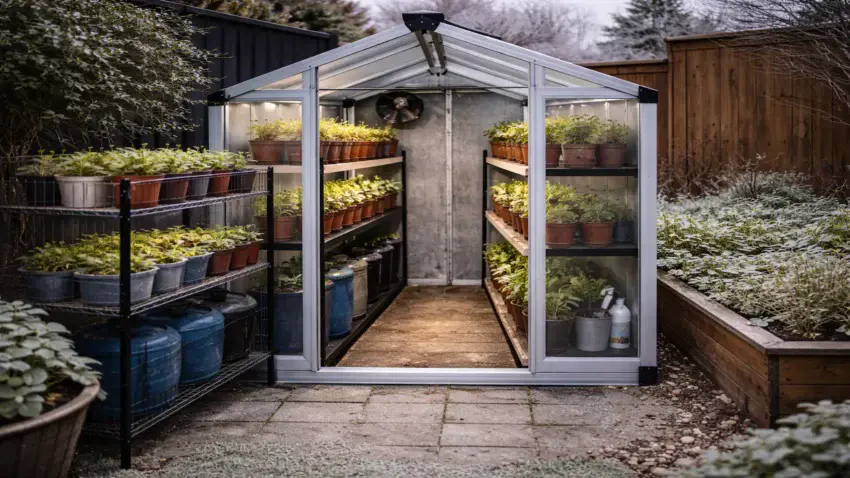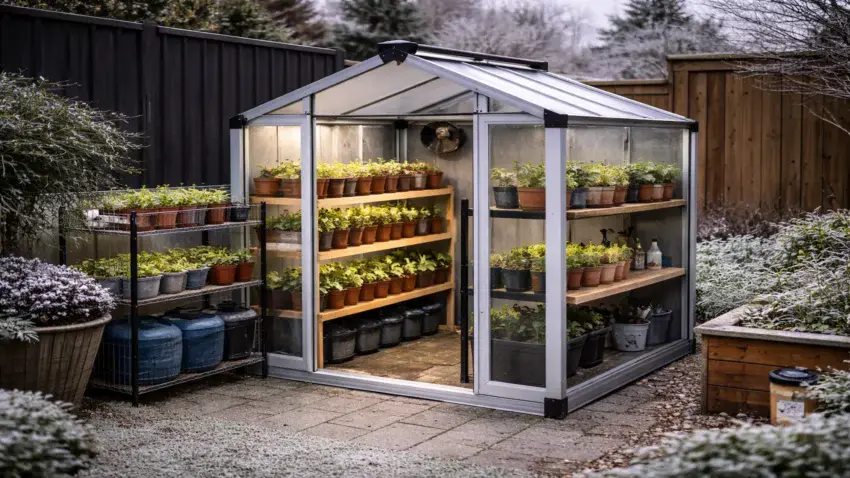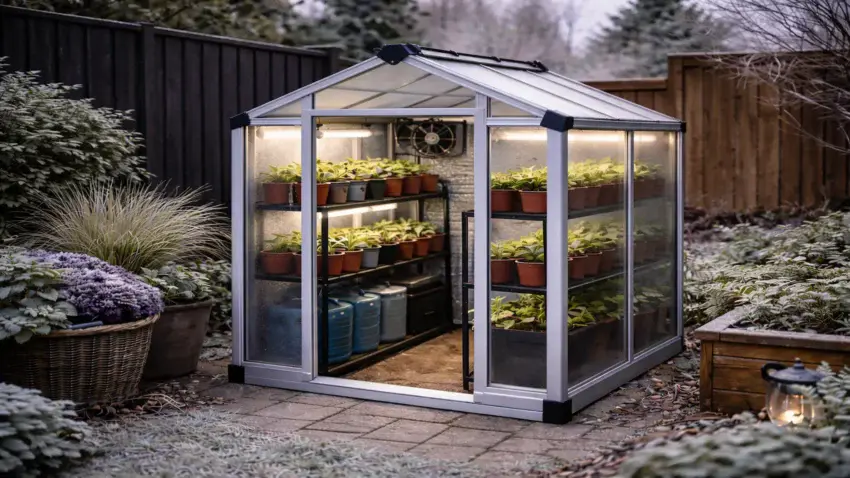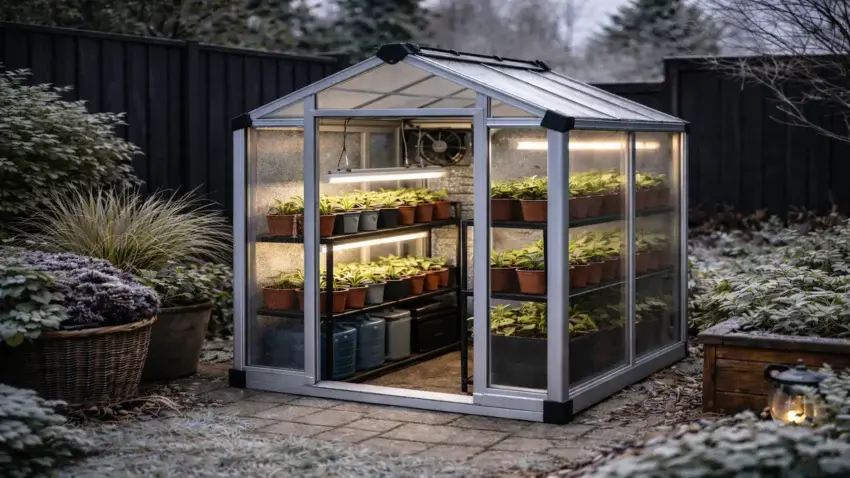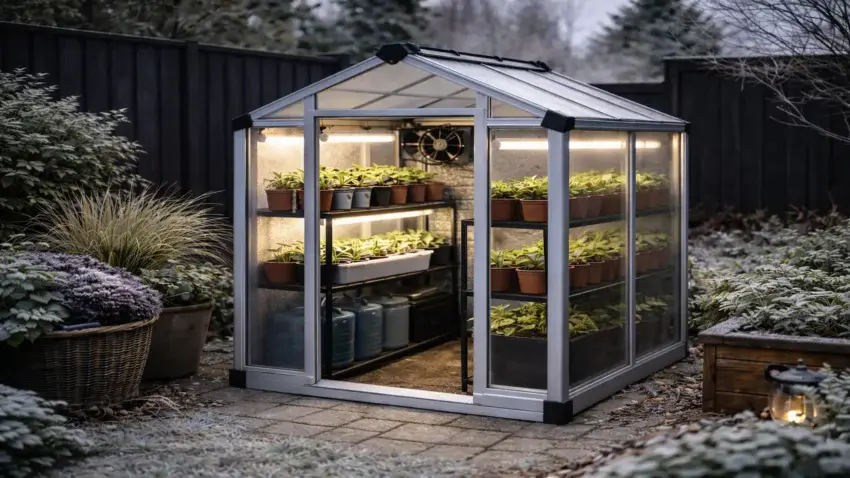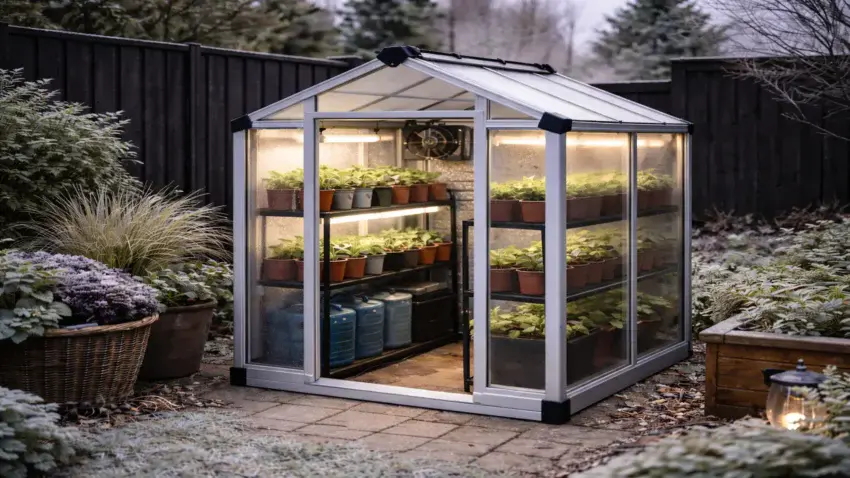
Climate control is where many small greenhouses succeed or fail. In compact spaces, temperature and humidity change quickly, and even a few hours of poor conditions can stress plants. Unlike large greenhouses, small structures heat up faster, cool down faster, and trap moisture more easily. That doesn’t mean they’re harder to manage — it means…
Author: Wayne
Greenhouse Shelving, Layout & Spacing in Small Greenhouses
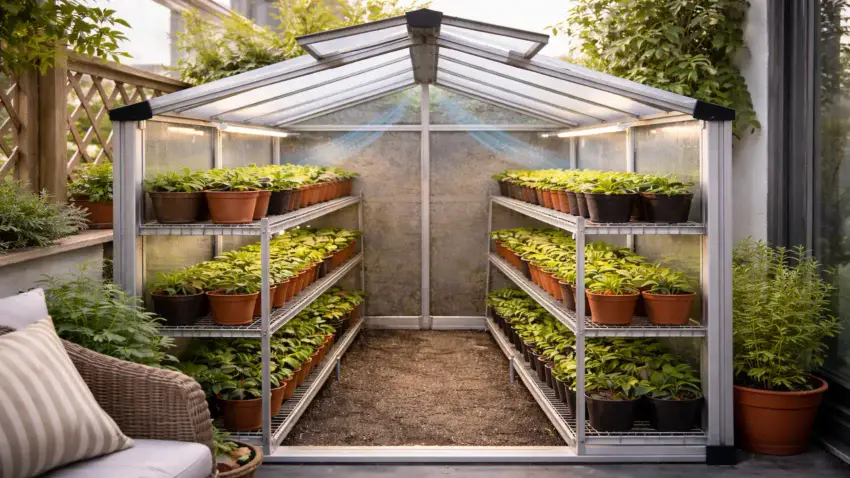
In a small greenhouse, shelving and layout matter just as much as the structure itself. Even a well-built greenhouse can struggle if shelves block light, restrict airflow, or make daily access frustrating. When space is limited, the goal isn’t to fit as many plants as possible. The goal is to create a layout that allows…
Small Greenhouse Types for Balconies & Tight Spaces
Choosing the right greenhouse type is the most important decision you’ll make when working with a balcony or other small outdoor space. In tight areas, the structure itself determines how much light reaches your plants, how air moves, and how easy daily care will feel. A greenhouse that works well in a large backyard can…
Plant Grouping and Zoning in Small Greenhouses
In small greenhouses, what you put next to what matters more than most people realize. Plant grouping affects airflow, light exposure, watering efficiency, temperature stability, and how predictable the space feels day to day. Poor grouping creates micro-problems that are hard to diagnose. Good grouping makes the entire greenhouse easier to manage. This page supports…
Shelf Spacing, Walkways, and Access in Small Greenhouses
In small greenhouses, how far apart things are matters just as much as what they’re made of. Shelf spacing, aisle width, and access paths directly affect airflow, light penetration, temperature balance, and how manageable the space feels day to day. Poor spacing makes a greenhouse feel cramped and unstable. Good spacing makes the same footprint…
Choosing the Right Shelving Types for Small Greenhouses
In small greenhouses, shelving does more than hold plants — it controls light access, airflow, temperature balance, and how usable the space feels day to day. The wrong shelving choice can block light, trap humidity, and make routine tasks frustrating. The right shelving makes everything else work better. This page supports our main guide, Shelving,…
Why Layout Matters More Than You Think in Small Greenhouses
In small greenhouses, layout isn’t just about fitting more plants — it directly affects airflow, light distribution, temperature stability, and daily usability. Because space is limited, every shelf, aisle, and plant position influences how the entire greenhouse behaves. A poorly planned layout can undo good heating, ventilation, and lighting. A thoughtful layout can make a…
Grow Light Placement and Height in Small Greenhouses
Once the right grow light type is chosen, placement and mounting height determine whether that light actually helps plants or creates new problems. In small greenhouses, distance matters more than power, and poor placement can waste light, overheat foliage, or leave lower plants underlit. This page supports our main guide, Lighting & Grow Lights for…
Choosing the Right Grow Light Types for Small Greenhouses
Once you’ve decided that supplemental lighting is necessary, the next question is which grow lights actually make sense in a small greenhouse. In compact spaces, light type matters as much as light output — oversized or mismatched fixtures can create heat problems, uneven coverage, or wasted energy. This page supports our main guide, Lighting &…
Natural Light vs Grow Lights in Small Greenhouses
In small greenhouses, the question usually isn’t whether plants get light — it’s whether they get enough usable light, consistently. Natural sunlight is always the first source to consider, but in compact spaces it often falls short due to shade, short days, or uneven distribution. That’s where supplemental grow lights come in — not to…