In small greenhouses, vertical space is tempting.
When floor space runs out, the natural instinct is to stack more shelves, hang baskets,
or squeeze plants upward.
Done right, vertical growing can dramatically increase capacity.
Done wrong, it quietly starves plants of light and airflow.
The key is understanding that vertical space is not free space.
Every added shelf or hanging plant affects how light moves through the greenhouse
and how air circulates.
This guide explains how to use vertical space effectively in small greenhouses
without blocking light, trapping heat, or creating long-term growth problems.
Why Vertical Space Is Tricky in Small Greenhouses
Small greenhouses rely heavily on light passing through the structure.
Unlike large greenhouses, there’s very little excess light to spare.
When vertical space is misused:
-
Upper plants block light from lower levels
-
Shelves cast permanent shadows
-
Air becomes stagnant between tiers
-
Lower plants weaken or stretch
The result is a greenhouse that looks full but performs poorly.
The Goal of Smart Vertical Growing
The goal isn’t stacking as many plants as possible —
it’s layering plants without creating shade zones.
Good vertical use should:
-
Allow light to reach every level
-
Maintain airflow from top to bottom
-
Keep plants accessible
-
Match plant height to shelf placement
If light can’t reach the lower shelves, vertical space is being overused.
Choose Shelving That Lets Light Through
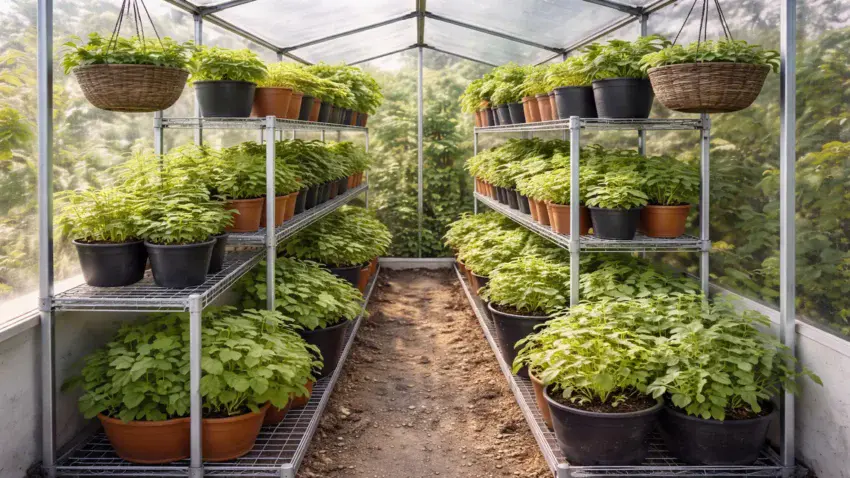
Open or Wire Shelving Is Essential
Solid shelves are one of the biggest vertical mistakes in small greenhouses.
Wire or open shelving:
-
Allows light to pass downward
-
Improves airflow
-
Reduces moisture buildup
-
Keeps lower plants healthier
If you can’t see light passing through a shelf, it’s probably blocking too much.
Space Shelves for Mature Plant Height
Many vertical problems start with shelves placed for seedlings, not mature plants.
Good spacing means:
-
Leaving room for plants to grow upward
-
Avoiding leaves pressing against the shelf above
-
Allowing light to spread instead of being trapped
A shelf that works in week two may fail by week six if spacing isn’t planned.
Be Strategic With Hanging Plants
Hanging baskets can work — but only when used carefully.
When Hanging Plants Help
-
Placed along greenhouse edges
-
Used for trailing or compact plants
-
Hung high enough to avoid shading shelves below
When They Cause Problems
-
Hung directly over shelving
-
Clustered in the center of the greenhouse
-
Used for dense or bushy plants
Hanging plants should frame the space, not hover over it.
Match Plant Height to Shelf Level
Not all plants belong on every shelf.
A simple guideline:
-
Lower shelves: Shade-tolerant plants, leafy greens
-
Middle shelves: Herbs, compact plants
-
Upper shelves: Plants needing the most light
This natural layering reduces competition and makes better use of available light.
Avoid the “Green Wall” Effect
Stacking shelves tightly can create a wall of plants that blocks airflow and light.
Signs you’ve gone too far:
-
Lower shelves stay damp longer
-
Plants lean toward the center
-
Air feels stale inside the greenhouse
-
Growth is uneven from top to bottom
Removing one shelf often improves performance more than adding another.
Use Vertical Space Without Losing Access
Vertical layouts still need to be usable.
Good vertical designs:
-
Keep plants within arm’s reach
-
Avoid shelves that require ladders or awkward bending
-
Leave a clear walkway
-
Don’t require moving plants just to water others
If vertical space makes daily care harder, it’s working against you.
How This Fits Into the Bigger Layout
Vertical space works best when combined with:
-
Proper shelving spacing
-
Clear walkways
-
Good airflow planning
-
Thoughtful plant grouping
Once vertical space is balanced, the final step is ensuring the greenhouse feels easy to work in —
not crowded or stressful.
If you’re still dialing in how your shelves, spacing, and airflow work together, this full guide to greenhouse shelving, layout, and spacing shows how all the pieces fit in small greenhouses.
Final Thoughts…
Vertical space is one of the most powerful tools in a small greenhouse —
and one of the easiest to misuse.
When shelves, plants, and hanging baskets are placed thoughtfully,
vertical growing increases efficiency without sacrificing plant health.
If adding height starts blocking light, it’s time to scale back.
In small greenhouses, balanced vertical space always outperforms maximum vertical space.
 Plan it. Grow it. Enjoy it!
 Helpful Resources for Small Greenhouse Success
Planning and maintaining a small greenhouse goes far beyond choosing the right size or layout. Understanding common pitfalls, having the right tools on hand, and setting things up correctly from the start can make a noticeable difference in both plant health and long-term enjoyment.
If you’re continuing your small greenhouse journey,
these guides will help you move forward with confidence:
-
Common Small Greenhouse Mistakes to Avoid
Learn which sizing, layout, and airflow mistakes cause the most frustration for new growers—and how to avoid them early. -
Essential Gardening Tools for Small Spaces
A practical breakdown of tools that make daily greenhouse tasks easier, cleaner, and more efficient in compact environments. -
Small Greenhouse Setup Guide
Step-by-step guidance on positioning, airflow planning, and layout decisions that set your greenhouse up for long-term success.
 Turn Your Gardening Knowledge Into a Simple Online Income
Curious how this site was built?
 Click here to learn more about Wealthy Affiliate.
SmallGardenBox.com started as a simple project built around small-space gardening ideas and greenhouse setups — and it only grew once I learned how to properly build and structure a real website.
If you’ve ever thought about sharing your gardening knowledge, greenhouse experience, or small-space growing tips online, the training at Wealthy Affiliate is what I personally used and recommend.
It walks you through building a website, creating helpful content,
and turning that knowledge into a long-term online asset.
