
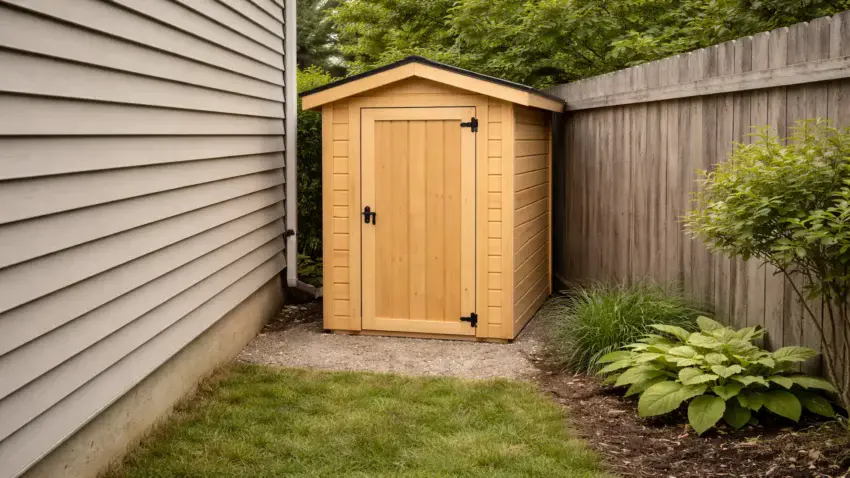
When outdoor space is limited, design choices matter more than size.
Small wooden storage shed plans for tight spaces are built to fit neatly into compact gardens,
narrow yards, and awkward corners—without looking cramped or temporary.
Wooden sheds are especially popular in small spaces
because they blend naturally into garden settings and can be sized precisely
to fit what you actually have available.
With the right plan, even a narrow footprint can become clean,
useful storage that feels intentional instead of forced.
For more layout options and build ideas, explore my small storage shed plans
guide for easy DIY builds designed specifically for small gardens.
Why Wooden Sheds Work Better in Small Spaces
Wood is forgiving, adaptable, and easy to customize.
For tight spaces, wooden shed plans offer:
-
Flexible sizing without modular limits
-
Easy trimming or adjustment during the build
-
A natural look that softens small garden areas
-
Better integration with fences, plants, and patios
Metal or plastic sheds often feel out of place or oversized once installed.
Wood allows you to build to the space, not around it.
Common Tight-Space Shed Locations
Small wooden sheds are often built where standard sheds won’t fit.
Typical locations include:
-
Along fence lines
-
Between a house and property boundary
-
In narrow side yards
-
In unused corners of small gardens
Plans designed for these spaces prioritize shallow depth,
efficient door placement, and clean rooflines.
Shed Sizes That Fit Without Crowding
For tight spaces, width and depth matter more than total square footage.
Popular footprints include:
-
4×8 – Extremely narrow, ideal for side yards
-
6×6 – Compact square footprint
-
6×8 – Balanced storage with minimal depth
-
6×10 – Extra length without adding bulk
Keeping the structure visually simple helps prevent small sheds from feeling intrusive.
Design Features That Save Space
Good plans make tight sheds feel usable instead of cramped.
Look for features like:
-
Single-slope or simple gable roofs
-
Outward-swinging doors to free interior space
-
Wall-mounted shelving and hooks
-
Minimal overhangs and trim
Every inch matters when space is limited, and smart plans account for that from the start.
Foundations for Tight Areas
Small wooden sheds don’t need heavy foundations.
Most tight-space builds work well with:
-
Skid foundations
-
Concrete blocks
-
Gravel pads
These options reduce ground disturbance and simplify placement near existing structures.
Keeping a Small Shed Looking Intentional
A shed in a tight space is always visible—so appearance matters.
Simple proportions, natural wood tones, and clean lines help the shed feel like part of the garden instead of an afterthought. When done right, small sheds often look better than oversized ones.
Where This Fits in the Small Shed Plan Lineup
Small wooden storage shed plans for tight spaces are ideal if you:
-
Have limited yard depth or width
-
Want storage without crowding the garden
-
Care about appearance as much as function
They complete the range of small shed builds focused on size, simplicity, budget, and layout.
What’s Next
If you’re working with limited space, the smartest next step is comparing
layouts and sizes before committing to a build.
Some small sheds save space through footprint alone,
while others rely on simpler framing or smarter material choices.
To see how different designs balance size, simplicity, and usability,
continue to my small storage shed plans guide —
where I break down easy DIY builds designed specifically for small gardens.
 Plan it. Grow it. Enjoy it!
 Turn Your Shed Building Experience Into a Simple Online Income
Curious how this site was built?
 Click here to learn more about Wealthy Affiliate.
SmallGardenBox.com started as a simple project built around small-space gardening ideas and greenhouse setups — and it only grew once I learned how to properly build and structure a real website.
If you’ve ever thought about sharing your gardening knowledge, greenhouse experience,
or shed building tips,
the training at Wealthy Affiliate is what I personally used and recommend.
It walks you through building a website, creating helpful content,
and turning that knowledge into a long-term online asset.
