Shelf greenhouses are great for vertical growing, but some gardeners want more room to work,
better airflow, and flexibility for larger plants.
That’s where small walk-in greenhouses come in.
A walk-in greenhouse gives you standing access inside the structure
while still fitting into compact spaces like balconies, patios, and narrow yards.
When chosen carefully, these greenhouses strike a balance between capacity
and usability without overwhelming a small footprint.
This guide explains when a small walk-in greenhouse makes sense, what to look for,
and how to avoid common mistakes in tight spaces.
What Is a Small Walk-In Greenhouse?
A small walk-in greenhouse is a compact structure that allows you to step inside
rather than work entirely from the outside.
Unlike large backyard greenhouses, these designs are scaled down for limited areas.
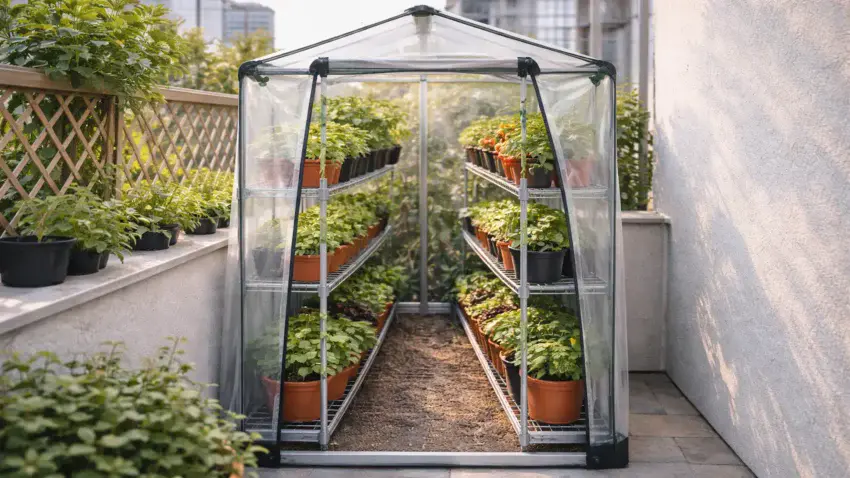
Typical features include:
-
A narrow but walkable footprint
-
A central aisle or short entry area
-
Shelving along one or both sides
-
Zippered or hinged door access
-
Lightweight framing suitable for patios or balconies
They’re designed for gardeners who want hands-on access
without committing to a full-size structure.
When a Walk-In Greenhouse Is the Right Choice
Small walk-in greenhouses work best when:
-
You want easier access to plants
-
You’re growing a mix of small and medium-sized plants
-
You need better airflow than shelf units provide
-
You have enough floor space for a narrow footprint
-
You prefer working at standing height
They’re especially useful for gardeners who spend more time inside the greenhouse
and want a setup that feels less cramped.
Advantages of Small Walk-In Greenhouses
Better Access and Workflow
Being able to step inside makes watering, pruning, and inspecting plants easier.
You’re less likely to bump containers or rearrange shelves just to reach the back.
Improved Airflow
Walk-in designs naturally allow better air movement,
especially when paired with vents or partially open doors.
This helps reduce humidity buildup compared to tightly packed shelf units.
More Flexible Plant Sizes
Walk-in greenhouses can handle:
-
Taller herbs
-
Compact fruiting plants
-
Larger containers
-
Mixed plant heights
This flexibility makes them suitable for longer growing cycles.
Common Limitations to Plan Around
Floor Space Requirements
Even compact walk-in greenhouses require more floor space than shelf units.
Measuring carefully before buying is critical.
Heat Buildup
Because they enclose more air,
walk-in greenhouses can overheat quickly if ventilation is ignored.
Tip:
Always choose a design with vents or plan to open the door regularly during warm weather.
Weight Considerations
Larger containers and shelving add weight.
On balconies, this may limit how much soil and water you can safely use.
Best Plants for Small Walk-In Greenhouses
Walk-in greenhouses are ideal for plants that benefit from space and airflow.
Good options include:
-
Herbs grown in larger pots
-
Leafy greens
-
Strawberries
-
Compact peppers
-
Dwarf tomato varieties
-
Seedlings transitioning outdoors
They’re less suited for very large or sprawling crops that need extensive vertical clearance.
Placement Tips for Tight Spaces
Where you place the greenhouse matters as much as the structure itself.
Sun Exposure
-
Choose the brightest available area
-
South- or west-facing locations work best
-
Avoid placing the greenhouse in deep shade
Clearance
-
Leave space to fully open the door
-
Ensure you can step in comfortably
-
Avoid placing it directly against railings that block airflow
Walk-In vs Shelf Greenhouses
Both styles work well in small spaces, but they serve different needs.
-
Shelf Greenhouses: Best for maximum vertical efficiency and lightweight setups
-
Walk-In Greenhouses: Better for access, airflow, and mixed plant sizes
If you want to work inside your greenhouse and grow a wider variety of plants,
a walk-in design is often worth the extra space.
How This Fits Into the Bigger Picture
Walk-in greenhouses are just one of several structure options for compact spaces.
If you’re still comparing designs,
this overview of small greenhouse types for balconies and tight spaces
helps you see how shelf, walk-in, lean-to, and portable greenhouses compare.
Once the structure is chosen, the next step is planning shelving, spacing, and walkways
so the interior works smoothly.
Final Thoughts…
A small walk-in greenhouse offers comfort, flexibility, and control in tight spaces —
but only when the footprint and layout are chosen carefully.
If you have enough room for a narrow entry and want easier access to your plants,
a walk-in greenhouse can be a major upgrade over shelf-only designs.
With good ventilation and thoughtful placement,
it becomes a versatile growing space that works well on balconies and patios alike.
 Plan it. Grow it. Enjoy it!
 Helpful Resources for Small Greenhouse Success
Planning and maintaining a small greenhouse goes far beyond choosing the right size or layout. Understanding common pitfalls, having the right tools on hand, and setting things up correctly from the start can make a noticeable difference in both plant health and long-term enjoyment.
If you’re continuing your small greenhouse journey,
these guides will help you move forward with confidence:
-
Common Small Greenhouse Mistakes to Avoid
Learn which sizing, layout, and airflow mistakes cause the most frustration for new growers—and how to avoid them early. -
Essential Gardening Tools for Small Spaces
A practical breakdown of tools that make daily greenhouse tasks easier, cleaner, and more efficient in compact environments. -
Small Greenhouse Setup Guide
Step-by-step guidance on positioning, airflow planning, and layout decisions that set your greenhouse up for long-term success.
 Turn Your Gardening Knowledge Into a Simple Online Income
Curious how this site was built?
 Click here to learn more about Wealthy Affiliate.
SmallGardenBox.com started as a simple project built around small-space gardening ideas and greenhouse setups — and it only grew once I learned how to properly build and structure a real website.
If you’ve ever thought about sharing your gardening knowledge, greenhouse experience, or small-space growing tips online, the training at Wealthy Affiliate is what I personally used and recommend.
It walks you through building a website, creating helpful content,
and turning that knowledge into a long-term online asset.
