Choosing the right greenhouse type is the most important decision you’ll make
when working with a balcony or other small outdoor space.
In tight areas, the structure itself determines how much light reaches your plants, how air moves,
and how easy daily care will feel.
A greenhouse that works well in a large backyard can quickly become a problem on a balcony.
Limited floor space, restricted airflow, weight limits, and access all matter more when every square foot counts.
This guide breaks down the most practical small greenhouse types for balconies and tight spaces, along with where each one works best and what limitations to plan around.
Before settling on a greenhouse structure,
it helps to review these balcony greenhouse ideas for small spaces,
which cover overall design, airflow, and plant planning in tight areas.
Why Greenhouse Type Matters in Small Spaces
In compact environments, there’s very little margin for error.
The wrong greenhouse style can block light, trap humidity,
or make it difficult to reach plants without constantly moving things around.
Greenhouse type affects:
-
How efficiently vertical space is used
-
How much natural light reaches lower plants
-
How air circulates through the structure
-
How comfortable the space feels to work in
When space is limited, the goal isn’t just shelter —
it’s balance between protection, access, and airflow.
Shelf-Style Greenhouses
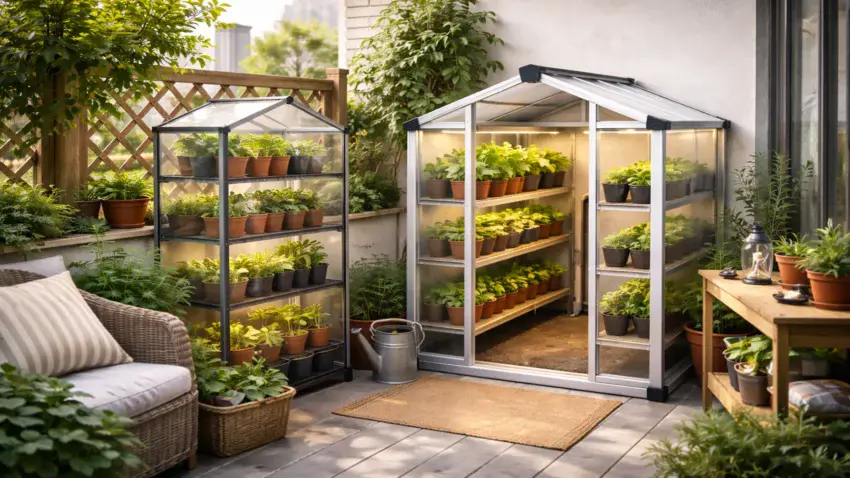
Shelf-style greenhouses are one of the most common options for balconies.
They typically consist of a narrow frame with multiple stacked shelves enclosed in clear panels or plastic.
Best Use Cases
Shelf greenhouses work well for:
-
Seed starting
-
Herbs
-
Leafy greens
-
Lightweight pots and trays
Their vertical design makes them ideal for very small balconies where
floor space is limited but height is available.
Limitations to Consider
The biggest issue with shelf-style greenhouses is light distribution.
Solid or closely spaced shelves can block sunlight from reaching lower levels,
leading to uneven growth.
They also limit the height of plants you can grow,
making them less suitable for taller vegetables or vining plants unless shelving is adjustable.
Compact Walk-In Greenhouses
Compact walk-in greenhouses are small enough for patios and some larger balconies
but still allow you to step inside the structure.
Best Use Cases
These greenhouses are well suited for:
-
Mixed plant heights
-
Larger containers
-
Seasonal growing transitions
-
Gardeners who want easier access
Because they don’t rely entirely on shelving, they allow more flexibility in plant arrangement.
Limitations to Consider
Walk-in greenhouses require more floor space and can heat up quickly in sunny conditions.
On balconies, weight and size restrictions may limit whether this option is practical.
Ventilation becomes especially important to prevent overheating.
Lean-To & Wall-Backed Greenhouses
Lean-to greenhouses are designed to sit against a wall or fence,
using an existing structure for support and partial insulation.
Best Use Cases
Lean-to designs are ideal for:
-
Narrow patios or side yards
-
Wind-exposed areas
-
Spaces where one wall already limits access
The wall helps retain heat and can provide protection from harsh weather.
Limitations to Consider
This type of greenhouse requires a suitable wall or fence and is less portable than other options.
Sun exposure also depends heavily on wall orientation,
which can limit light if not positioned carefully.
Pop-Up & Portable Greenhouses
Pop-up and portable greenhouses are lightweight,
temporary structures often made with flexible frames and plastic covers.
Best Use Cases
They work well for:
-
Renters
-
Seasonal use
-
Temporary seed starting
-
Testing greenhouse gardening without commitment
Their low cost and easy setup make them appealing for beginners.
Limitations to Consider
Portable greenhouses offer less insulation and durability.
They can struggle with strong wind, cold temperatures, or heavy use,
and often require frequent adjustment to maintain airflow and stability.
Choosing the Right Greenhouse Type for Your Space
Before choosing a greenhouse, take time to evaluate:
-
Available floor space
-
Height clearance
-
Sun exposure throughout the day
-
Weight limits on balconies
-
How often you’ll access plants
A simple greenhouse that fits comfortably almost always performs better than a
larger one that feels cramped or awkward to use.
Planning Ahead Before Shelving & Layout
Once the greenhouse type is chosen, the next step is designing the interior.
Shelving, spacing, and walkways determine whether plants thrive or
struggle in a compact greenhouse.
Poor layout choices can undo the benefits of even the best greenhouse design.
For a complete overview of designing compact greenhouse setups,
this guide on balcony greenhouse ideas for small spaces explains how structure,
layout, and plant planning work together in tight areas.
Final Thoughts…
The best small greenhouse for a balcony or tight space isn’t the biggest or most expensive option —
it’s the one that fits the space without fighting it.
When access is easy, light reaches every level, and airflow isn’t restricted,
plants stay healthier and daily care feels manageable instead of frustrating.
Taking the time to choose the right greenhouse type upfront prevents many of the
common problems that show up later, from uneven growth to constant rearranging.
A well-matched structure gives you flexibility to grow, experiment,
and adjust as the seasons change.
Once the greenhouse type is set, the real performance comes down to how the interior is planned. Shelving, spacing, and walkways determine whether a compact greenhouse works smoothly
or becomes overcrowded.
If you’re ready to move forward, the next step is learning how to design shelving and layouts that
support light, airflow, and easy access inside a small greenhouse.
 Plan it. Grow it. Enjoy it!
 Helpful Resources for Small Greenhouse Success
Planning and maintaining a small greenhouse goes far beyond choosing the right size or layout. Understanding common pitfalls, having the right tools on hand, and setting things up correctly from the start can make a noticeable difference in both plant health and long-term enjoyment.
If you’re continuing your small greenhouse journey,
these guides will help you move forward with confidence:
-
Common Small Greenhouse Mistakes to Avoid
Learn which sizing, layout, and airflow mistakes cause the most frustration for new growers—and how to avoid them early. -
Essential Gardening Tools for Small Spaces
A practical breakdown of tools that make daily greenhouse tasks easier, cleaner, and more efficient in compact environments. -
Small Greenhouse Setup Guide
Step-by-step guidance on positioning, airflow planning, and layout decisions that set your greenhouse up for long-term success.
 Turn Your Gardening Knowledge Into a Simple Online Income
Curious how this site was built?
 Click here to learn more about Wealthy Affiliate.
SmallGardenBox.com started as a simple project built around small-space gardening ideas and greenhouse setups — and it only grew once I learned how to properly build and structure a real website.
If you’ve ever thought about sharing your gardening knowledge, greenhouse experience, or small-space growing tips online, the training at Wealthy Affiliate is what I personally used and recommend.
It walks you through building a website, creating helpful content,
and turning that knowledge into a long-term online asset.
