In a small greenhouse, layout is climate control.
When space is limited, how you arrange shelves, plants, and walkways directly affects airflow,
light distribution, temperature stability, and daily usability.
Poor layout can undo good heating, ventilation, and lighting —
while a thoughtful layout can make a small greenhouse feel larger, calmer, and easier to manage.
This guide focuses on
shelving, layout, and space optimization strategies designed specifically for small greenhouses, including balcony setups, patio structures, and tight backyard builds.
You’ll learn how to organize plants vertically, maintain airflow paths, avoid overcrowding,
and create a layout that supports every other system in your greenhouse.
The goal isn’t to fit more plants at any cost—it’s to create balanced, usable space.
Why Layout Matters More in Small Greenhouses
Small greenhouses magnify layout mistakes.
Because there’s less room for air to circulate and light to spread,
crowded or poorly arranged interiors quickly lead to uneven conditions.
Plants block one another, moisture lingers, and access becomes frustrating.
Common layout problems include:
-
Blocked airflow around plants
-
Shaded lower shelves
-
Heat trapped at the roof
-
Overcrowding that encourages disease
-
Narrow walkways that limit maintenance
In compact spaces, layout decisions affect every system at once.
Good organization improves airflow, light reach, temperature balance, and ease of care.
Shelving Options for Small Greenhouses
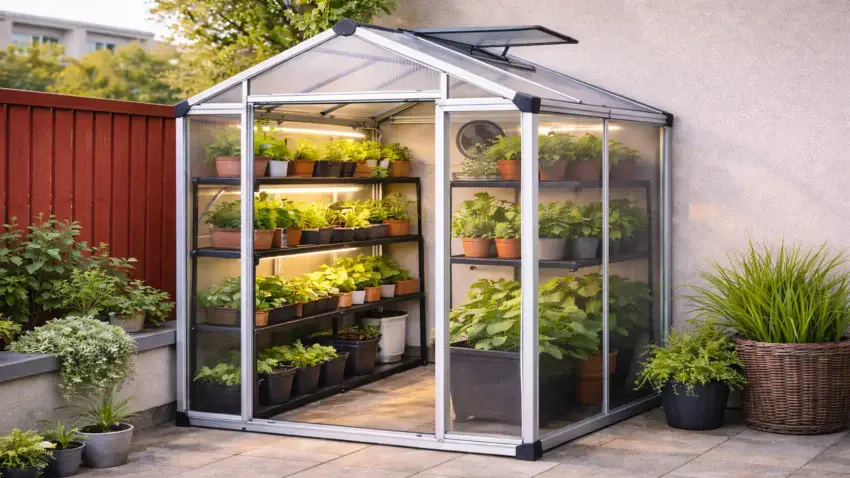
Shelving is often the backbone of a small greenhouse layout.
The right shelving allows you to use vertical space efficiently without blocking light or airflow.
The wrong shelving can create shadows, trap moisture, and limit access.
Effective shelving strategies include:
-
Open-wire or slatted shelves that allow air movement
-
Adjustable shelving to accommodate plant growth
-
Narrow-depth shelves that preserve walkways
-
Staggered heights to reduce shading
In small greenhouses, fewer well-placed shelves often outperform dense, floor-to-ceiling storage.
Vertical Growing Without Blocking Airflow
Vertical growing can dramatically increase usable space — but only if airflow is preserved.
Stacking plants too tightly restricts air movement and creates humid pockets
where problems develop quickly.
Vertical layouts must balance plant density with circulation.
Key considerations include:
-
Leaving vertical gaps between shelves
-
Avoiding solid back panels that block air
-
Ensuring fans or vents can move air past vertical surfaces
-
Rotating plants to prevent long-term shading
Vertical space is valuable, but airflow paths should never be sacrificed to gain more shelf area.
Walkways, Access & Maintenance Space
A greenhouse that’s hard to move around in becomes hard to maintain.
In small spaces, access is often overlooked in favor of squeezing in more plants.
Over time, this leads to neglected pruning, missed watering issues,
and delayed problem detection.
Good layout planning includes:
-
Clear, consistent walkways
-
Space to reach all plants comfortably
-
Easy access to vents, doors, and equipment
-
Room to remove plants when needed
If you can’t easily reach a plant, it’s likely to suffer eventually.
Balancing Plant Density With Light & Heat
Crowding affects more than access — it changes how light and heat behave.
Dense plant arrangements:
-
Block lower leaves from light
-
Reduce airflow between foliage
-
Trap heat and moisture
-
Increase disease pressure
Spacing plants slightly farther apart often results in healthier growth and better yields,
even if the total plant count is lower.
In small greenhouses, quality of space almost always beats quantity.
Designing a Layout That Supports All Systems
The best small greenhouse layouts work with heating, ventilation,
and lighting — not against them.
A supportive layout:
-
Allows warm air to rise and escape
-
Lets fresh air circulate evenly
-
Keeps lights unobstructed
-
Prevents moisture from pooling
-
Makes daily care simple
Before adding more shelves or plants,
it’s worth stepping back and asking how the layout affects airflow,
light paths, and temperature balance.
Layout isn’t a finishing step — it’s a core system.
If you want to improve more than just layout in a compact greenhouse,
our Small-Space Greenhouse Accessories & Climate Control pillar covers heating,
ventilation, lighting, and other systems that help small greenhouses stay productive year-round.
With shelving and layout optimized in a small greenhouse,
heating strategies become easier to manage and more effective throughout the space.
Final Thoughts…
In small greenhouses, organization determines performance.
Thoughtful shelving, clear walkways,
and balanced plant spacing create an environment where heat, air,
and light can do their jobs effectively.
Most layout problems come from trying to do too much in too little space.
By prioritizing airflow, access, and light distribution,
you can turn even a very small greenhouse into a calm,
productive growing space that’s easier to manage day after day.
A good layout doesn’t just fit plants — it supports growth.
 Plan it. Grow it. Enjoy it!
 Helpful Resources for Small Greenhouse Success
Planning and maintaining a small greenhouse goes far beyond choosing the right size or layout. Understanding common pitfalls, having the right tools on hand,
and setting things up correctly from the start can make a noticeable difference in both plant health
and long-term enjoyment.
If you’re continuing your small greenhouse journey,
these guides will help you move forward with confidence:
-
Common Small Greenhouse Mistakes to Avoid
Learn which sizing, layout, and airflow mistakes cause the most frustration for new growers —
and how to avoid them early. -
Essential Gardening Tools for Small Spaces
A practical breakdown of tools that make daily greenhouse tasks easier,
cleaner, and more efficient in compact environments. -
Small Greenhouse Setup Guide
Step-by-step guidance on positioning, airflow planning,
and layout decisions that set your greenhouse up for long-term success.
 Turn Your Gardening Knowledge Into a Simple Online Income
Curious how this site was built?
 Click here to learn more about Wealthy Affiliate.
SmallGardenBox.com started as a simple project built around small-space gardening ideas
and greenhouse setups — and it only grew once I learned how to properly build
and structure a real website.
If you’ve ever thought about sharing your gardening knowledge, greenhouse experience,
or small-space growing tips online, the training at Wealthy Affiliate is what I personally used
and recommend.
It walks you through building a website, creating helpful content,
and turning that knowledge into a long-term online asset.
