
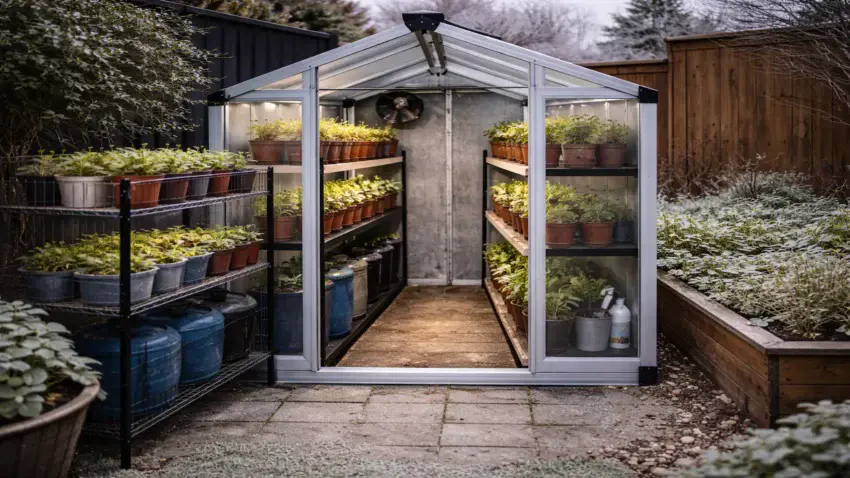
In small greenhouses, how far apart things are matters just as much as what they’re made of.
Shelf spacing, aisle width, and access paths directly affect
airflow, light penetration, temperature balance, and how manageable the space feels day to day.
Poor spacing makes a greenhouse feel cramped and unstable.
Good spacing makes the same footprint feel calmer and easier to control.
This page supports our main guide, Shelving, Layout & Space Optimization for Small Greenhouses,
which explains how spacing and access choices improve airflow, light distribution,
and daily usability in compact greenhouse spaces.
This page focuses on how much space to leave between shelves, plants, and walkways
to keep small greenhouses functional instead of congested.
Why Spacing Errors Hurt More in Small Greenhouses
In tight structures, there’s very little margin for error.
Spacing problems often lead to:
-
Blocked airflow between shelves
-
Shaded lower plants despite adequate lighting
-
Warm, stagnant zones that trap humidity
-
Difficulty reaching plants for daily care
In larger greenhouses, these issues are localized. In small ones, they affect everything.
Shelf Spacing: Air and Light Need Room to Move
Shelves that are stacked too closely create vertical bottlenecks.
Good shelf spacing:
-
Allows light to spread instead of stopping at the first layer
-
Lets warm air rise and circulate
-
Reduces condensation buildup beneath shelves
As a rule, shelves should never feel “compressed.”
If leaves brush the shelf above them, spacing is already too tight.
Horizontal Gaps Matter More Than You Expect
It’s not just vertical space that matters.
Common mistakes include:
-
Shelves pushed flush against walls
-
Plants packed tightly from front to back
-
No clearance behind shelving units
Leaving small gaps behind and beside shelves improves airflow far more than most growers expect.
Walkways Are a Functional System, Not Wasted Space
In small greenhouses, walkways often get sacrificed for more plant space —
and that usually backfires.
Adequate walkways:
-
Allow air to move through the center of the structure
-
Make daily adjustments faster and more accurate
-
Reduce accidental damage to plants and equipment
If you have to turn sideways or move plants to pass through, access is too tight.
Central vs Side Aisle Layouts
Two basic walkway layouts dominate small greenhouses.
Side aisles:
-
Maximize shelf length
-
Work well in very narrow structures
Central aisles:
-
Improve airflow symmetry
-
Make access easier on both sides
The best choice depends on greenhouse width,
but either option requires deliberate spacing to avoid crowding.
Planning for Maintenance, Not Just Growth
Spacing should account for human movement, not just plant size.
Good layouts leave room for:
-
Watering without bumping foliage
-
Adjusting vents or fans
-
Moving trays in and out
If routine tasks feel awkward, spacing is probably too tight.
Seasonal Spacing Adjustments
Spacing needs change over time.
As plants grow:
-
Shelves may need to be raised or removed
-
Walkways may need widening
-
Dense zones may need thinning
Small greenhouses benefit from layouts that can breathe and shift,
not fixed arrangements that force compromise.
How This Fits Into the Bigger Layout Plan
Once shelving types are chosen and spacing is dialed in,
layout becomes predictable instead of reactive.
Airflow improves, light spreads more evenly, and daily tasks take less effort.
Our main guide on Shelving, Layout & Space Optimization for Small Greenhouses
shows how shelf choice, spacing,
and plant arrangement work together as a system rather than isolated decisions.
Final Thoughts…
In small greenhouses, space isn’t wasted when it’s left open — it’s working.
Proper spacing allows air, light, heat, and people to move freely.
When shelves and walkways are planned intentionally,
the greenhouse becomes easier to manage and far more forgiving.
The final step is learning how to group and arrange plants within that space
for maximum efficiency without congestion.
 Plan it. Grow it. Enjoy it!
 Helpful Resources for Small Greenhouse Success
Planning and maintaining a small greenhouse goes far beyond choosing the right size or layout. Understanding common pitfalls, having the right tools on hand,
and setting things up correctly from the start can make a noticeable difference in both plant health
and long-term enjoyment.
If you’re continuing your small greenhouse journey,
these guides will help you move forward with confidence:
-
Common Small Greenhouse Mistakes to Avoid
Learn which sizing, layout, and airflow mistakes cause the most frustration for new growers —
and how to avoid them early. -
Essential Gardening Tools for Small Spaces
A practical breakdown of tools that make daily greenhouse tasks easier,
cleaner, and more efficient in compact environments. -
Small Greenhouse Setup Guide
Step-by-step guidance on positioning, airflow planning,
and layout decisions that set your greenhouse up for long-term success.
 Turn Your Gardening Knowledge Into a Simple Online Income
Curious how this site was built?
 Click here to learn more about Wealthy Affiliate.
SmallGardenBox.com started as a simple project built around small-space gardening ideas
and greenhouse setups — and it only grew once I learned how to properly build
and structure a real website.
If you’ve ever thought about sharing your gardening knowledge, greenhouse experience,
or small-space growing tips online, the training at Wealthy Affiliate is what I personally used
and recommend.
It walks you through building a website, creating helpful content,
and turning that knowledge into a long-term online asset.
