Growing plants on a small balcony means every inch matters.
Floor space is limited, weight restrictions are real, and sunlight often comes from only one direction.
In that kind of environment,
shelf greenhouses are one of the most practical and beginner-friendly solutions available.
Instead of spreading plants across the floor, shelf greenhouses grow upward,
stacking multiple growing levels into a narrow footprint.
When chosen correctly, they provide protection from wind and cold while
still allowing enough light and airflow for healthy plants.
This guide breaks down how shelf greenhouses work, when they’re the right
choice, what to avoid, and how to set one up so it actually succeeds on a balcony.
What Is a Shelf Greenhouse?
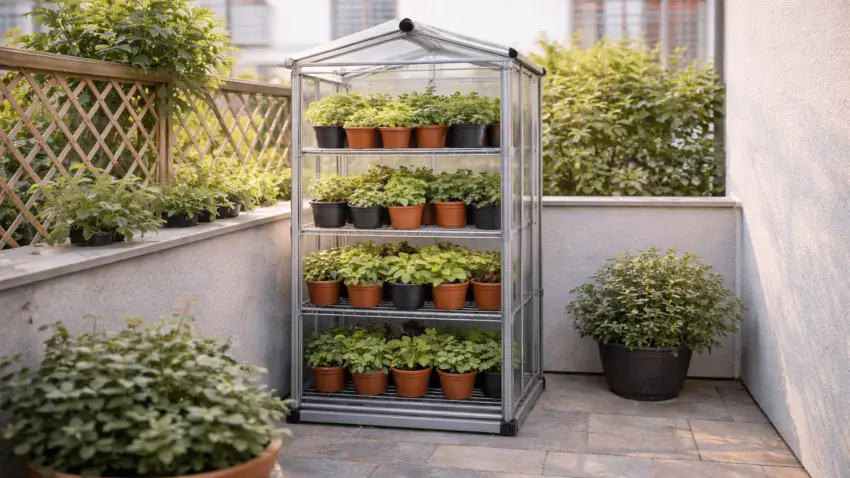
A shelf greenhouse is a compact greenhouse structure built around vertical shelving
rather than floor area.
Most designs include:
-
3–5 stacked shelves
-
A slim frame designed for balconies or patios
-
A clear cover (plastic or polycarbonate) for light transmission
-
A lightweight footprint suitable for small spaces
They’re especially popular with apartment gardeners,
renters, and anyone working with a narrow balcony or limited load capacity.
Unlike walk-in greenhouses, shelf units are designed for
small plants, containers, and seed trays, not standing or working inside the structure.
When a Shelf Greenhouse Makes Sense
Shelf greenhouses work best in specific situations.
They’re ideal if:
-
Your balcony is narrow or shallow
-
You don’t have room for a walk-in greenhouse
-
You want to grow herbs, greens, or seedlings
-
You need something lightweight and easy to move
-
You’re renting and need a non-permanent setup
They’re especially effective for gardeners who want organization and efficiency,
not maximum plant size.
Advantages of Shelf Greenhouses on Balconies
1. Vertical Space Efficiency
Instead of using more floor space, shelf greenhouses stack plants upward.
This allows you to grow many plants in a very small footprint, which is critical on balconies.
2. Lightweight Construction
Most shelf greenhouses are made with aluminum or thin steel frames and lightweight shelving.
This makes them safer for balconies with weight limits.
3. Easy Access to Plants
Plants are raised off the ground, which means:
-
Less bending
-
Easier watering
-
Better visibility for spotting problems early
4. Beginner-Friendly Setup
Shelf greenhouses are usually simple to assemble and don’t require tools or permanent mounting.
Common Problems With Shelf Greenhouses (and How to Avoid Them)
Shelf greenhouses fail when people treat them like mini walk-in greenhouses.
The problems usually come from poor placement or overcrowding,
not the structure itself.
Blocking Light
Tall shelf units can shade lower shelves if plants are packed too tightly.
Fix:
-
Keep taller plants on lower shelves
-
Rotate trays occasionally
-
Avoid solid shelves that block light
Poor Airflow
Plastic covers can trap humidity and heat.
Fix:
-
Vent the cover daily
-
Leave the door partially open during warm weather
-
Avoid placing the unit directly against a wall with no airflow
Overloading Shelves
Thin wire shelves aren’t designed for heavy pots.
Fix:
-
Use lightweight containers
-
Avoid water-logged soil
-
Distribute weight evenly
Best Plants for Shelf Greenhouses
Shelf greenhouses work best with plants that stay compact and manageable.
Excellent Choices
-
Herbs (basil, parsley, cilantro, thyme)
-
Leafy greens (lettuce, spinach, arugula)
-
Seed trays and seedlings
-
Strawberries in small containers
-
Compact flowering plants
Plants to Avoid
-
Tall vining crops (tomatoes, cucumbers)
-
Large root vegetables
-
Heavy fruiting plants
-
Anything that requires deep soil
Shelf greenhouses are about control and consistency, not size.
Shelf Greenhouse Placement Tips
Where you place the greenhouse matters just as much as the structure itself.
Sunlight
-
Aim for the brightest section of your balcony
-
South- or west-facing balconies work best
-
Avoid deep shade unless growing shade-tolerant plants
Wind Protection
-
Corners or walls provide natural wind breaks
-
Avoid exposed railing edges if possible
Access
-
Leave space to open the front
-
Make sure you can water and rotate plants easily
Shelf Greenhouses vs Other Small Greenhouse Types
Shelf greenhouses are often compared to other compact designs,
but each serves a different purpose.
-
Shelf Greenhouses: Best for vertical growing and beginners
-
Walk-In Mini Greenhouses: Better for hands-on work and larger plants
-
Lean-To Greenhouses: Best when attached to a wall
-
Portable Zip-Up Greenhouses: Good for seasonal or temporary use
If your priority is maximum plants in minimal space, shelf greenhouses win.
Is a Shelf Greenhouse Right for You?
A shelf greenhouse is a strong choice if you want:
-
A simple setup
-
Lightweight structure
-
Organized growing space
-
Minimal commitment
-
Reliable results in a small footprint
They’re not the answer for every gardener, but in balcony environments,
they often provide the best balance of protection, efficiency, and ease.
How This Fits Into the Bigger Picture
Shelf greenhouses are just one option within the broader world of small greenhouse structures.
If you’re still deciding which style works best for your space, the main guide on
small greenhouse types for balconies and tight spaces
breaks down all the major options side-by-side.
Once you’ve chosen the right structure, the next step is learning how to
arrange shelves, spacing, and walkways so light and airflow work in your favor.
Shelf greenhouses are just one option — this overview of
small greenhouse types for balconies and tight spaces helps you compare
shelf, walk-in, lean-to, and portable designs.
Final Thoughts…
Shelf greenhouses succeed when expectations match reality.
They’re not designed to grow everything —
they’re designed to grow the right plants well in a limited space.
With thoughtful placement, smart plant choices, and proper spacing,
a shelf greenhouse can turn even the smallest balcony into a productive growing area.
If space is tight and efficiency matters,
this style of greenhouse is one of the most reliable starting points available.
 Plan it. Grow it. Enjoy it!
 Helpful Resources for Small Greenhouse Success
Planning and maintaining a small greenhouse goes far beyond choosing the right size or layout. Understanding common pitfalls, having the right tools on hand, and setting things up correctly from the start can make a noticeable difference in both plant health and long-term enjoyment.
If you’re continuing your small greenhouse journey,
these guides will help you move forward with confidence:
-
Common Small Greenhouse Mistakes to Avoid
Learn which sizing, layout, and airflow mistakes cause the most frustration for new growers—and how to avoid them early. -
Essential Gardening Tools for Small Spaces
A practical breakdown of tools that make daily greenhouse tasks easier, cleaner, and more efficient in compact environments. -
Small Greenhouse Setup Guide
Step-by-step guidance on positioning, airflow planning, and layout decisions that set your greenhouse up for long-term success.
 Turn Your Gardening Knowledge Into a Simple Online Income
Curious how this site was built?
 Click here to learn more about Wealthy Affiliate.
SmallGardenBox.com started as a simple project built around small-space gardening ideas and greenhouse setups — and it only grew once I learned how to properly build and structure a real website.
If you’ve ever thought about sharing your gardening knowledge, greenhouse experience, or small-space growing tips online, the training at Wealthy Affiliate is what I personally used and recommend.
It walks you through building a website, creating helpful content,
and turning that knowledge into a long-term online asset.
