One of the biggest advantages of a small or balcony greenhouse is the ability to start seeds earlier
and more reliably than indoor windowsills or open outdoor beds.
In a controlled space, seeds get consistent warmth, protection from wind, and steady moisture —
all things that are difficult to maintain on a balcony or patio without some kind of enclosure.
That said, seed starting in a small greenhouse is different from seed starting in a large one.
Space is tighter, temperatures change faster, and small mistakes can snowball quickly.
This guide explains how to start seeds successfully in compact greenhouses
without overcrowding, overheating, or damping-off issues.
Why Small Greenhouses Are Ideal for Seed Starting
Small greenhouses create a sweet spot for germination by combining protection
with access to natural light.
They work especially well because:
-
Daytime warmth builds quickly
-
Night temperatures stay more stable than outdoors
-
Humidity stays higher than open air
-
Natural sunlight reduces the need for grow lights
For gardeners working with limited space, this makes seed starting far more predictable.
Best Seeds to Start in a Balcony Greenhouse
Not every plant needs to be started early, and not every seed benefits from greenhouse conditions.
Seeds that work especially well include:
-
Tomatoes and peppers
-
Lettuce and leafy greens
-
Herbs like basil, parsley, and cilantro
-
Brassicas such as kale, broccoli, and cabbage
-
Flowers with longer germination times
Fast-sprouting crops that dislike transplanting (like root vegetables) are usually better sown later.
Containers That Work Best for Small Spaces
Choosing the right containers helps prevent clutter and moisture problems.
Good options include:
-
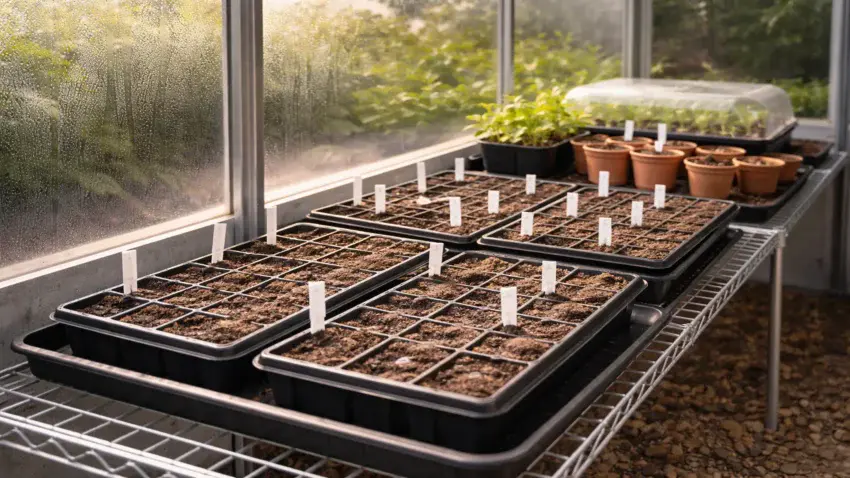
Seed trays with drainage
-
Small pots grouped on wire shelving
-
Shallow flats for greens
-
Reusable cell trays for uniform spacing
Avoid deep containers early on — shallow roots warm faster and reduce excess moisture buildup.
Managing Temperature for Germination
Seed germination depends heavily on temperature, and small greenhouses heat up quickly.
To manage this:
-
Place seed trays on middle shelves, not the roofline
-
Vent on sunny days, even in early spring
-
Close vents in late afternoon to retain warmth
-
Avoid placing trays directly against cold panels
Seeds prefer steady warmth, not temperature spikes.
Watering Without Causing Damping-Off
Overwatering is the most common seed-starting mistake in small greenhouses.
Smart watering habits:
-
Use fine misting instead of heavy watering
-
Water in the morning so surfaces can dry
-
Ensure containers drain freely
-
Avoid letting trays sit in standing water
Soil should be moist, not saturated.
Light Placement and Spacing
Natural sunlight is usually enough for seed starting in a greenhouse, but spacing still matters.
To prevent weak seedlings:
-
Rotate trays every few days
-
Keep leaves from touching neighboring plants
-
Avoid stacking trays directly above one another
-
Thin seedlings early instead of waiting too long
Good airflow and spacing reduce disease and stretching.
Transitioning Seedlings as They Grow
As seedlings develop, their needs change quickly.
At this stage:
-
Reduce humidity gradually
-
Increase airflow
-
Space pots farther apart
-
Prepare plants for outdoor conditions slowly
This hardening-off process makes transplanting far more successful.
To see which plants actually thrive in a balcony greenhouse —
and how growing options change with space and season —
this guide to what you can grow in a balcony greenhouse breaks it all down.
Final Thoughts…
Seed starting in a small or balcony greenhouse is one of the most effective ways to
extend your growing season and make better use of limited space.
Success comes from:
-
Choosing the right seeds
-
Managing warmth and moisture
-
Avoiding overcrowding early
-
Adjusting conditions as plants grow
With a thoughtful approach, even the smallest greenhouse can produce strong,
healthy starts that set the tone for the entire growing season.
 Plan it. Grow it. Enjoy it!
 Helpful Resources for Small Greenhouse Success
Planning and maintaining a small greenhouse goes far beyond choosing the right size or layout. Understanding common pitfalls, having the right tools on hand, and setting things up correctly from the start can make a noticeable difference in both plant health and long-term enjoyment.
If you’re continuing your small greenhouse journey,
these guides will help you move forward with confidence:
-
Common Small Greenhouse Mistakes to Avoid
Learn which sizing, layout, and airflow mistakes cause the most frustration for new growers —
and how to avoid them early. -
Essential Gardening Tools for Small Spaces
A practical breakdown of tools that make daily greenhouse tasks easier, cleaner,
and more efficient in compact environments. -
Small Greenhouse Setup Guide
Step-by-step guidance on positioning, airflow planning, and layout decisions that set your greenhouse up for long-term success.
 Turn Your Gardening Knowledge Into a Simple Online Income
Curious how this site was built?
 Click here to learn more about Wealthy Affiliate.
SmallGardenBox.com started as a simple project built around small-space gardening ideas and greenhouse setups — and it only grew once I learned how to properly build and structure a real website.
If you’ve ever thought about sharing your gardening knowledge, greenhouse experience, or small-space growing tips online, the training at Wealthy Affiliate is what I personally used and recommend.
It walks you through building a website, creating helpful content,
and turning that knowledge into a long-term online asset.
