
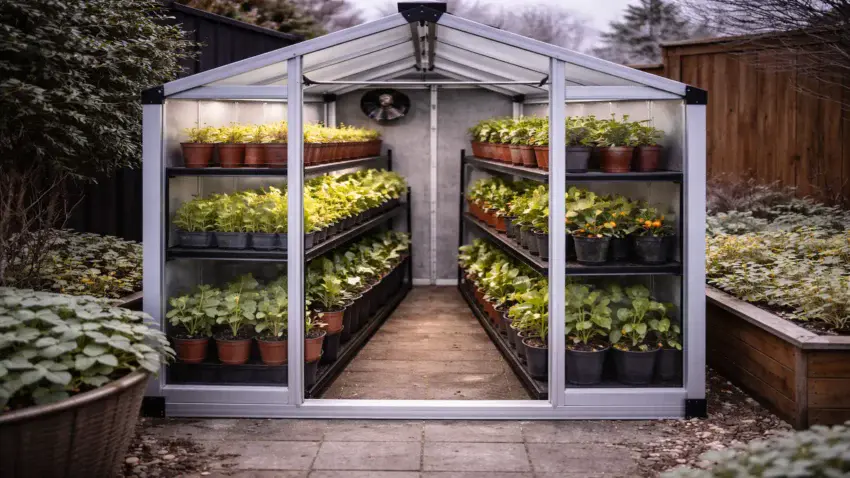
In small greenhouses, what you put next to what matters more than most people realize.
Plant grouping affects airflow, light exposure, watering efficiency, temperature stability,
and how predictable the space feels day to day.
Poor grouping creates micro-problems that are hard to diagnose.
Good grouping makes the entire greenhouse easier to manage.
This page supports our main guide,
Shelving, Layout & Space Optimization for Small Greenhouses,
which explains how plant grouping and zoning work together with shelving and spacing
to keep compact greenhouse layouts balanced and efficient.
This page focuses on how to group plants intentionally
so small greenhouses stay stable instead of chaotic.
Why Random Plant Placement Causes Problems
In compact spaces, randomness compounds quickly.
Common issues include:
-
Tall plants shading low-light growers
-
High-humidity plants overwhelming drier zones
-
Uneven growth caused by mixed light needs
-
Inconsistent watering and maintenance routines
In small greenhouses, poor grouping doesn’t stay localized — it spreads.
Grouping by Light Requirements
Light is the easiest place to start.
Good grouping:
-
Places high-light plants together near the brightest zones
-
Keeps shade-tolerant plants from competing for intensity
-
Prevents constant rearranging as plants stretch or stall
When plants with similar light needs share space, growth becomes more predictable.
Grouping by Water and Humidity Needs
Watering efficiency improves dramatically when plants are grouped correctly.
Benefits include:
-
Fewer overwatering mistakes
-
Reduced standing moisture in dry-loving areas
-
Easier observation of stress patterns
Mixing drought-tolerant and moisture-loving plants on the same shelf
often creates unnecessary problems.
Temperature Zoning in Small Greenhouses
Even in small structures, temperature varies.
Zoning can be done by:
-
Height (warm air rises)
-
Proximity to walls or doors
-
Distance from vents or fans
Grouping plants by temperature tolerance helps prevent stress during seasonal swings.
Avoiding Overcrowding Through Intentional Density
Overcrowding isn’t just about space — it’s about air and recovery time.
Smart density:
-
Leaves space for airflow between plant groups
-
Reduces disease spread
-
Makes it easier to isolate issues early
If plants touch constantly, grouping has failed — even if spacing technically exists.
Functional Zones vs Visual Organization
Small greenhouses benefit more from functional zones than visual symmetry.
Effective zones might include:
-
Seedling or propagation areas
-
Growth-focused production zones
-
Holding or recovery areas
Organizing by function keeps routines simple and repeatable.
Seasonal Grouping Adjustments
Grouping isn’t permanent.
As seasons change:
-
Light availability shifts
-
Plant sizes change
-
Watering needs evolve
Successful small greenhouse layouts allow grouping to adjust without rebuilding the entire setup.
How This Fits Into the Bigger Layout Plan
Once shelving types are chosen and spacing is dialed in,
plant grouping becomes the final tuning step.
It’s what turns a functional layout into a stable, low-friction system.
Our main guide on Shelving, Layout & Space Optimization for Small Greenhouses
shows how grouping decisions interact with shelving, spacing, airflow, and daily workflow.
Final Thoughts…
In small greenhouses, grouping isn’t about perfection —
it’s about reducing friction.
When plants with similar needs share space, the greenhouse becomes easier to read,
easier to maintain, and more forgiving.
Good grouping turns limited space into an advantage instead of a constraint.
 Plan it. Grow it. Enjoy it!
 Helpful Resources for Small Greenhouse Success
Planning and maintaining a small greenhouse goes far beyond choosing the right size or layout. Understanding common pitfalls, having the right tools on hand,
and setting things up correctly from the start can make a noticeable difference in both plant health
and long-term enjoyment.
If you’re continuing your small greenhouse journey,
these guides will help you move forward with confidence:
-
Common Small Greenhouse Mistakes to Avoid
Learn which sizing, layout, and airflow mistakes cause the most frustration for new growers —
and how to avoid them early. -
Essential Gardening Tools for Small Spaces
A practical breakdown of tools that make daily greenhouse tasks easier,
cleaner, and more efficient in compact environments. -
Small Greenhouse Setup Guide
Step-by-step guidance on positioning, airflow planning,
and layout decisions that set your greenhouse up for long-term success.
 Turn Your Gardening Knowledge Into a Simple Online Income
Curious how this site was built?
 Click here to learn more about Wealthy Affiliate.
SmallGardenBox.com started as a simple project built around small-space gardening ideas
and greenhouse setups — and it only grew once I learned how to properly build
and structure a real website.
If you’ve ever thought about sharing your gardening knowledge, greenhouse experience,
or small-space growing tips online, the training at Wealthy Affiliate is what I personally used
and recommend.
It walks you through building a website, creating helpful content,
and turning that knowledge into a long-term online asset.
