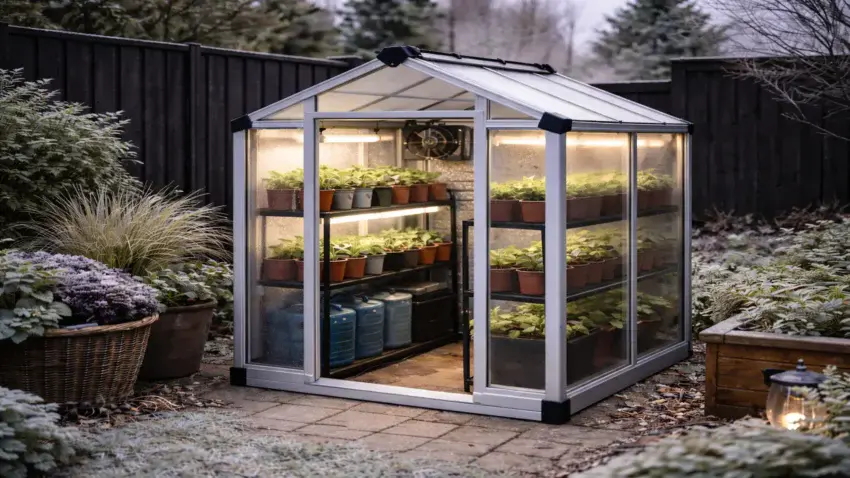
In small greenhouses, the question usually isn’t whether plants get light —
it’s whether they get enough usable light, consistently.
Natural sunlight is always the first source to consider,
but in compact spaces it often falls short due to shade, short days, or uneven distribution.
That’s where supplemental grow lights come in — not to replace sunlight,
but to fill the gaps that small greenhouses can’t avoid.
This page supports our main guide, Lighting & Grow Lights for Small Greenhouses,
which explains how to combine natural and supplemental light in
compact greenhouse environments without overwhelming limited space.
This page focuses on how natural light and grow lights compare in small greenhouses,
and how to decide when supplementation actually makes sense.
When Natural Light Is Enough
In some situations, small greenhouses can rely almost entirely on sunlight.
Natural light may be sufficient when:
-
The greenhouse has full sun exposure for most of the day
-
Shelving and plant density are minimal
-
Days are long and sun angles are high
-
Plants have modest light requirements
In these cases, sunlight provides excellent spectrum quality and costs nothing to use.
The challenge is that these conditions are often seasonal or temporary.
Why Natural Light Often Falls Short in Small Spaces
Small greenhouses lose usable light faster than large ones.
Common limitations include:
-
Shadows from nearby buildings, fences, or trees
-
Shallow sun angles during fall and winter
-
Light blocked by shelving and plant overlap
-
Short winter days that limit total light hours
Even when the greenhouse appears bright, plants may not receive enough
duration or intensity to sustain steady growth.
What Grow Lights Solve in Compact Greenhouses
Grow lights don’t need to overpower sunlight — they need to stabilize it.
In small greenhouses, supplemental lighting helps:
-
Extend day length during short seasons
-
Even out light across shelves and corners
-
Support lower levels that sunlight can’t reach
-
Maintain growth consistency during cloudy periods
Used correctly, grow lights reduce stress rather than accelerate growth unnaturally.
Grow Lights Don’t Replace Sun — They Support It
One of the biggest misconceptions is that grow lights turn a greenhouse
into an indoor grow room.
In small greenhouses:
-
Sunlight still provides the primary energy
-
Grow lights act as insurance, not replacement
-
Lower-output lights are usually sufficient
This balance keeps plants adapted to natural conditions while preventing
slowdowns caused by inconsistent light.
Avoiding Overlighting in Small Greenhouses
More light isn’t always better.
In compact spaces, excessive lighting can:
-
Overheat leaf surfaces
-
Increase water demand rapidly
-
Stress shade-tolerant plants
-
Create uneven growth patterns
Because space is tight, lighting needs to be measured and targeted, not blanket coverage.
Deciding When to Add Grow Lights
Grow lights are usually justified when:
-
Growth slows despite correct temperature and watering
-
Winter or shoulder seasons shorten usable daylight
-
Plants are stacked or shaded by structure design
-
Certain crops consistently underperform
If light is the limiting factor, supplemental lighting often produces
immediate, visible improvement.
How This Fits Into the Bigger Lighting Plan
Understanding the balance between natural light and grow lights helps you decide
if supplemental lighting is needed at all.
Our main guide on Lighting & Grow Lights for Small Greenhouses
ties natural light assessment, grow light selection, and placement together into a
system that fits compact spaces without unnecessary complexity.
Final Thoughts…
In small greenhouses, sunlight is valuable — but it isn’t always reliable.
Grow lights work best when they support natural light, smoothing out its limitations
rather than trying to overpower it.
Once that balance is understood, lighting becomes predictable instead of frustrating.
The next step is choosing
which types of grow lights actually make sense for small greenhouse use,
not which ones look the most powerful.
 Plan it. Grow it. Enjoy it!
 Helpful Resources for Small Greenhouse Success
Planning and maintaining a small greenhouse goes far beyond choosing the right size or layout. Understanding common pitfalls, having the right tools on hand,
and setting things up correctly from the start can make a noticeable difference in both plant health
and long-term enjoyment.
If you’re continuing your small greenhouse journey,
these guides will help you move forward with confidence:
-
Common Small Greenhouse Mistakes to Avoid
Learn which sizing, layout, and airflow mistakes cause the most frustration for new growers —
and how to avoid them early. -
Essential Gardening Tools for Small Spaces
A practical breakdown of tools that make daily greenhouse tasks easier,
cleaner, and more efficient in compact environments. -
Small Greenhouse Setup Guide
Step-by-step guidance on positioning, airflow planning,
and layout decisions that set your greenhouse up for long-term success.
 Turn Your Gardening Knowledge Into a Simple Online Income
Curious how this site was built?
 Click here to learn more about Wealthy Affiliate.
SmallGardenBox.com started as a simple project built around small-space gardening ideas
and greenhouse setups — and it only grew once I learned how to properly build
and structure a real website.
If you’ve ever thought about sharing your gardening knowledge, greenhouse experience,
or small-space growing tips online, the training at Wealthy Affiliate is what I personally used
and recommend.
It walks you through building a website, creating helpful content,
and turning that knowledge into a long-term online asset.
