Light is the engine that drives everything inside a greenhouse.
In small greenhouses — especially balcony, patio, or shaded backyard setups —
light availability is often inconsistent.
Buildings, fences, seasonal sun angles, and short winter days can all limit
how much usable light plants receive, even when the greenhouse itself is well designed.
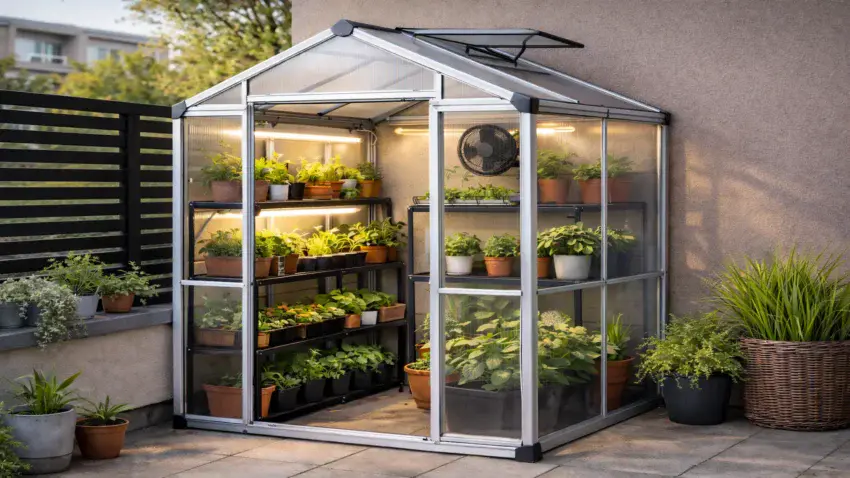
This guide focuses on lighting strategies for small greenhouses,
including when natural light is enough, when supplemental lighting becomes necessary,
and how to add grow lights without overwhelming limited space or creating unnecessary complexity.
The goal isn’t to flood plants with light — it’s to provide consistent, usable illumination
that supports steady growth.
Why Lighting Is Challenging in Small Greenhouses
Small greenhouses magnify lighting problems.
With limited footprint and height, plants often compete for the same light source.
Shadows form quickly, light angles shift more dramatically throughout the day,
and seasonal changes are felt more strongly than in larger structures.
Common lighting challenges include:
-
Insufficient light during winter months
-
Shaded conditions from nearby buildings or railings
-
Uneven light distribution from top to bottom
-
Plants stretching or leaning toward brighter areas
-
Reduced flowering or fruit production
Because small greenhouses have fewer placement options,
lighting decisions must be intentional and efficient.
Making the Most of Natural Light
Natural sunlight should always be your primary light source.
Even in small spaces, thoughtful positioning and layout can significantly improve
how much usable light reaches plants.
Key considerations include:
-
Greenhouse orientation relative to the sun
-
Panel clarity and cleanliness
-
Reflective surfaces to reduce shadow loss
-
Plant placement based on light needs
-
Avoiding overcrowding that blocks light
Maximizing natural light reduces the need for supplemental lighting and
helps plants maintain natural growth rhythms.
When Supplemental Grow Lights Make Sense
Supplemental lighting becomes useful when natural light alone can’t meet plant needs.
This is most common when:
-
Growing during winter or shoulder seasons
-
Using a north-facing balcony or shaded patio
-
Starting seedlings early
-
Growing light-demanding plants in limited sun
In small greenhouses, grow lights should fill gaps, not replace sunlight entirely.
Proper placement and timing matter more than raw output.
Over-lighting can stress plants just as much as under-lighting, especially in tight spaces.
Choosing Grow Lights for Compact Spaces
Not all grow lights work well in small greenhouses.
Limited headroom, power access, and airflow mean lighting choices
must balance effectiveness with practicality.
Important factors include:
-
Light intensity appropriate for small areas
-
Heat output and ventilation impact
-
Mounting options in low-clearance spaces
-
Energy efficiency for long-term use
-
Even coverage without harsh hotspots
In compact environments, fewer well-placed lights almost always outperform larger,
more powerful fixtures.
Avoiding Common Lighting Mistakes
Many lighting problems come from trying to solve the wrong issue.
Common mistakes include:
-
Adding lights when airflow or spacing is the real problem
-
Mounting lights too close to plants
-
Ignoring seasonal sun changes
-
Overcomplicating lighting schedules
-
Using lighting to compensate for overcrowding
Good lighting works alongside proper layout, ventilation,
and temperature control — not as a substitute for them.
How to Choose the Right Lighting Approach for Your Greenhouse
The right lighting strategy depends on:
-
Available natural light
-
Greenhouse size and height
-
Plant types being grown
-
Seasonal goals
-
Power access and limitations
Some small greenhouses thrive with natural light alone.
Others benefit from light supplementation during specific times of year.
The best setups focus on consistency and balance, not maximum brightness.
Lighting should quietly support growth — not become another system you constantly adjust.
If you want to manage more than just lighting in a compact greenhouse,
our Small-Space Greenhouse Accessories & Climate Control pillar covers heating,
ventilation, layout, and other systems that help small greenhouses stay productive year-round.
Once lighting is dialed in inside a small greenhouse, shelving and layout choices
become critical for maintaining airflow, light distribution, and easy day-to-day plant care.
Final Thoughts…
In small greenhouses, lighting is about precision, not intensity.
By maximizing natural light, supplementing only when necessary,
and choosing fixtures suited for compact spaces,
you can create a stable growing environment without excess heat, clutter, or complexity.
Healthy plants don’t need perfect lighting —
they need reliable light that works with the rest of your greenhouse systems.
 Plan it. Grow it. Enjoy it!
 Helpful Resources for Small Greenhouse Success
Planning and maintaining a small greenhouse goes far beyond choosing the right size or layout.
Understanding common pitfalls, having the right tools on hand,
and setting things up correctly from the start can make a noticeable difference in both plant health
and long-term enjoyment.
If you’re continuing your small greenhouse journey,
these guides will help you move forward with confidence:
-
Common Small Greenhouse Mistakes to Avoid
Learn which sizing, layout, and airflow mistakes cause the most frustration for new growers —
and how to avoid them early. -
Essential Gardening Tools for Small Spaces
A practical breakdown of tools that make daily greenhouse tasks easier,
cleaner, and more efficient in compact environments. -
Small Greenhouse Setup Guide
Step-by-step guidance on positioning, airflow planning,
and layout decisions that set your greenhouse up for long-term success.
 Turn Your Gardening Knowledge Into a Simple Online Income
Curious how this site was built?
 Click here to learn more about Wealthy Affiliate.
SmallGardenBox.com started as a simple project built around small-space gardening ideas
and greenhouse setups — and it only grew once I learned how to properly build
and structure a real website.
If you’ve ever thought about sharing your gardening knowledge, greenhouse experience,
or small-space growing tips online, the training at Wealthy Affiliate is what I personally used
and recommend.
It walks you through building a website, creating helpful content,
and turning that knowledge into a long-term online asset.
