
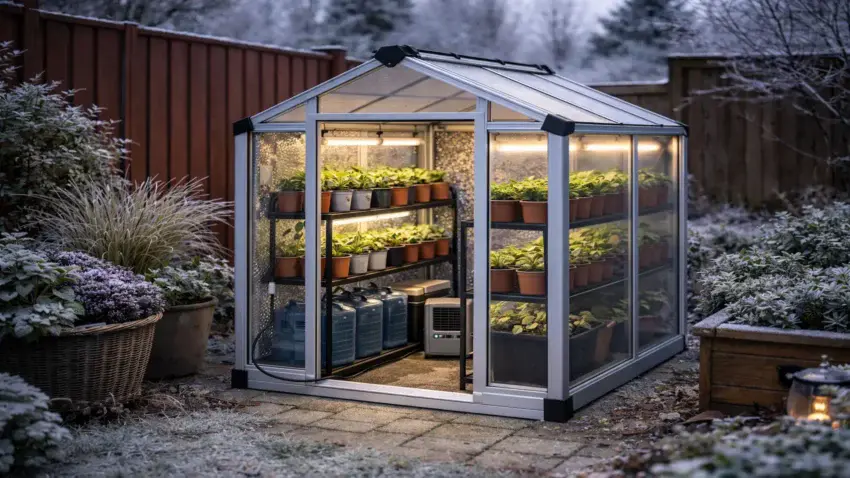
Adding heat to a small greenhouse is only half the equation. In compact spaces,
how well heat is retained often matters more than how much heat is produced.
Poor insulation forces heaters to cycle constantly,
while even modest insulation upgrades can dramatically stabilize temperatures.
This page supports our main guide, Greenhouse Heating for Small Spaces,
which explains how to safely and effectively manage temperature in
compact greenhouse environments.
This child focuses on keeping heat inside small greenhouses, reducing energy loss,
and making heating systems work smarter instead of harder.
Why Insulation Matters More in Small Greenhouses
Small greenhouses lose heat faster because:
-
They have more surface area relative to air volume
-
Thin panels release heat quickly after sunset
-
Drafts have a larger impact in tight spaces
In larger structures, heat loss is gradual. In compact greenhouses, it’s immediate —
which is why insulation has an outsized effect.
Common Heat Loss Points in Compact Greenhouses
Before adding insulation, it helps to understand where heat escapes first.
Typical weak spots include:
-
Door gaps and frame seams
-
Panel joints and glazing edges
-
Roof vents that don’t seal tightly
-
Ground contact along the base
Sealing these areas often improves temperature stability more than upgrading heaters.
Insulation Options That Work in Small Spaces
Not all insulation methods scale well. In small greenhouses,
the goal is retention without blocking light or airflow.
Effective options include:
-
Bubble insulation or thermal film for winter use
-
Insulated north-facing walls or panels
-
Temporary nighttime covers or curtains
-
Insulating the base perimeter to slow ground heat loss
Because the structure is compact, even partial insulation can noticeably reduce
overnight temperature drops.
Thermal Mass: Small Additions, Big Impact
Thermal mass stores heat during the day and releases it slowly at night.
In small greenhouses, it works best when kept simple.
Good small-scale options:
-
Water containers or barrels
-
Stone or masonry placed where sun exposure is highest
-
Dense shelving materials that absorb warmth
The key is balance — too much thermal mass can crowd the space,
but small additions often provide meaningful stability.
Insulation vs Ventilation: Finding the Balance
Retaining heat doesn’t mean sealing the greenhouse airtight.
In compact spaces:
-
Insulation slows heat loss
-
Ventilation prevents overheating and humidity issues
Well-insulated small greenhouses still need controlled airflow,
especially during sunny winter days when temperatures can spike quickly.
How This Fits Into the Bigger Heating Plan
Insulation and heat retention make every heating method more effective.
When heat loss is reduced, heaters cycle less, thermostats respond more predictably,
and plants experience fewer stress swings.
Our main guide on Greenhouse Heating for Small Spaces shows how insulation,
heating methods, and temperature control work together as a system rather than separate fixes.
Final Thoughts…
In small greenhouses, insulation is often the difference between constant adjustment
and steady performance.
By slowing heat loss and supporting temperature stability,
insulation allows even low-output heating systems to work effectively.
When heat retention is treated as a priority,
compact greenhouses become easier to manage, more energy-efficient,
and far less stressful for both plants and growers.
 Plan it. Grow it. Enjoy it!
 Helpful Resources for Small Greenhouse Success
Planning and maintaining a small greenhouse goes far beyond choosing the right size or layout. Understanding common pitfalls, having the right tools on hand,
and setting things up correctly from the start can make a noticeable difference in both plant health
and long-term enjoyment.
If you’re continuing your small greenhouse journey,
these guides will help you move forward with confidence:
-
Common Small Greenhouse Mistakes to Avoid
Learn which sizing, layout, and airflow mistakes cause the most frustration for new growers —
and how to avoid them early. -
Essential Gardening Tools for Small Spaces
A practical breakdown of tools that make daily greenhouse tasks easier,
cleaner, and more efficient in compact environments. -
Small Greenhouse Setup Guide
Step-by-step guidance on positioning, airflow planning,
and layout decisions that set your greenhouse up for long-term success.
 Turn Your Gardening Knowledge Into a Simple Online Income
Curious how this site was built?
 Click here to learn more about Wealthy Affiliate.
SmallGardenBox.com started as a simple project built around small-space gardening ideas
and greenhouse setups — and it only grew once I learned how to properly build
and structure a real website.
If you’ve ever thought about sharing your gardening knowledge, greenhouse experience,
or small-space growing tips online, the training at Wealthy Affiliate is what I personally used
and recommend.
It walks you through building a website, creating helpful content,
and turning that knowledge into a long-term online asset.
