In small greenhouses, ventilation isn’t optional —
it’s what keeps the entire space livable for your plants.
Because compact greenhouses heat up quickly and trap moisture easily,
even a short period without airflow can lead to heat stress, mold, mildew, or weak growth.
Unlike large structures that naturally buffer temperature swings,
balcony and small greenhouses rely almost entirely on intentional airflow to stay balanced.
This guide breaks down how ventilation actually works in small greenhouses,
what methods are most effective, and how to avoid the common mistakes
that cause overheating and poor plant health.
Why Ventilation Matters More in Small Greenhouses
Small greenhouses behave differently than larger ones.
-
They heat faster when the sun hits the panels
-
They cool slower once hot air is trapped
-
Humidity builds quickly from watering and plant transpiration
Without steady airflow, temperatures can spike dramatically — even on mild days —
stressing plants long before you notice a problem.
Good ventilation helps:
-
Regulate temperature
-
Reduce humidity buildup
-
Prevent fungal disease
-
Strengthen plant growth
-
Make the greenhouse more comfortable to work in
Natural Ventilation: The Foundation of Airflow
Most small greenhouses rely on natural ventilation,
meaning airflow created by warm air rising and escaping through openings.
Roof Vents
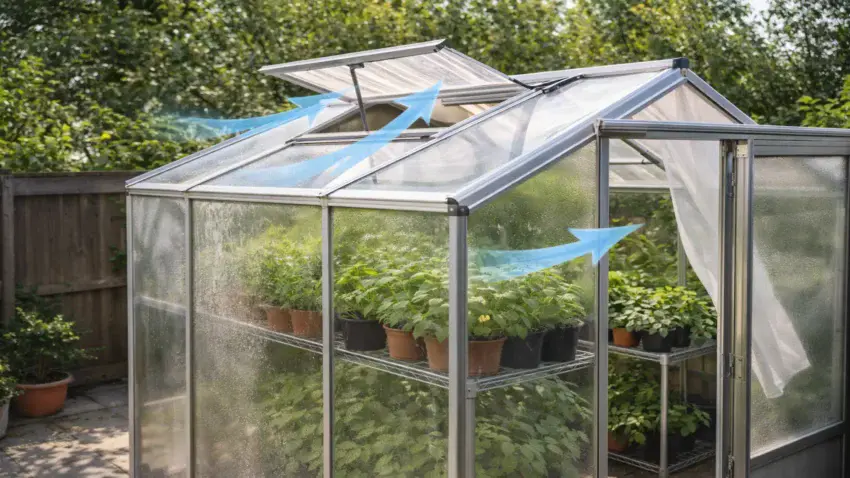
Roof vents are the most effective passive ventilation option.
-
Hot air naturally rises and exits through the top
-
Even a small roof vent can make a noticeable difference
-
Automatic vent openers are ideal for hands-off control
If your greenhouse has only one vent, prioritize a top vent over side openings.
Door Ventilation
Leaving the door partially or fully open creates a strong airflow path.
-
Cool air enters low
-
Warm air exits high
-
Best used during warm, calm weather
For balcony greenhouses, door ventilation is often the easiest and most reliable method.
Side & Wall Vents: Supplemental, Not Primary
Side vents help, but they work best in combination with roof or door ventilation.
-
They introduce fresh air at plant level
-
They reduce stagnant pockets between shelves
-
Alone, they rarely release enough heat
If your greenhouse only has side vents, open them early in the day before heat builds up.
Using Fans in Small Greenhouses
Fans don’t replace ventilation — they improve it.
Circulation Fans
Small clip or oscillating fans help move air evenly through the space.
-
Prevent hot or humid dead zones
-
Strengthen plant stems
-
Reduce disease pressure
Fans should gently move leaves, not blast them.
Exhaust Fans
In very hot or enclosed spaces, a small exhaust fan can actively remove hot air.
-
Most useful when natural ventilation isn’t enough
-
Best paired with a lower intake opening
-
Often unnecessary for basic balcony setups
For most small greenhouses, circulation fans + passive vents are sufficient.
Common Ventilation Mistakes to Avoid
Waiting Too Long to Open Vents
Once a greenhouse overheats, it’s harder to cool down.
Open vents early, especially on sunny mornings.
Blocking Airflow with Shelving
Tightly packed shelves can trap heat and humidity.
-
Leave space between shelves and walls
-
Keep the center walkway clear
-
Avoid solid shelving that blocks airflow
Over-Sealing the Greenhouse
Weatherproofing is good — airtight is not.
A greenhouse needs controlled airflow, not total isolation.
Seasonal Ventilation Adjustments
Ventilation needs change throughout the year.
Spring & Summer
-
Open vents daily
-
Use door ventilation frequently
-
Add shade cloth if temperatures spike
Fall
-
Vent during warm afternoons
-
Close earlier in the evening
-
Monitor humidity closely
Winter (If Growing)
-
Vent briefly on sunny days
-
Focus on moisture control rather than cooling
-
Short airflow bursts prevent condensation buildup
How Ventilation Fits into the Bigger Layout Picture
Ventilation works best when the greenhouse layout supports it.
Clear walkways, balanced shelving heights, and open vertical space all help air move naturally through the structure.
If airflow feels blocked or uneven, the issue is often layout — not lack of vents.
If you’re deciding what to grow next, understanding
what plants actually thrive in a balcony greenhouse across different seasons
helps you make better climate-control choices year-round.
Final Thoughts…
In small greenhouses, ventilation is the difference between a space that constantly struggles
and one that quietly works.
You don’t need complex systems or expensive equipment —
just smart vent placement, consistent habits, and unobstructed airflow.
When ventilation works, temperature stabilizes, humidity drops,
and plants grow stronger with less effort.
Get the air moving right, and everything else becomes easier.
 Plan it. Grow it. Enjoy it!
 Helpful Resources for Small Greenhouse Success
Planning and maintaining a small greenhouse goes far beyond choosing the right size or layout. Understanding common pitfalls, having the right tools on hand, and setting things up correctly from the start can make a noticeable difference in both plant health and long-term enjoyment.
If you’re continuing your small greenhouse journey,
these guides will help you move forward with confidence:
-
Common Small Greenhouse Mistakes to Avoid
Learn which sizing, layout, and airflow mistakes cause the most frustration for new growers—and how to avoid them early. -
Essential Gardening Tools for Small Spaces
A practical breakdown of tools that make daily greenhouse tasks easier, cleaner, and more efficient in compact environments. -
Small Greenhouse Setup Guide
Step-by-step guidance on positioning, airflow planning, and layout decisions that set your greenhouse up for long-term success.
 Turn Your Gardening Knowledge Into a Simple Online Income
Curious how this site was built?
 Click here to learn more about Wealthy Affiliate.
SmallGardenBox.com started as a simple project built around small-space gardening ideas and greenhouse setups — and it only grew once I learned how to properly build and structure a real website.
If you’ve ever thought about sharing your gardening knowledge, greenhouse experience, or small-space growing tips online, the training at Wealthy Affiliate is what I personally used and recommend.
It walks you through building a website, creating helpful content,
and turning that knowledge into a long-term online asset.
