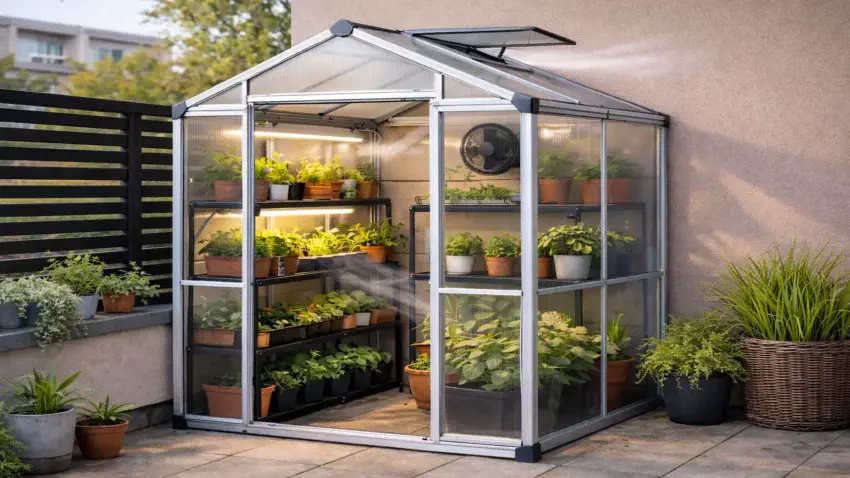
Ventilation is one of the most critical systems in a small greenhouse —
and one of the most underestimated.
In compact spaces, heat, moisture, and stale air build up quickly.
Without a reliable way to move fresh air through the structure,
plants can struggle even when temperature and watering seem correct.
This guide focuses on
ventilation and airflow strategies designed specifically for small greenhouses,
including balcony setups, mini backyard structures, and tight patio builds.
You’ll learn why airflow matters so much in limited space,
how to prevent common ventilation mistakes,
and how to create steady air movement without losing temperature control.
Good ventilation doesn’t fight your greenhouse — it keeps everything in balance.
Why Ventilation Is Critical in Small Greenhouses
Small greenhouses trap air.
With limited volume and fewer natural escape paths, heat and humidity can spike rapidly —
especially on sunny days.
Even short periods of poor airflow can weaken plants, encourage disease,
and create uneven growing conditions.
Common problems caused by poor ventilation include:
-
Overheating during the day
-
Condensation buildup on panels
-
Mold and mildew development
-
Weak stems and slow growth
-
Uneven temperatures from top to bottom
Unlike larger structures, small greenhouses can’t rely on passive air movement alone.
Ventilation must be intentional and consistent.
Passive Ventilation Options for Small Greenhouses
Passive ventilation should always be your starting point.
These methods rely on natural airflow rather than powered systems and
can be surprisingly effective in small spaces when designed properly.
Passive ventilation strategies often include:
-
Roof vents that release rising warm air
-
Side vents or louvered openings
-
Door placement that encourages cross-breeze
-
Vent positioning that aligns with prevailing wind
In small greenhouses, vent placement matters more than vent size.
A few well-positioned openings can outperform larger vents placed incorrectly.
Passive systems work best when heat buildup is predictable and outdoor conditions are mild.
Active Airflow Solutions (Fans & Assisted Ventilation)
When passive airflow isn’t enough, active ventilation fills the gap.
Small circulation fans or vent-assisted airflow systems help move warm,
moist air out while pulling fresh air in.
In compact greenhouses, even gentle air movement can dramatically improve plant health.
Active airflow is especially useful when:
-
Outdoor air is still
-
Humidity remains high
-
Heat collects near the roof
-
Plants are densely spaced
The goal isn’t strong airflow — it’s constant circulation.
Air should move through the space evenly without creating drafts or drying plants.
Managing Heat Without Trapping Humidity
Ventilation and heating are closely connected.
Adding heat without airflow can raise temperatures while trapping moisture,
leading to condensation and fungal issues.
On the other hand, too much ventilation can dump valuable heat too quickly.
Successful small greenhouse setups balance:
-
Heat retention during cool periods
-
Air exchange during warm periods
-
Moisture release without chilling plants
Timing matters. Ventilation doesn’t need to run constantly —
it needs to respond to conditions inside the greenhouse, not just the weather outside.
Choosing the Right Ventilation Strategy for Your Space
There’s no single ventilation setup that works for every small greenhouse.
The right approach depends on:
-
Greenhouse size and height
-
Location (balcony, patio, yard)
-
Local humidity levels
-
Seasonal vs year-round use
-
Power availability
Some greenhouses thrive with passive vents alone.
Others need light mechanical assistance during peak heat or humidity.
The key is choosing airflow solutions that support stability, not constant adjustment.
Ventilation should quietly maintain balance — not become another system you have to babysit.
If you’re looking to manage more than just airflow in a compact greenhouse,
our Small-Space Greenhouse Accessories & Climate Control pillar covers heating, lighting,
layout, and other systems that help small greenhouses stay productive year-round.
After airflow is balanced in a small greenhouse, lighting and grow lights play a
key role in supporting consistent plant growth when natural light is limited.
Final Thoughts…
In small greenhouses, airflow is not optional — it’s foundational.
Proper ventilation prevents overheating, controls moisture,
and creates an environment where plants can grow steadily instead of reacting to stress.
Most ventilation problems come from underestimating how quickly conditions change in tight spaces.
By focusing on steady airflow and thoughtful vent placement, you can protect plants,
reduce disease risk and keep your greenhouse productive throughout the season.
Ventilation isn’t about moving more air — it’s about moving the right amount at the right time.
 Plan it. Grow it. Enjoy it!
 Helpful Resources for Small Greenhouse Success
Planning and maintaining a small greenhouse goes far beyond choosing the right size or layout.
Understanding common pitfalls, having the right tools on hand,
and setting things up correctly from the start can make a noticeable difference in both plant health
and long-term enjoyment.
If you’re continuing your small greenhouse journey,
these guides will help you move forward with confidence:
-
Common Small Greenhouse Mistakes to Avoid
Learn which sizing, layout, and airflow mistakes cause the most frustration for new growers —
and how to avoid them early. -
Essential Gardening Tools for Small Spaces
A practical breakdown of tools that make daily greenhouse tasks easier,
cleaner, and more efficient in compact environments. -
Small Greenhouse Setup Guide
Step-by-step guidance on positioning, airflow planning,
and layout decisions that set your greenhouse up for long-term success.
 Turn Your Gardening Knowledge Into a Simple Online Income
Curious how this site was built?
 Click here to learn more about Wealthy Affiliate.
SmallGardenBox.com started as a simple project built around small-space gardening ideas
and greenhouse setups — and it only grew once I learned how to properly build
and structure a real website.
If you’ve ever thought about sharing your gardening knowledge, greenhouse experience,
or small-space growing tips online, the training at Wealthy Affiliate is what I personally used
and recommend.
It walks you through building a website, creating helpful content,
and turning that knowledge into a long-term online asset.
