
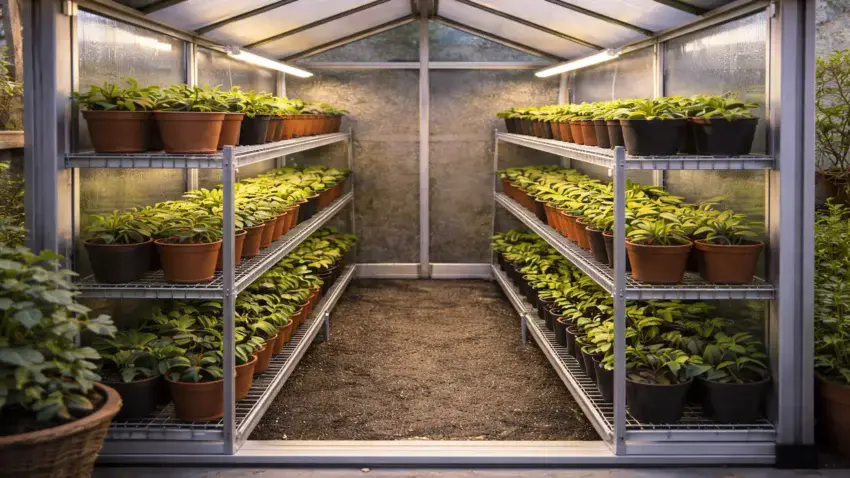
In a small greenhouse, shelving and layout matter just as much as the structure itself.
Even a well-built greenhouse can struggle if shelves block light, restrict airflow,
or make daily access frustrating.
When space is limited, the goal isn’t to fit as many plants as possible.
The goal is to create a layout that allows light, air, and movement to work together.
A thoughtful shelving plan leads to healthier plants, easier maintenance,
and a greenhouse that feels calm instead of cramped.
This guide breaks down how to plan shelving, spacing, and walkways in small greenhouses
so your setup works with the space — not against it.
Before settling on a greenhouse structure,
it helps to review these balcony greenhouse ideas for small spaces,
which cover overall design, airflow, and plant planning in tight areas.
Why Shelving and Layout Matter in Small Greenhouses
In compact greenhouses, small mistakes compound quickly.
A shelf placed too low or too close can block sunlight to an entire section.
Tight walkways make watering and pruning awkward.
Poor airflow creates humidity pockets that invite disease.
Good layout decisions:
-
Improve light distribution
-
Encourage natural airflow
-
Reduce overcrowding
-
Make daily tasks easier
When shelves and spacing are planned intentionally,
plants grow more evenly and problems are easier to spot early.
Choosing the Right Shelving Type
Not all shelving works well in a greenhouse environment, especially in tight spaces.
Wire, Slatted, and Mesh Shelving
Open-style shelving allows light and air to pass through,
making it one of the best choices for small greenhouses.
Benefits:
-
Light reaches lower shelves
-
Better airflow
-
Less moisture buildup
These shelves are ideal for multi-level setups where every inch of vertical space matters.
Solid Shelving
Solid shelves can be useful in limited situations but often cause problems in small greenhouses.
Limitations:
-
Block light to lower plants
-
Trap humidity
-
Increase uneven growth
If solid shelves are used, spacing and positioning become even more critical.
Shelf Spacing: How Much Room Plants Really Need
Crowding shelves too closely is one of the most common layout mistakes.
Proper spacing allows:
-
Light to reach all plant levels
-
Air to circulate between shelves
-
Plants to grow without competing for space
As a general rule, shelves should be spaced far enough apart that light can visibly reach
the lower level during the brightest part of the day.
If lower plants appear shaded for most of the day, spacing is too tight.
Vertical Layout Without Blocking Light
Vertical growing is essential in small greenhouses, but it needs to be done carefully.
Effective vertical strategies include:
-
Staggered shelving heights
-
Hanging baskets placed where they won’t cast constant shade
-
Taller plants positioned along walls rather than center aisles
The goal is to layer plants without creating permanent shadows.
Walkway Width and Access
Access is often overlooked until it becomes a daily annoyance.
Narrow walkways lead to:
-
Bumped plants
-
Spilled soil and water
-
Avoided maintenance tasks
A comfortable walkway allows you to:
-
Reach all shelves easily
-
Rotate plants as needed
-
Inspect growth without rearranging everything
In small greenhouses, a single clear aisle is usually better than multiple cramped paths.
Managing Airflow Through Layout
Shelving placement directly affects airflow.
When shelves are packed tightly against walls or each other,
air stagnates and humidity builds up.
Good airflow comes from:
-
Leaving small gaps between shelves and walls
-
Avoiding solid barriers that block movement
-
Keeping the center of the greenhouse as open as possible
Even passive airflow can make a noticeable difference when layout supports it.
Common Shelving and Layout Mistakes to Avoid
Many greenhouse issues trace back to early layout choices.
Watch out for:
-
Shelves packed wall-to-wall
-
Solid shelves stacked too closely
-
Walkways narrowed by plant overgrowth
-
Hanging planters placed directly over lower shelves
A simpler layout almost always outperforms an overfilled one.
Adjusting Layout as Plants Grow
Plants don’t stay the same size, and your layout shouldn’t be locked in permanently.
Plan for:
-
Adjustable shelves
-
Seasonal rearrangement
-
Removing shelves temporarily if needed
A flexible setup allows your greenhouse to evolve as your growing goals change.
To see how shelving and spacing fit into the bigger picture,
explore these balcony greenhouse ideas for small spaces, which cover greenhouse types,
climate control, and growing strategies for limited environments.
Once shelving and spacing are dialed in,
the next step is managing temperature, airflow, and humidity
so a small greenhouse stays stable as conditions change.
Final Thoughts…
In small greenhouses, shelving and layout quietly determine success.
When light flows freely, air can move, and access feels natural,
plants respond with steadier growth and fewer problems.
Resisting the urge to overcrowd gives you more control, not less.
A balanced layout keeps the greenhouse manageable and
enjoyable to work in throughout the season.
Once shelving and spacing are dialed in, the next challenge becomes managing
temperature and humidity — especially as seasons change.
 Plan it. Grow it. Enjoy it!
 Helpful Resources for Small Greenhouse Success
Planning and maintaining a small greenhouse goes far beyond choosing the right size or layout. Understanding common pitfalls, having the right tools on hand, and setting things up correctly from the start can make a noticeable difference in both plant health and long-term enjoyment.
If you’re continuing your small greenhouse journey,
these guides will help you move forward with confidence:
-
Common Small Greenhouse Mistakes to Avoid
Learn which sizing, layout, and airflow mistakes cause the most frustration for new growers—and how to avoid them early. -
Essential Gardening Tools for Small Spaces
A practical breakdown of tools that make daily greenhouse tasks easier, cleaner, and more efficient in compact environments. -
Small Greenhouse Setup Guide
Step-by-step guidance on positioning, airflow planning, and layout decisions that set your greenhouse up for long-term success.
 Turn Your Gardening Knowledge Into a Simple Online Income
Curious how this site was built?
 Click here to learn more about Wealthy Affiliate.
SmallGardenBox.com started as a simple project built around small-space gardening ideas and greenhouse setups — and it only grew once I learned how to properly build and structure a real website.
If you’ve ever thought about sharing your gardening knowledge, greenhouse experience, or small-space growing tips online, the training at Wealthy Affiliate is what I personally used and recommend.
It walks you through building a website, creating helpful content,
and turning that knowledge into a long-term online asset.
