
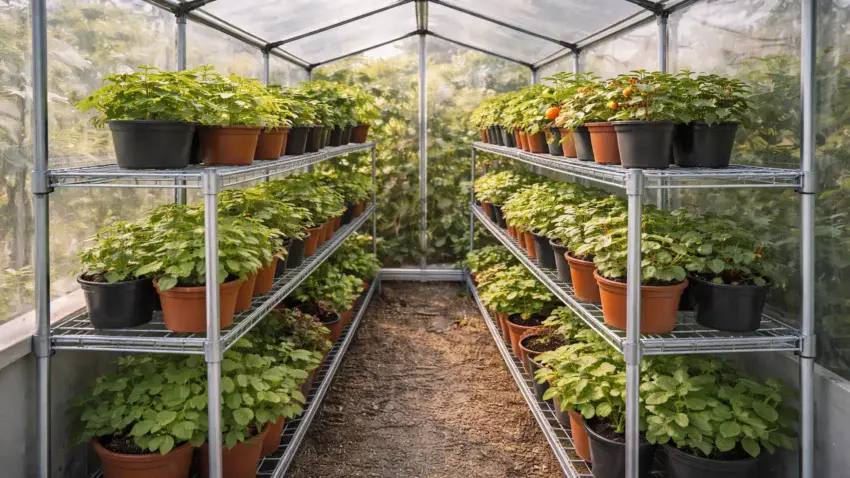
In a small greenhouse, shelving matters just as much as the structure itself.
Even the best greenhouse can become frustrating if shelves block light, restrict airflow,
or make daily access difficult.
Good shelving isn’t about fitting as many plants as possible.
It’s about creating a layout that allows light, air, and movement to work together.
When shelving is planned correctly, plants stay healthier, maintenance becomes easier,
and the greenhouse feels calm instead of cramped.
This guide explains how to set up greenhouse shelving the right way in small greenhouses
so your space works efficiently without sacrificing plant health.
Why Shelving Matters More in Small Greenhouses
Small greenhouses magnify mistakes.
Poor shelf placement that might be tolerable in a large structure can cause real problems
in a compact space.
Common issues caused by bad shelving include:
-
Lower plants sitting in constant shade
-
Poor airflow and trapped humidity
-
Narrow walkways that make access frustrating
-
Overcrowding that encourages disease
Thoughtful shelving avoids these problems and
makes the greenhouse easier to manage day after day.
The Goal of Proper Greenhouse Shelving
The goal isn’t maximum capacity — it’s balanced efficiency.
Well-planned shelving should:
-
Allow light to reach all plants
-
Promote airflow from top to bottom
-
Leave room to move and work comfortably
-
Support plant growth without overcrowding
If shelves make the greenhouse harder to use, they’re working against you.
Best Shelving Types for Small Greenhouses
Wire Shelving
Wire shelves are one of the best options for small greenhouses.
Why they work:
-
Allow light to pass through
-
Improve airflow around plants
-
Reduce moisture buildup
-
Easy to adjust or rearrange
They’re especially effective for seedlings, herbs, and leafy greens.
Narrow, Multi-Tier Shelving
In tight spaces, shelving should be tall, not deep.
Look for shelves that:
-
Use vertical space efficiently
-
Don’t extend too far into walkways
-
Keep plants accessible from the front
Shallow shelves prevent plants from being lost in the back and reduce shading issues.
Proper Shelf Spacing
Spacing between shelves matters as much as the shelves themselves.
General guidelines:
-
Leave enough vertical space for plant growth
-
Avoid stacking shelves too close together
-
Make sure light can reach lower levels
-
Allow airflow between tiers
If plants are brushing the shelf above them, spacing is too tight.
Walkways and Access
A usable greenhouse needs room to move.
Good shelving layouts always:
-
Leave a clear central or side walkway
-
Allow easy access to every shelf
-
Avoid forcing you to move plants just to reach others
Even a narrow walkway is better than no walkway at all.
Common Shelving Mistakes to Avoid
-
Shelves that block windows or panels
-
Deep shelves that are hard to reach
-
Overloading shelves with heavy pots
-
Placing plants directly on the floor
-
Ignoring airflow between levels
Most problems come from trying to fit “just a few more plants” into the space.
How This Fits Into the Bigger Layout
Shelving is only one part of greenhouse layout, but it sets the foundation.
Once shelves are placed correctly, it’s easier to:
-
Space plants properly
-
Improve airflow
-
Use vertical space wisely
-
Avoid overcrowding
From here, it makes sense to look at what happens when shelving is done wrong —
and how to fix it.
If you’re still dialing in how your shelves, spacing, and airflow work together, this full guide to greenhouse shelving, layout, and spacing shows how all the pieces fit in small greenhouses.
Final Thoughts…
In small greenhouses, shelving should support your plants, not fight against them.
When shelves are spaced properly, allow light through, and leave room to work,
the entire greenhouse becomes easier to manage.
Getting shelving right from the start saves time, reduces stress,
and leads to healthier plants — especially in compact growing spaces.
 Plan it. Grow it. Enjoy it!
 Helpful Resources for Small Greenhouse Success
Planning and maintaining a small greenhouse goes far beyond choosing the right size or layout. Understanding common pitfalls, having the right tools on hand, and setting things up correctly from the start can make a noticeable difference in both plant health and long-term enjoyment.
If you’re continuing your small greenhouse journey,
these guides will help you move forward with confidence:
-
Common Small Greenhouse Mistakes to Avoid
Learn which sizing, layout, and airflow mistakes cause the most frustration for new growers—and how to avoid them early. -
Essential Gardening Tools for Small Spaces
A practical breakdown of tools that make daily greenhouse tasks easier, cleaner, and more efficient in compact environments. -
Small Greenhouse Setup Guide
Step-by-step guidance on positioning, airflow planning, and layout decisions that set your greenhouse up for long-term success.
 Turn Your Gardening Knowledge Into a Simple Online Income
Curious how this site was built?
 Click here to learn more about Wealthy Affiliate.
SmallGardenBox.com started as a simple project built around small-space gardening ideas and greenhouse setups — and it only grew once I learned how to properly build and structure a real website.
If you’ve ever thought about sharing your gardening knowledge, greenhouse experience, or small-space growing tips online, the training at Wealthy Affiliate is what I personally used and recommend.
It walks you through building a website, creating helpful content,
and turning that knowledge into a long-term online asset.
