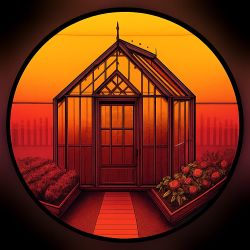

Heating a small greenhouse isn’t just a scaled-down version of heating a large one.
In compact structures — balcony greenhouses, mini backyard builds, patio setups,
and side-yard enclosures — temperature changes happen faster, hit harder, and swing wider.
That difference is the root cause of most heating mistakes.
This page breaks down why small greenhouses behave differently,
so the heating methods covered in our main guide on
greenhouse heating for small spaces actually make sense when you apply them.
This breakdown supports our main guide on Greenhouse Heating for Small Spaces,
where we focus on practical, controlled heating methods designed
specifically for compact greenhouse environments.
Small Greenhouses Heat Up (and Cool Down) Faster
The defining characteristic of a small greenhouse is low thermal mass.
With less air volume and fewer surfaces to absorb heat,
temperature reacts almost instantly to changes:
-
A few minutes of sun can spike interior temperatures
-
A passing cloud can cause a noticeable drop
-
Nighttime heat loss happens quickly after sunset
In larger greenhouses, these changes are gradual. In small ones, they’re immediate.
This is why “more heat” is rarely the solution — control is.
Overheating Is a Bigger Risk Than Freezing
Most people worry about cold damage first.
In small greenhouses, overheating is often the real threat.
Common causes include:
-
Heaters sized for larger spaces
-
No thermostat or poor placement
-
Solar gain stacking on top of artificial heat
A compact greenhouse can jump from “safe” to “stressful” temperatures
before plants have time to adapt.
That stress weakens growth even if temperatures never drop below freezing.
Effective heating in small spaces focuses on stability, not maximum warmth.
Tight Spaces Trap Heat Unevenly
Another challenge unique to small greenhouses is uneven heat distribution.
In tight footprints:
-
Warm air pools quickly near the roof
-
Cold spots linger near doors, corners, and glazing seams
-
Plants on upper shelves experience very different conditions than those below
This makes heater placement and airflow more important than heater strength.
A smaller heat source, placed correctly,
usually performs better than a powerful heater fighting poor circulation.
Insulation Matters More Than Heat Output
In small greenhouses, heat retention beats heat generation.
Because the structure is compact:
-
Small insulation upgrades have an outsized impact
-
Draft sealing makes a noticeable difference
-
Nighttime heat loss is easier to slow down
This is why many small-space heating strategies start with insulation and
heat conservation before adding any active heat source.
Why “Greenhouse Size” Should Drive Heating Choices
Heating advice that works for large backyard or commercial greenhouses often fails in compact setups.
Small greenhouses require:
-
Lower-wattage heat sources
-
Tighter thermostat control
-
Faster response to weather changes
-
Greater awareness of sun-driven heat gain
When heating decisions are matched to greenhouse scale,
plant health improves and energy waste drops sharply.
How This Fits Into the Bigger Heating Strategy
Understanding how heat behaves in small spaces makes it easier to choose
the right heating method — whether that’s supplemental electric heat,
passive warmth, or a combination of both.
Our full guide to Greenhouse Heating for Small Spaces builds on these principles
and walks through practical heating approaches that respect the realities of
compact greenhouse environments.
Final Thoughts…
Small greenhouses don’t fail because they can’t get warm enough —
they fail because heat isn’t managed carefully.
Once you understand how quickly temperature changes, how easily heat becomes uneven,
and why insulation matters more than raw output, heating decisions become clearer
and far more effective.
From here, the next step is choosing heating methods designed for small spaces,
not oversized solutions that create more problems than they solve.
 Plan it. Grow it. Enjoy it!
 Helpful Resources for Small Greenhouse Success
Planning and maintaining a small greenhouse goes far beyond choosing the right size or layout.
Understanding common pitfalls, having the right tools on hand,
and setting things up correctly from the start can make a noticeable difference in both plant health
and long-term enjoyment.
If you’re continuing your small greenhouse journey,
these guides will help you move forward with confidence:
-
Common Small Greenhouse Mistakes to Avoid
Learn which sizing, layout, and airflow mistakes cause the most frustration for new growers —
and how to avoid them early. -
Essential Gardening Tools for Small Spaces
A practical breakdown of tools that make daily greenhouse tasks easier,
cleaner, and more efficient in compact environments. -
Small Greenhouse Setup Guide
Step-by-step guidance on positioning, airflow planning,
and layout decisions that set your greenhouse up for long-term success.
 Turn Your Gardening Knowledge Into a Simple Online Income
Curious how this site was built?
 Click here to learn more about Wealthy Affiliate.
SmallGardenBox.com started as a simple project built around small-space gardening ideas
and greenhouse setups — and it only grew once I learned how to properly build
and structure a real website.
If you’ve ever thought about sharing your gardening knowledge, greenhouse experience,
or small-space growing tips online, the training at Wealthy Affiliate is what I personally used
and recommend.
It walks you through building a website, creating helpful content,
and turning that knowledge into a long-term online asset.
