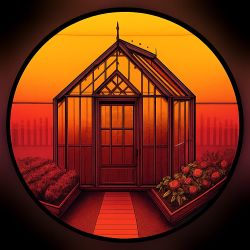

Heating a small greenhouse isn’t the same as heating a large one.
In compact spaces — like balcony greenhouses, mini backyard structures,
or tight patio setups — temperature changes happen fast.
A little extra heat can quickly become too much,
while cold nights can undo a full day of sun in just a few hours.
This guide focuses on smart, controlled heating for small greenhouses, not brute force solutions.
You’ll learn how heat behaves in limited spaces, why overheating is more common than freezing,
and how to choose a heating approach that supports healthy plant growth instead of working against it.
If you’re growing in a small greenhouse, the goal isn’t maximum heat — it’s stable, predictable warmth.
Why Heating Is Tricky in Small Greenhouses
Small greenhouses amplify every mistake.
Because there’s less air volume and less thermal mass,
temperature swings happen faster than most people expect.
A sunny afternoon can raise internal temperatures dramatically,
while nightfall can cause rapid heat loss — sometimes within minutes.
Common challenges include:
-
Sudden daytime overheating
-
Sharp temperature drops after sunset
-
Uneven heat distribution
-
Dry air that stresses plants
-
Roots warming or cooling faster than foliage
Unlike larger structures, small greenhouses don’t buffer changes well.
That’s why heating strategies need to be measured and intentional, not reactive.
Passive Heating Options for Small Greenhouses
Passive heating should always be your first line of defense.
These methods don’t rely on electricity or fuel and help your greenhouse
retain and manage the heat it already receives.
In small spaces, passive techniques can often provide enough warmth on their own —
especially during shoulder seasons.
Common passive heating strategies include:
-
Maximizing sun exposure during the day
-
Reducing heat loss at night
-
Using thermal mass to store daytime warmth
-
Improving insulation around panels, doors, and seams
Passive heating works best when your greenhouse receives consistent sunlight
and is protected from wind.
Even small improvements can significantly reduce how much supplemental heat you need.
Active Heating Options (When Passive Isn’t Enough)
There are times when passive methods simply aren’t sufficient —
especially during cold nights, extended cloudy periods, or winter growing.
Active heating introduces an external heat source, but in small greenhouses,
more heat is rarely better.
Oversized heaters can dry the air, scorch plants, and create dangerous temperature swings.
Active heating options are typically used to:
-
Prevent frost damage
-
Maintain minimum nighttime temperatures
-
Support winter or early-spring growing
In small spaces, safety, airflow, and temperature regulation matter more than raw output.
Any active heating approach must be paired with good ventilation
and monitoring to avoid plant stress.
Preventing Overheating and Dry Air
Overheating is the most common heating-related problem in small greenhouses.
Because warm air accumulates quickly,
temperatures can spike well beyond what plants can tolerate —
sometimes without obvious warning.
Dry air often follows, increasing water stress and slowing growth.
Common causes include:
-
Too much supplemental heat
-
Poor air circulation
-
Lack of ventilation during sunny periods
-
Heat sources placed too close to plants
Successful heating setups focus on even heat distribution, not hot spots.
Circulating air and allowing excess heat to escape at the right times is
just as important as adding warmth in the first place.
How to Choose the Right Heating Approach for Your Space
There is no universal heating solution for small greenhouses.
The right approach depends on:
-
Greenhouse size and design
-
Location (balcony, patio, yard)
-
Local climate
-
Seasonal vs year-round use
-
Available power sources
Some growers need only passive heat retention.
Others require light supplemental heat during cold nights.
The key is matching the heating strategy to the specific limitations of your space,
rather than copying large-greenhouse solutions that don’t scale down well.
Heating should support plant growth quietly in the background — not dominate the system.
If you’re looking to manage more than just heat in a compact greenhouse,
our Small-Space Greenhouse Accessories & Climate Control pillar covers ventilation,
lighting, layout, and other systems that help small greenhouses stay productive year-round.
Once you have heating under control in a small greenhouse,
proper ventilation and airflow become essential for releasing excess heat
and managing humidity throughout the space.
Final Thoughts…
Small greenhouse heating is a balancing act.
Too little heat limits growth.
Too much heat causes stress.
The most successful setups rely on moderation, airflow, and consistency,
not constant adjustment.
By understanding how heat behaves in compact spaces —
and choosing strategies designed specifically for small greenhouses —
you can extend your growing season, protect plants from damage,
and avoid the common mistakes that frustrate new growers.
Heating doesn’t need to be complicated.
It just needs to be controlled.
 Plan it. Grow it. Enjoy it!
 Helpful Resources for Small Greenhouse Success
Planning and maintaining a small greenhouse goes far beyond choosing the right size or layout.
Understanding common pitfalls, having the right tools on hand,
and setting things up correctly from the start can make a noticeable difference in both plant health
and long-term enjoyment.
If you’re continuing your small greenhouse journey,
these guides will help you move forward with confidence:
-
Common Small Greenhouse Mistakes to Avoid
Learn which sizing, layout, and airflow mistakes cause the most frustration for new growers —
and how to avoid them early. -
Essential Gardening Tools for Small Spaces
A practical breakdown of tools that make daily greenhouse tasks easier,
cleaner, and more efficient in compact environments. -
Small Greenhouse Setup Guide
Step-by-step guidance on positioning, airflow planning,
and layout decisions that set your greenhouse up for long-term success.
 Turn Your Gardening Knowledge Into a Simple Online Income
Curious how this site was built?
 Click here to learn more about Wealthy Affiliate.
SmallGardenBox.com started as a simple project built around small-space gardening ideas
and greenhouse setups — and it only grew once I learned how to properly build
and structure a real website.
If you’ve ever thought about sharing your gardening knowledge, greenhouse experience,
or small-space growing tips online, the training at Wealthy Affiliate is what I personally used
and recommend.
It walks you through building a website, creating helpful content,
and turning that knowledge into a long-term online asset.
