Climate control is where many small greenhouses succeed or fail. In compact spaces,
temperature and humidity change quickly, and even a few hours of poor conditions can stress plants.
Unlike large greenhouses, small structures heat up faster, cool down faster,
and trap moisture more easily.
That doesn’t mean they’re harder to manage —
it means they require intentional design and simple habits rather than complex equipment.
This guide explains how to manage heat, airflow, and humidity in balcony
and small greenhouses so plants stay healthy across changing seasons.
Before settling on a greenhouse structure,
it helps to review these balcony greenhouse ideas for small spaces,
which cover overall design, airflow, and plant planning in tight areas.
Why Climate Control Is Different in Small Greenhouses
Small greenhouses respond immediately to environmental changes.
Morning sun can raise temperatures rapidly,
while a cold night can undo progress just as fast.
Common challenges include:
-
Overheating on sunny days
-
High humidity with poor airflow
-
Sudden temperature drops overnight
-
Condensation forming on walls and plants
Understanding how air and heat move through a small structure helps you prevent
problems before they start.
Managing Heat in a Compact Greenhouse
Heat is both a benefit and a risk in small greenhouses.
Capturing warmth extends the growing season, but too much heat causes plant stress.
Effective heat management includes:
-
Venting warm air before it builds up
-
Avoiding overcrowded layouts that trap heat
-
Using shade selectively during peak sun hours
In small spaces, passive solutions often work better than powered ones because they
respond naturally to changing conditions.
Ventilation: The Most Important Climate Factor
Ventilation does more than cool the greenhouse.
It controls humidity, improves air quality, and reduces the risk of disease.
Good ventilation helps:
-
Prevent condensation buildup
-
Reduce mold and mildew
-
Strengthen plant stems through gentle airflow
Even a small opening near the top of the greenhouse can make a noticeable difference
when combined with a clear lower airflow path.
Controlling Humidity in Tight Spaces
Humidity rises quickly in small greenhouses, especially when shelves are packed closely together.
High humidity can lead to:
-
Fungal issues
-
Soft, weak growth
-
Condensation dripping onto leaves
To manage moisture levels:
-
Space plants so air can move freely
-
Avoid watering late in the day
-
Allow fresh air exchange regularly
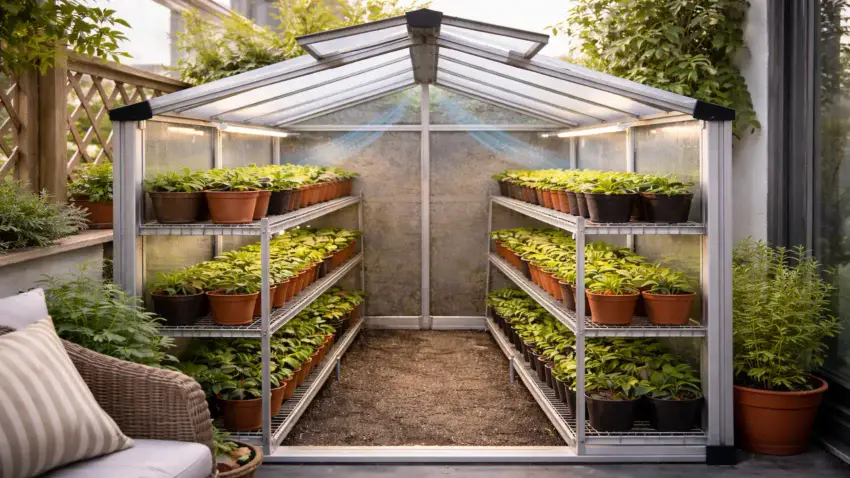
Humidity control improves dramatically when shelving and spacing support airflow rather than block it.
Cold Protection Without Overheating
Cold nights are often the biggest concern for balcony gardeners.
While greenhouses help retain warmth, improper sealing or airflow can cause sharp temperature swings.
Simple cold-protection strategies include:
-
Closing vents before sunset
-
Using thermal mass like water containers
-
Positioning plants away from cold exterior walls
The goal is to slow heat loss without sealing the greenhouse so tightly that moisture builds up overnight.
Seasonal Climate Adjustments
Climate control changes with the seasons, even in the same greenhouse.
Spring and Fall
-
Monitor daytime overheating
-
Balance ventilation with warmth retention
Summer
-
Maximize airflow
-
Reduce direct sun exposure during peak hours
Winter
-
Minimize heat loss
-
Focus on insulation and overnight temperature stability
Adjusting habits seasonally prevents extreme conditions from developing.
How Layout Affects Climate Control
Climate control doesn’t exist separately from layout.
Shelving placement, walkway width, and plant spacing all influence airflow and temperature.
A well-planned layout:
-
Allows warm air to escape upward
-
Prevents stagnant air pockets
-
Keeps humidity levels more even
If air can move naturally through the greenhouse, temperature becomes easier to manage.
Common Climate Control Mistakes to Avoid
Many greenhouse problems come from small oversights.
Watch out for:
-
Blocking vents with plants or shelving
-
Closing the greenhouse completely for long periods
-
Overwatering in enclosed spaces
-
Ignoring temperature swings between day and night
Simple awareness prevents most climate-related issues.
For a complete overview of designing compact greenhouse setups,
this guide on balcony greenhouse ideas for small spaces explains how structure,
layout, and plant planning work together in tight areas.
With temperature, airflow, and humidity under control, the next step is choosing
plants that thrive in a small greenhouse and match the conditions you’ve created.
Final Thoughts…
Climate control in small greenhouses doesn’t require complicated systems.
It requires attention, balance, and a layout that supports airflow and heat movement.
When temperature and humidity are managed consistently, plants grow stronger,
recover faster from stress, and remain productive longer.
A calm greenhouse environment is easier to maintain and more enjoyable to work in.
Once climate control is under control,
the final piece of the puzzle is choosing plants that thrive in
compact greenhouse conditions throughout the year.
 Plan it. Grow it. Enjoy it!
 Helpful Resources for Small Greenhouse Success
Planning and maintaining a small greenhouse goes far beyond choosing the right size or layout. Understanding common pitfalls, having the right tools on hand, and setting things up correctly from the start can make a noticeable difference in both plant health and long-term enjoyment.
If you’re continuing your small greenhouse journey,
these guides will help you move forward with confidence:
-
Common Small Greenhouse Mistakes to Avoid
Learn which sizing, layout, and airflow mistakes cause the most frustration for new growers—and how to avoid them early. -
Essential Gardening Tools for Small Spaces
A practical breakdown of tools that make daily greenhouse tasks easier, cleaner, and more efficient in compact environments. -
Small Greenhouse Setup Guide
Step-by-step guidance on positioning, airflow planning, and layout decisions that set your greenhouse up for long-term success.
 Turn Your Gardening Knowledge Into a Simple Online Income
Curious how this site was built?
 Click here to learn more about Wealthy Affiliate.
SmallGardenBox.com started as a simple project built around small-space gardening ideas and greenhouse setups — and it only grew once I learned how to properly build and structure a real website.
If you’ve ever thought about sharing your gardening knowledge, greenhouse experience, or small-space growing tips online, the training at Wealthy Affiliate is what I personally used and recommend.
It walks you through building a website, creating helpful content,
and turning that knowledge into a long-term online asset.
