Humidity is one of the most overlooked factors in small greenhouse success —
and one of the easiest to get wrong.
In compact greenhouses, moisture builds up fast.
Watered plants, warm air, limited airflow,
and tight spacing can push humidity levels far beyond what most plants can tolerate.
Left unchecked, that excess moisture leads to mold, mildew, fungal disease, and weak growth.
The goal isn’t to eliminate humidity — plants need it.
The goal is controlled humidity that supports healthy growth without creating problems.
Why Humidity Is Harder to Manage in Small Greenhouses
Small greenhouses trap moisture more quickly than large structures.
There’s less air volume, fewer natural air exchanges, and often limited ventilation options.
A single watering session can spike humidity for hours if air isn’t moving properly.
Common challenges include:
-
Moist air lingering overnight
-
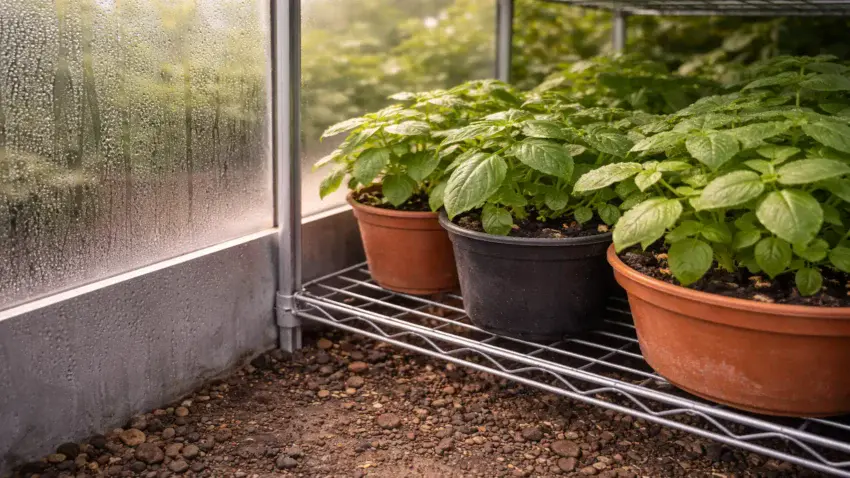
Condensation forming on walls and ceilings
-
Damp soil that never fully dries
-
Leaf surfaces staying wet too long
When humidity stays high for extended periods, plants struggle to transpire properly,
and disease pressure increases.
Signs Humidity Is Too High
High humidity doesn’t always show up immediately — but plants will tell you.
Watch for:
-
Persistent condensation on panels or roof
-
Mold or algae on soil surfaces
-
Powdery mildew on leaves
-
Soft, leggy growth
-
Leaves that feel damp long after watering
If these issues appear, airflow and moisture control need adjustment.
Ideal Humidity Ranges for Small Greenhouses
Most common greenhouse plants thrive in a moderate humidity range.
General targets:
-
Seedlings: 60–70%
-
Leafy greens & herbs: 50–65%
-
Fruit-bearing plants: 50–60%
Going above 70% for extended periods increases disease risk, especially in cooler conditions.
How to Lower Humidity Without Drying Plants Out
Humidity control doesn’t require expensive equipment.
In small greenhouses, simple habits matter more than gadgets.
Improve Airflow First
Air movement is the fastest way to stabilize humidity.
-
Open roof vents daily, even in cooler weather
-
Crack doors or side vents briefly after watering
-
Use passive airflow rather than sealing the space shut
Moving air helps moisture evaporate evenly instead of settling on leaves and surfaces.
Adjust Watering Habits
Overwatering is a major humidity driver.
-
Water early in the day so moisture can evaporate
-
Avoid soaking soil late in the evening
-
Water soil directly instead of misting leaves
Wet leaves + stagnant air = disease.
Space Plants Properly
Crowded plants trap moisture between leaves.
-
Leave gaps between pots
-
Avoid stacking plants directly above each other
-
Prune dense growth to improve air circulation
Good spacing alone can reduce humidity issues dramatically.
Manage Condensation
Condensation is a warning sign, not a harmless side effect.
If you see water dripping from panels:
-
Increase ventilation duration
-
Reduce nighttime watering
-
Open vents briefly even on cool mornings
Dry surfaces mean stable humidity.
When Humidity Is Too Low
Low humidity can also be a problem, especially in winter.
Signs include:
-
Leaf curling or browning edges
-
Stunted growth
-
Excessively dry soil despite watering
If humidity drops too low:
-
Group plants closer (without crowding)
-
Place shallow water trays away from foliage
-
Reduce ventilation slightly during cold, dry periods
Balance is the goal — not extremes.
Seasonal Humidity Adjustments
Humidity control changes with the seasons.
-
Spring: High humidity risk from cool nights and watering
-
Summer: Ventilation is critical to prevent heat + moisture buildup
-
Fall: Watch condensation as temperatures fluctuate
-
Winter: Reduce moisture while avoiding overly dry air
Adjusting habits seasonally prevents most problems before they start.
If you’re deciding what to grow next, understanding
what plants actually thrive in a balcony greenhouse across different seasons
helps you make better climate-control choices year-round.
Final Thoughts…
In small and balcony greenhouses, humidity doesn’t manage itself.
A few simple practices — airflow, smart watering, and proper spacing —
make the difference between a healthy growing environment and constant disease issues.
When humidity is controlled, plants grow stronger, resist stress better,
and require less intervention overall.
Next, it helps to understand what plants actually thrive under these controlled conditions —
and how your growing choices change throughout the year.
 Plan it. Grow it. Enjoy it!
 Helpful Resources for Small Greenhouse Success
Planning and maintaining a small greenhouse goes far beyond choosing the right size or layout. Understanding common pitfalls, having the right tools on hand, and setting things up correctly from the start can make a noticeable difference in both plant health and long-term enjoyment.
If you’re continuing your small greenhouse journey,
these guides will help you move forward with confidence:
-
Common Small Greenhouse Mistakes to Avoid
Learn which sizing, layout, and airflow mistakes cause the most frustration for new growers —
and how to avoid them early. -
Essential Gardening Tools for Small Spaces
A practical breakdown of tools that make daily greenhouse tasks easier, cleaner,
and more efficient in compact environments. -
Small Greenhouse Setup Guide
Step-by-step guidance on positioning, airflow planning, and layout decisions that set your greenhouse up for long-term success.
 Turn Your Gardening Knowledge Into a Simple Online Income
Curious how this site was built?
 Click here to learn more about Wealthy Affiliate.
SmallGardenBox.com started as a simple project built around small-space gardening ideas and greenhouse setups — and it only grew once I learned how to properly build and structure a real website.
If you’ve ever thought about sharing your gardening knowledge, greenhouse experience, or small-space growing tips online, the training at Wealthy Affiliate is what I personally used and recommend.
It walks you through building a website, creating helpful content,
and turning that knowledge into a long-term online asset.
