Once you’ve decided that supplemental lighting is necessary,
the next question is which grow lights actually make sense in a small greenhouse.
In compact spaces, light type matters as much as light output —
oversized or mismatched fixtures can create heat problems, uneven coverage, or wasted energy.
This page supports our main guide, Lighting & Grow Lights for Small Greenhouses,
which explains how to add effective supplemental lighting
without overwhelming limited greenhouse space.
This page focuses on grow light types that work best in small greenhouses,
and why simpler, lower-output options often outperform larger systems.
Why Grow Light Choice Matters More in Small Spaces
Small greenhouses amplify mistakes.
Because plants, lights, and walls are close together:
-
Excess heat builds quickly
-
Light intensity rises fast at short distances
-
Poor beam spread creates bright spots and shadows
The “strongest” light is rarely the best choice.
The right light is the one that fits the scale of the space.
LED Grow Lights: The Best Fit for Small Greenhouses
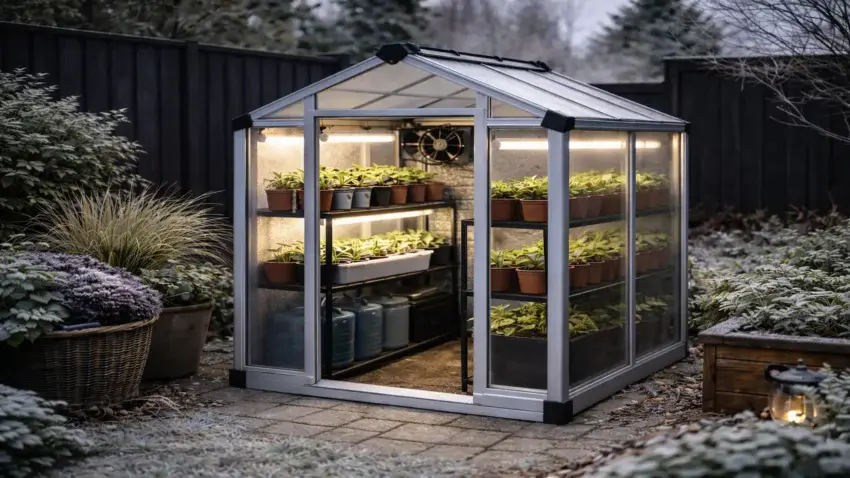
For most small greenhouse setups, LED grow lights are the most practical option.
They work well because they:
-
Produce very little excess heat
-
Use minimal electricity
-
Come in slim, low-profile fixtures
-
Provide consistent output at short distances
In compact spaces, LEDs allow light to be added close to plants
without stressing them or overheating the structure.
Fluorescent Lights: Still Useful in Limited Roles
Fluorescent lights aren’t obsolete — they’re just specialized.
They can work well for:
-
Seed starting
-
Young plants and cuttings
-
Short-term supplemental lighting
However, fluorescents tend to:
-
Cover smaller areas
-
Lose intensity quickly with distance
-
Offer less flexibility as plants grow
In small greenhouses, they’re best used for specific zones, not full-space coverage.
Why High-Intensity Lights Rarely Make Sense
High-intensity discharge (HID) lights and
powerful fixtures are often a poor match for small greenhouses.
Common problems include:
-
Excess heat buildup
-
Uneven light distribution
-
High energy use
-
Limited mounting flexibility
These lights are designed for large spaces with height and airflow —
conditions most small greenhouses don’t have.
Spectrum Matters, But Doesn’t Need to Be Complicated
Modern grow lights often emphasize full-spectrum output,
which works well for mixed plant growth.
In small greenhouses:
-
Broad, balanced spectrum is usually sufficient
-
Highly specialized spectrums add complexity without much benefit
-
Plants benefit more from consistent light duration than fine-tuned color control
Simple, balanced lighting keeps management easy and results predictable.
Matching Light Type to Plant Needs
Not all plants require the same intensity.
In compact greenhouses:
-
Leafy greens and herbs need modest supplemental light
-
Fruiting plants may need stronger or longer lighting periods
-
Mixed plant setups benefit from adjustable or zone-based lighting
Choosing flexible fixtures makes it easier to adapt as plant selection changes.
How This Fits Into the Bigger Lighting Plan
Once the right grow light type is chosen, the remaining factors become
placement, height, and timing.
Light type sets the foundation, but how it’s used determines the outcome.
Our main guide on Lighting & Grow Lights for Small Greenhouses
connects light type selection with placement and scheduling to create a balanced,
low-stress lighting system for compact spaces.
Final Thoughts…
In small greenhouses, lighting success comes from fit, not force.
Lights that match the size of the space deliver more usable light,
create fewer side effects and require less adjustment.
When grow light types are chosen with scale in mind,
supplemental lighting becomes a support system —
not a constant problem to manage.
Next, the final step is learning
where to place grow lights and how high to mount them
for even coverage in small greenhouses.
 Plan it. Grow it. Enjoy it!
 Helpful Resources for Small Greenhouse Success
Planning and maintaining a small greenhouse goes far beyond choosing the right size or layout. Understanding common pitfalls, having the right tools on hand,
and setting things up correctly from the start can make a noticeable difference in both plant health
and long-term enjoyment.
If you’re continuing your small greenhouse journey,
these guides will help you move forward with confidence:
-
Common Small Greenhouse Mistakes to Avoid
Learn which sizing, layout, and airflow mistakes cause the most frustration for new growers —
and how to avoid them early. -
Essential Gardening Tools for Small Spaces
A practical breakdown of tools that make daily greenhouse tasks easier,
cleaner, and more efficient in compact environments. -
Small Greenhouse Setup Guide
Step-by-step guidance on positioning, airflow planning,
and layout decisions that set your greenhouse up for long-term success.
 Turn Your Gardening Knowledge Into a Simple Online Income
Curious how this site was built?
 Click here to learn more about Wealthy Affiliate.
SmallGardenBox.com started as a simple project built around small-space gardening ideas
and greenhouse setups — and it only grew once I learned how to properly build
and structure a real website.
If you’ve ever thought about sharing your gardening knowledge, greenhouse experience,
or small-space growing tips online, the training at Wealthy Affiliate is what I personally used
and recommend.
It walks you through building a website, creating helpful content,
and turning that knowledge into a long-term online asset.
