
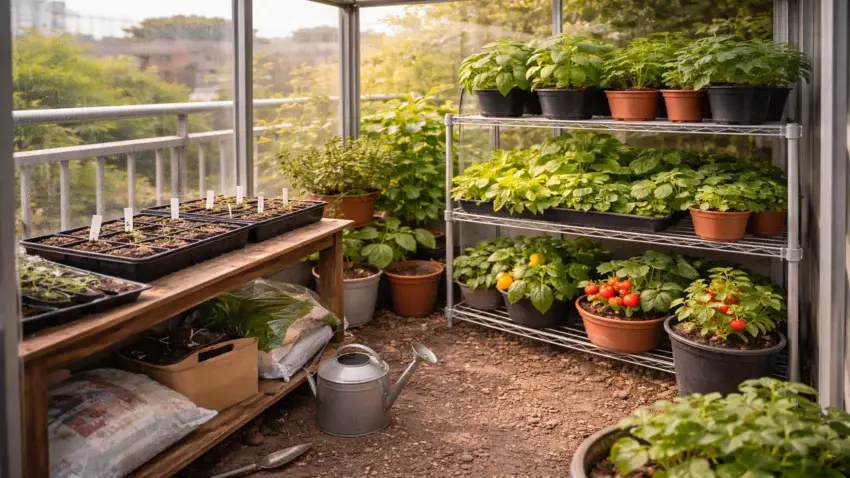
A balcony greenhouse opens the door to growing far more than most people expect —
but success depends on choosing the right kinds of plants and organizing them
in a way that respects space, light, and airflow.
This isn’t about cramming every square inch with pots and hoping for the best.
Smart balcony greenhouse growing is about intentional plant choices, realistic expectations,
and layouts that make daily care easy instead of frustrating.
Below are practical, proven growing ideas that work in small and balcony greenhouses,
without turning them into overcrowded experiments.
Start With Plant Size, Not Plant Type
The biggest mistake balcony growers make is choosing plants based on
desire instead of mature size.
In small greenhouses, what matters most is:
-
Final plant height
-
Root depth
-
Spreading habit
-
How often the plant needs access (watering, pruning, harvesting)
Compact plants that grow upward slowly or stay naturally small will always outperform sprawling
or aggressive growers in limited space.
If a plant needs constant tying, heavy pruning, or frequent moving just to survive —
it’s probably not a good balcony choice.
Herbs That Thrive in Small Greenhouses
Herbs are some of the most forgiving and productive plants you can grow in a balcony greenhouse.
Best options:
-
Basil
-
Parsley
-
Cilantro
-
Chives
-
Thyme
-
Oregano
-
Mint (keep it contained)
Why they work so well:
-
Shallow roots
-
Compact growth
-
Frequent harvesting keeps them manageable
-
Excellent candidates for upper or middle shelves
Grouping herbs together also makes watering and harvesting fast — a huge win in tight spaces.
Leafy Greens for Reliable Harvests
Leafy greens are ideal for balcony greenhouses because they grow quickly
and don’t demand vertical space.
Strong performers:
-
Lettuce (loose-leaf varieties)
-
Spinach
-
Arugula
-
Swiss chard (baby size works best)
-
Asian greens (bok choy, tatsoi)
These crops:
-
Tolerate cooler temperatures
-
Grow well in shallow containers
-
Can be harvested repeatedly instead of all at once
Staggering plantings every 2–3 weeks keeps production steady without overwhelming your shelves.
Compact Fruiting Plants (With Limits)
Yes — you can grow fruiting plants in a balcony greenhouse.
But scale matters.
Realistic options:
-
Dwarf or patio tomatoes
-
Compact pepper varieties
-
Small chili plants
-
Strawberries
Keep expectations grounded:
-
One or two fruiting plants per greenhouse is plenty
-
Use lower shelves or floor-level placement
-
Avoid large indeterminate tomatoes or vining plants unless space is very carefully managed
Fruiting plants are heavier feeders and need more airflow,
so they should never be packed tightly against leafy greens.
Seed Starting Without Chaos
Balcony greenhouses are excellent for seed starting — if you keep it organized.
Best practices:
-
Use shallow trays on upper shelves
-
Group seedlings by growth stage
-
Remove trays as soon as plants outgrow them
-
Avoid stacking trays directly above mature plants
Seed starting works best as a seasonal activity,
not a permanent setup competing with mature crops for light.
Vertical Space That Actually Helps
Vertical space is valuable — but only when used thoughtfully.
Good vertical growing ideas include:
-
Hanging baskets for trailing herbs
-
Narrow side-wall shelves
-
Staggered shelf heights to prevent shading
-
Lightweight pots that can be moved easily
Avoid:
-
Hanging plants directly over lower shelves
-
Tall plants placed on upper levels
-
Any setup that blocks airflow or light paths
Vertical space should support growth, not suffocate it.
Group Plants by Needs, Not Looks
A visually perfect greenhouse that ignores plant needs will struggle long-term.
Group plants based on:
-
Water frequency
-
Light requirements
-
Growth speed
-
Harvest schedules
For example:
-
Herbs together
-
Greens together
-
Fruiting plants isolated
-
Seedlings in a separate zone
This makes watering simpler, reduces stress on plants,
and keeps maintenance from becoming a daily chore.
Seasonal Swaps Keep Things Manageable
One of the smartest balcony greenhouse strategies is rotating crops by season instead of
trying to grow everything year-round.
Examples:
-
Cool-season greens in early spring and fall
-
Herbs and peppers during warmer months
-
Seed starting early, then clearing space for mature plants
Seasonal rotation prevents overcrowding and keeps the greenhouse feeling calm instead of chaotic.
What to Skip in Balcony Greenhouses
Some plants just aren’t worth the fight in small spaces.
Usually best avoided:
-
Large vining crops (cucumbers, squash)
-
Tall indeterminate tomatoes
-
Corn or pole beans
-
Anything requiring aggressive trellising
These plants quickly dominate space, block airflow, and reduce overall productivity.
How Growing Choices Affect Daily Use
The best balcony greenhouse setups are easy to live with.
A good plant mix allows:
-
Clear access to all shelves
-
Comfortable watering without moving pots constantly
-
Easy harvesting
-
Quick visual checks for plant health
If you find yourself constantly rearranging plants just to reach others, the layout —
not the greenhouse — is the problem.
To see which plants actually thrive in a balcony greenhouse —
and how growing options change with space and season —
this guide to what you can grow in a balcony greenhouse breaks it all down.
Final Thoughts…
Balcony greenhouse growing isn’t about maximizing plant count —
it’s about maximizing success.
By choosing compact plants, grouping them intelligently, and rotating crops seasonally,
a small greenhouse can stay productive, manageable, and enjoyable all year long.
When plants fit the space — instead of fighting it — everything gets easier.
 Plan it. Grow it. Enjoy it!
 Helpful Resources for Small Greenhouse Success
Planning and maintaining a small greenhouse goes far beyond choosing the right size or layout. Understanding common pitfalls, having the right tools on hand, and setting things up correctly from the start can make a noticeable difference in both plant health and long-term enjoyment.
If you’re continuing your small greenhouse journey,
these guides will help you move forward with confidence:
-
Common Small Greenhouse Mistakes to Avoid
Learn which sizing, layout, and airflow mistakes cause the most frustration for new growers —
and how to avoid them early. -
Essential Gardening Tools for Small Spaces
A practical breakdown of tools that make daily greenhouse tasks easier, cleaner,
and more efficient in compact environments. -
Small Greenhouse Setup Guide
Step-by-step guidance on positioning, airflow planning, and layout decisions that set your greenhouse up for long-term success.
 Turn Your Gardening Knowledge Into a Simple Online Income
Curious how this site was built?
 Click here to learn more about Wealthy Affiliate.
SmallGardenBox.com started as a simple project built around small-space gardening ideas and greenhouse setups — and it only grew once I learned how to properly build and structure a real website.
If you’ve ever thought about sharing your gardening knowledge, greenhouse experience, or small-space growing tips online, the training at Wealthy Affiliate is what I personally used and recommend.
It walks you through building a website, creating helpful content,
and turning that knowledge into a long-term online asset.
