
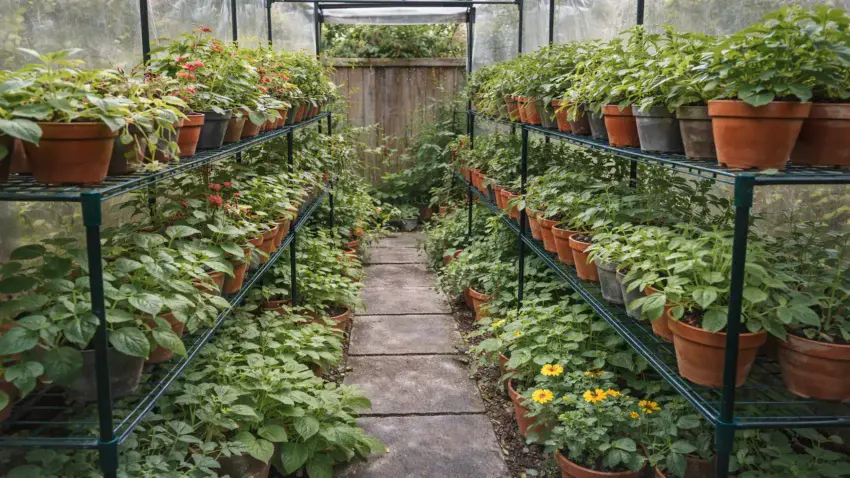
In small greenhouses, layout mistakes show up fast.
What feels like a minor compromise at setup can quickly turn into blocked light,
poor airflow, and daily frustration.
Most bad greenhouse layouts don’t come from lack of effort —
they come from trying to squeeze just a little more into a limited space.
The result is a greenhouse that technically holds plants, but works against them.
This guide breaks down the most common greenhouse layout mistakes in small greenhouses
and explains how to avoid them before they cost you time, plants, and patience.
Why Layout Mistakes Matter More in Small Greenhouses
Small greenhouses don’t have room to absorb errors.
When shelves are placed poorly or walkways disappear, problems stack up quickly.
Bad layouts often lead to:
-
Shaded lower plants
-
Trapped humidity
-
Restricted airflow
-
Difficult access for watering and care
-
Increased disease and stress
Fixing these issues later is harder than planning correctly from the start.
Mistake #1: Overcrowding Plants
The most common mistake is trying to grow too much at once.
Overcrowding causes:
-
Plants to compete for light
-
Poor airflow between leaves
-
Higher humidity levels
-
Faster spread of pests and disease
Rule of thumb:
If plants are touching each other constantly, spacing is too tight.
Mistake #2: Shelves Blocking Light
Solid shelves or poorly placed tiers can block sunlight from reaching lower levels.
This leads to:
-
Weak or leggy growth
-
Uneven plant development
-
Plants struggling on lower shelves
Light should move through the greenhouse, not stop at the top shelf.
Mistake #3: No Clear Walkway
A greenhouse without a usable walkway is hard to maintain.
Common symptoms:
-
Moving plants just to reach others
-
Stepping around pots on the floor
-
Avoiding certain areas entirely
Even a narrow walkway improves workflow and reduces accidental damage.
Mistake #4: Plants on the Floor
Placing plants directly on the floor often seems convenient, but it creates problems.
Floor-level plants:
-
Receive less light
-
Are more exposed to cold
-
Sit in stagnant air
-
Are harder to water and inspect
Shelving exists to lift plants into better growing conditions — use it.
Mistake #5: Ignoring Airflow
Many layout problems come down to airflow being blocked by shelves,
walls of plants, or tightly packed containers.
Poor airflow causes:
-
Excess moisture buildup
-
Mold and mildew
-
Slower drying after watering
-
Increased disease pressure
Plants need air movement just as much as they need light.
Mistake #6: Uneven Shelf Heights
Shelves stacked too closely together create vertical congestion.
Problems include:
-
Upper shelves shading lower ones
-
Plants outgrowing their space
-
Limited airflow between tiers
Shelf spacing should account for mature plant size, not just seedlings.
How to Fix a Bad Greenhouse Layout
If your greenhouse already feels cramped, small changes can help:
-
Remove one shelf to improve airflow
-
Space plants further apart
-
Switch to wire shelving
-
Raise plants off the floor
-
Prioritize access over capacity
Fewer plants grown well always outperform more plants grown poorly.
Learning From Layout Mistakes
Bad layouts are common — especially for beginners.
The key is recognizing when the setup is working against you.
A good greenhouse layout:
-
Feels easy to use
-
Allows light to reach all plants
-
Lets air move freely
-
Doesn’t require constant rearranging
If your greenhouse feels stressful, the layout is usually the reason.
How This Fits Into the Bigger Picture
Understanding what not to do makes it easier to build a better setup.
Once mistakes are avoided, the next step is learning how to use
vertical space effectively without creating new problems.
That’s where thoughtful vertical planning comes in.
If you’re still dialing in how your shelves, spacing, and airflow work together, this full guide to greenhouse shelving, layout, and spacing shows how all the pieces fit in small greenhouses.
Final Thoughts…
Bad greenhouse layouts don’t fail because of bad intentions —
they fail because space is limited.
In small greenhouses, every shelf, walkway, and plant placement matters.
By avoiding these common mistakes, you create a space that’s easier to manage,
healthier for plants, and far more enjoyable to use over time.
 Plan it. Grow it. Enjoy it!
 Helpful Resources for Small Greenhouse Success
Planning and maintaining a small greenhouse goes far beyond choosing the right size or layout. Understanding common pitfalls, having the right tools on hand, and setting things up correctly from the start can make a noticeable difference in both plant health and long-term enjoyment.
If you’re continuing your small greenhouse journey,
these guides will help you move forward with confidence:
-
Common Small Greenhouse Mistakes to Avoid
Learn which sizing, layout, and airflow mistakes cause the most frustration for new growers—and how to avoid them early. -
Essential Gardening Tools for Small Spaces
A practical breakdown of tools that make daily greenhouse tasks easier, cleaner, and more efficient in compact environments. -
Small Greenhouse Setup Guide
Step-by-step guidance on positioning, airflow planning, and layout decisions that set your greenhouse up for long-term success.
 Turn Your Gardening Knowledge Into a Simple Online Income
Curious how this site was built?
 Click here to learn more about Wealthy Affiliate.
SmallGardenBox.com started as a simple project built around small-space gardening ideas and greenhouse setups — and it only grew once I learned how to properly build and structure a real website.
If you’ve ever thought about sharing your gardening knowledge, greenhouse experience, or small-space growing tips online, the training at Wealthy Affiliate is what I personally used and recommend.
It walks you through building a website, creating helpful content,
and turning that knowledge into a long-term online asset.
