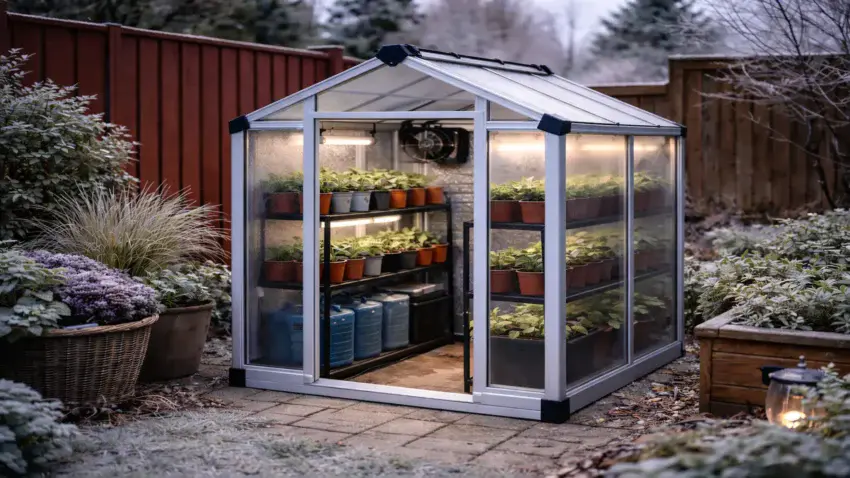
In small greenhouses, ventilation success isn’t just about having vents or fans —
it’s about where air moves once it’s inside.
Poor airflow direction creates dead zones, humidity pockets,
and uneven temperatures even when ventilation equipment is present.
This page supports our main guide, Greenhouse Ventilation & Airflow for Small Spaces,
which explains how to move fresh air through compact greenhouses without
creating temperature swings or plant stress.
This page focuses on airflow paths and fan placement,
helping you guide air through a small greenhouse instead of letting it stall or short-circuit.
Why Airflow Direction Matters More in Small Spaces
Small greenhouses have very little margin for error.
When air moves incorrectly:
-
Fresh air exits before circulating
-
Moist air lingers around plants
-
Heat pools near the roof while lower areas stay damp
Because the space is compact, airflow mistakes affect the entire environment,
not just isolated areas.
Understanding Short-Circuit Airflow
One of the most common problems in small greenhouses is short-circuiting —
when air enters and exits too close together.
This happens when:
-
Fans point directly at open vents
-
Intake and exhaust are too close
-
Doors are opened without guiding airflow
The result is air movement that looks active but doesn’t actually refresh the space.
Good airflow follows a path, not a straight line out.
Best Airflow Paths in Small Greenhouses
Effective airflow in compact structures usually follows a simple pattern:
-
Fresh air enters low or mid-height
-
Air circulates across plant zones
-
Warm, moist air exits higher
This encourages:
-
Even temperature distribution
-
Reduced condensation on leaves
-
Better gas exchange for plants
The goal isn’t speed — it’s coverage.
Fan Placement: Circulation vs Exhaust
Not all fans serve the same purpose in a small greenhouse.
Circulation fans
-
Keep air moving internally
-
Break up humidity pockets
-
Reduce stagnant zones
These are often best placed:
-
Above plant height
-
Angled slightly downward
-
Away from direct vent openings
Exhaust fans
-
Remove warm, moist air
-
Pull fresh air through the structure
In small greenhouses, exhaust fans should be used sparingly
and paired carefully with intake points to avoid dumping heat too quickly.
Avoiding Direct Blasts on Plants
In tight spaces, it’s easy for fans to overpower plants.
Common mistakes include:
-
Fans pointed directly at foliage
-
High airflow speeds in short distances
-
Continuous strong airflow in one direction
Plants benefit more from gentle, indirect movement than from constant air pressure.
If leaves flutter constantly, airflow is usually too aggressive.
Adjusting Airflow for Seasonal Conditions
Airflow needs change with the season.
In cooler months:
-
Focus on circulation over exhaust
-
Use shorter ventilation intervals
-
Preserve heat while preventing moisture buildup
In warmer periods:
-
Increase air exchange
-
Encourage heat removal
-
Maintain steady movement to avoid hot spots
Small greenhouses respond quickly, so minor adjustments go a long way.
How This Fits Into the Bigger Ventilation Plan
Once airflow direction and fan placement are correct,
ventilation systems work far more efficiently.
Fans don’t need to run as long, vents don’t need to open as wide,
and temperature control becomes easier.
Our main guide on Greenhouse Ventilation & Airflow for Small Spaces
ties airflow direction, fan placement,
and ventilation methods together into one balanced approach for compact environments.
Final Thoughts…
In small greenhouses, air doesn’t wander — it takes the path you give it.
When airflow is guided intentionally, humidity drops, temperatures stabilize,
and plants experience fewer stress cycles.
Fan placement and airflow direction turn ventilation from trial-and-error into a
predictable system that works with the space instead of fighting it.
From here, the final step is learning
how to fine-tune airflow timing and automation for small greenhouses.
 Plan it. Grow it. Enjoy it!
 Helpful Resources for Small Greenhouse Success
Planning and maintaining a small greenhouse goes far beyond choosing the right size or layout. Understanding common pitfalls, having the right tools on hand,
and setting things up correctly from the start can make a noticeable difference in both plant health
and long-term enjoyment.
If you’re continuing your small greenhouse journey,
these guides will help you move forward with confidence:
-
Common Small Greenhouse Mistakes to Avoid
Learn which sizing, layout, and airflow mistakes cause the most frustration for new growers —
and how to avoid them early. -
Essential Gardening Tools for Small Spaces
A practical breakdown of tools that make daily greenhouse tasks easier,
cleaner, and more efficient in compact environments. -
Small Greenhouse Setup Guide
Step-by-step guidance on positioning, airflow planning,
and layout decisions that set your greenhouse up for long-term success.
 Turn Your Gardening Knowledge Into a Simple Online Income
Curious how this site was built?
 Click here to learn more about Wealthy Affiliate.
SmallGardenBox.com started as a simple project built around small-space gardening ideas
and greenhouse setups — and it only grew once I learned how to properly build
and structure a real website.
If you’ve ever thought about sharing your gardening knowledge, greenhouse experience,
or small-space growing tips online, the training at Wealthy Affiliate is what I personally used
and recommend.
It walks you through building a website, creating helpful content,
and turning that knowledge into a long-term online asset.
